More than 30 years with fire
We have spent more than three decades designing, making and installing fireplaces. We are a family business and follow every project from start to finish.
11 wood-burning projects documented in the portfolio

Open, closed and inserts · Made to measure
More than 30 years designing, making and installing bespoke wood-burning fireplaces: open, closed with glass, insert cassettes and design pieces. We also close and restore the fireplace you already have.
Clima Difusión
At Clima Difusión we specialise in making bespoke wood-burning fireplaces. We have been in the trade for more than 30 years and work with the whole range of wood-fuelled appliances: fireplaces, stoves and insert cassettes.
We build new fireplaces and also restore existing ones: we close open fireplaces with a cassette or with a glass door and draught regulator, make brass and iron fireplace fronts, cassettes and enclosures to measure, and design three-sided, see-through and suspended pieces.
We look after the whole process: design, manufacture, permits, installation and finishing. Our installers are certified and we follow current regulations, so in the end all you have to do is put the logs in and light the fire.
Quick answer
A wood-burning fireplace has a hearth, either a refractory masonry opening or a metal box (cassette or insert), and a chimney that takes the smoke away through a flue hidden in a hood or in the wall. An open fireplace can be closed with a cassette or a glass door. Clima Difusión designs them to measure and installs them.
Updated: October 2026
| Parts | The hearth, where the wood burns, and the chimney, which takes the smoke away |
|---|---|
| Types of hearth | Masonry opening lined with refractory material, or a metal box (cassette or insert) with vents, grate and ash pan |
| Types of fireplace | Open, closed with door and glass, insert cassette and boiler fireplace |
| Flue | Always needed; it can be hidden in a hood or built into the wall |
| Heat output | Much higher in a closed fireplace than in an open one, because the incoming air is controlled |
| If you already have one | It can be closed with a cassette or with a glass door and draught regulator |
| Made to measure | Brass and iron fronts, cassettes, enclosures and three-sided, see-through or suspended pieces |
| Installation | Certified installers, following current regulations |
| Where to see them | In our Barcelona showroom; Saturdays by appointment |
Why Clima Difusión
We have spent more than three decades designing, making and installing fireplaces. We are a family business and follow every project from start to finish.
11 wood-burning projects documented in the portfolio
Fireplace fronts in brass and in toothed, machined iron, cassettes and enclosures made to the exact size of the opening. We don't fit your living room around the fireplace: it is the other way round.
Fronts, cassettes and enclosures made to measure
All our installers are certified and we follow current regulations. The safety of a wood-burning fireplace depends as much on the draught and the flue as on the appliance itself.
Installation in line with current regulations
We close open fireplaces with a cassette and new plasterboard, or with a glass door and draught regulator. You gain a better view of the fire and efficiency without knocking anything down.
Design, manufacture, logistics, permits, installation and finishing: we handle the whole process so all you have to do is put the logs in and light the fire.
Four stages: design, preparation, installation and finishing
We work with trusted architects and have our own interior design team to fit the fireplace into a renovation or a new build.
How it works
The wood-burning hearth is the chamber where the fire burns. To burn well, wood needs air, which supplies oxygen for combustion, and an outlet for the smoke. The temperature difference between the flue and the outside creates the draught: hot smoke rises up the chimney and pulls fresh air towards the fire.
In an open fireplace that draught is excessive: too much cold air comes in and the combustion gases leave so quickly that they have no time to give off heat to the room. That is why its efficiency is poor, even though the fire can be seen without any obstruction.
In a closed fireplace the amount of air entering the combustion chamber is controlled. The hot gases stay inside longer, the temperature rises, combustion is more complete and the heat has time to pass into the room. Some cassettes have fans that spread the heat faster and push it into other rooms, in exchange for a little electricity and some noise.
A masonry hearth is lined with refractory material, which withstands the heat of the fire. Metal boxes and stoves are made of steel or cast iron: steel heats up sooner and allows lighter shapes; a cast iron fireplace takes longer to warm up, but stores the heat and releases it slowly once the fire has gone out.
Types
There are three main families, depending on how the fire relates to the room. That choice determines how much heat you get, the building work required and whether an existing fireplace can be reused.
 Open
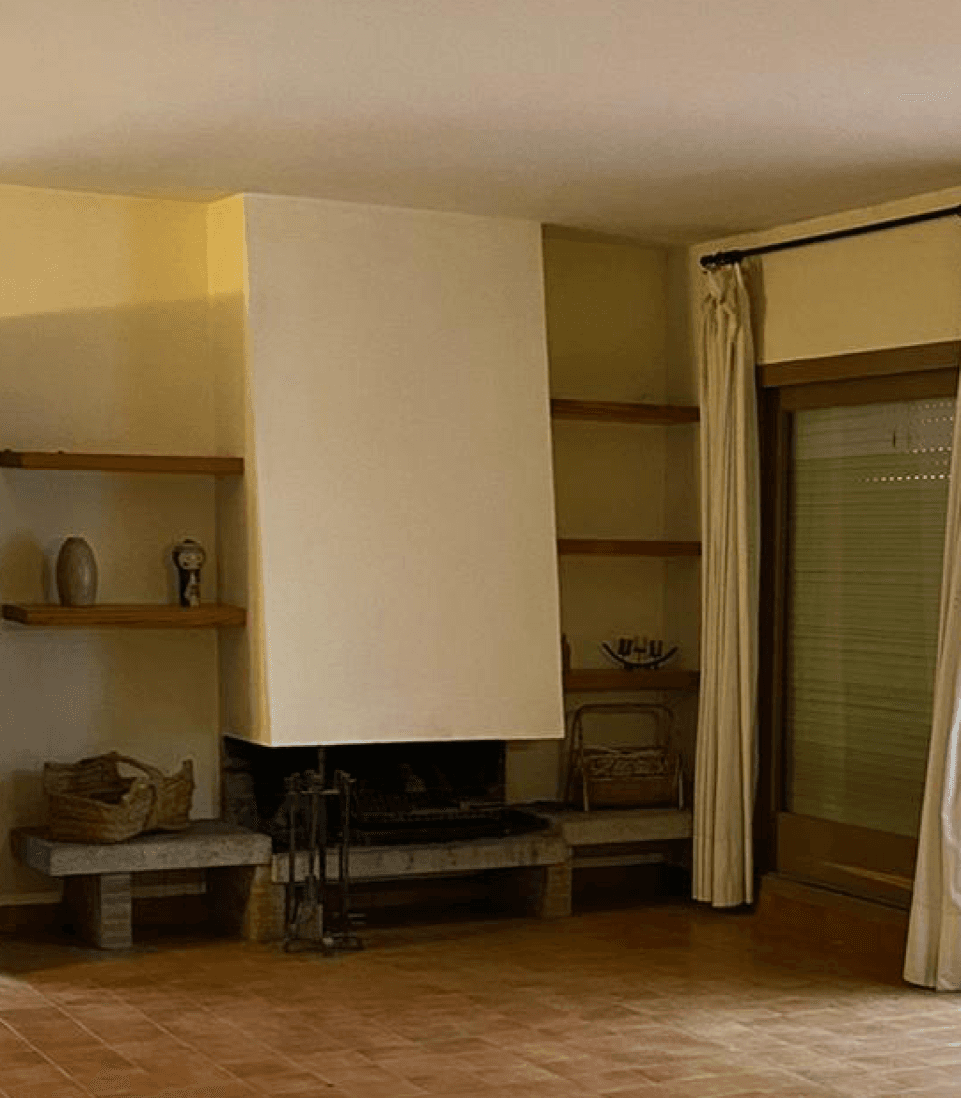
The traditional fireplace: you watch the logs burn with nothing in the way and hear the fire crackle. Its charm is hard to beat.
Its weak point is efficiency: the draught is excessive, too much cold air comes in and the smoke carries off much of the heat. If you already have one, you can close it with a bespoke enclosure and keep the view of the fire.
 Closed
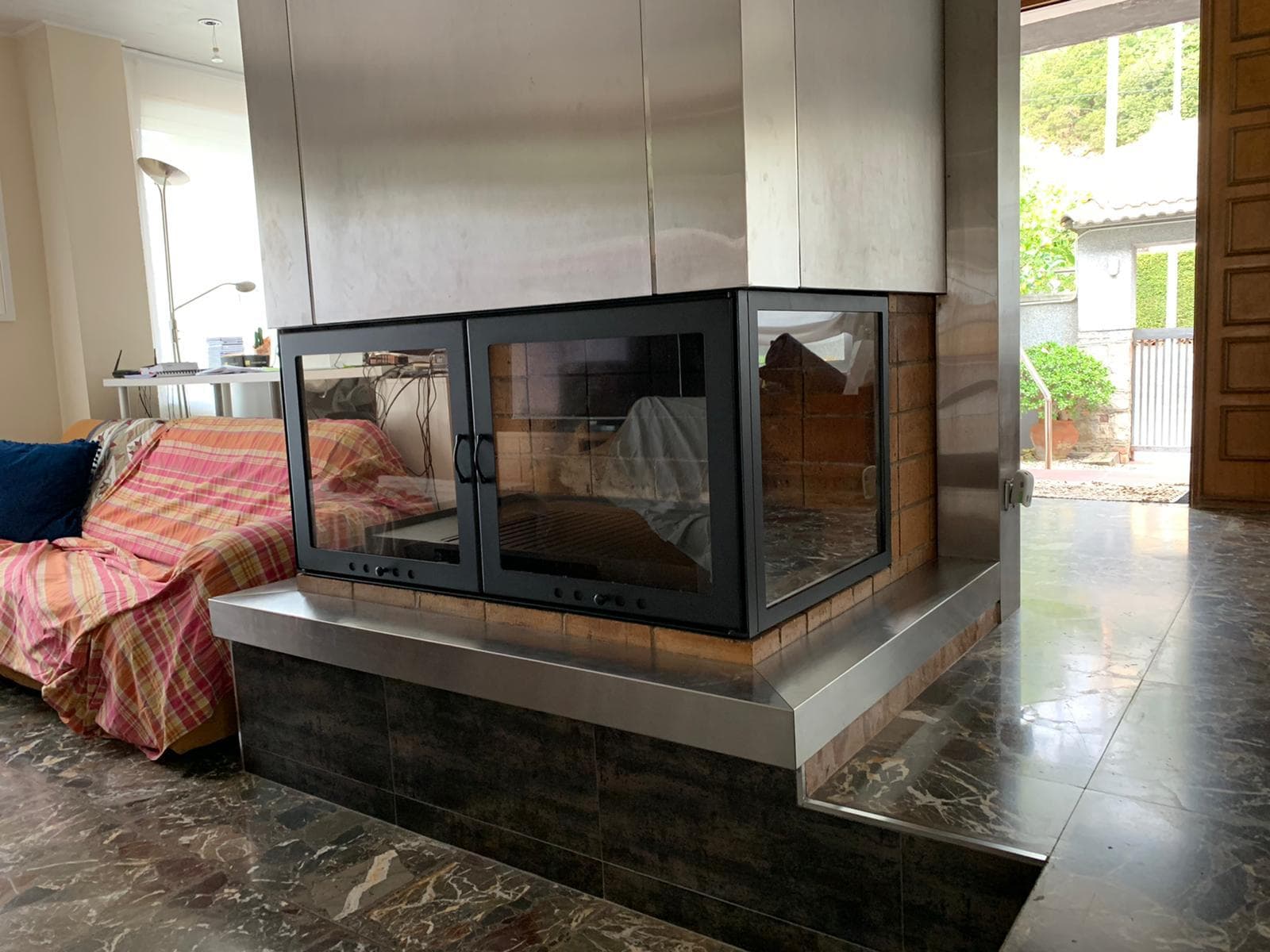
A glass door closes the combustion chamber and lets you regulate the incoming air. Something that simple makes a dramatic difference to the heat you get, and the same wood goes much further.
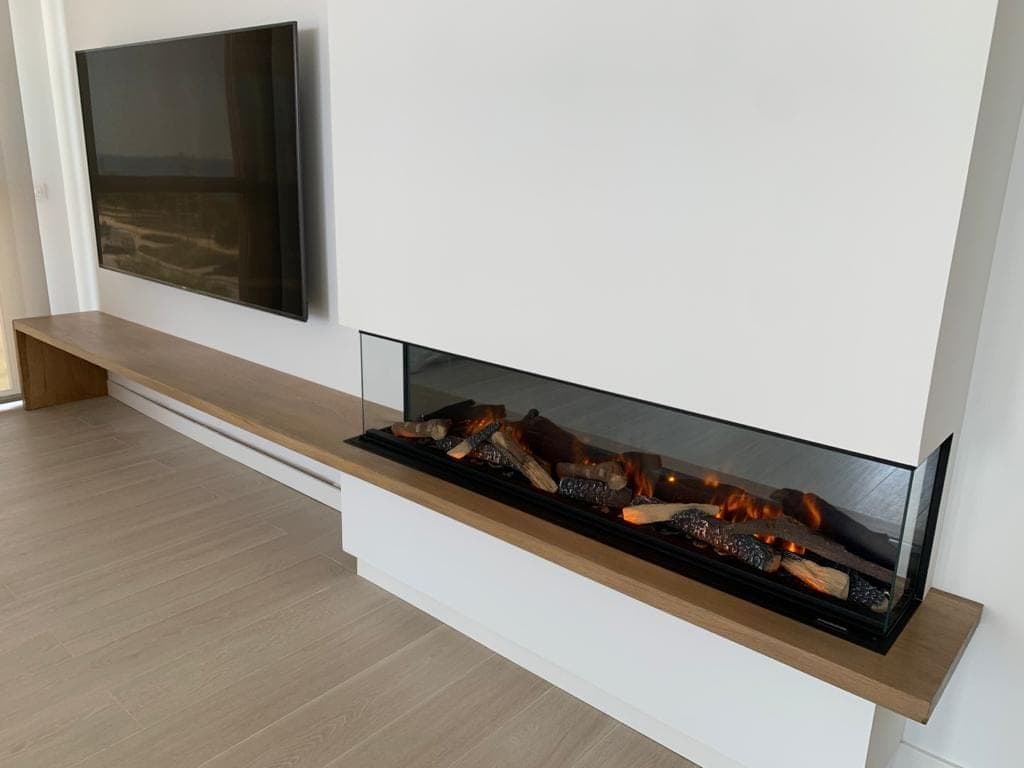
It can have guillotine doors, which slide up and down, or hinged doors that open like a window, and glass on one, two, three or more sides.
 Cassette
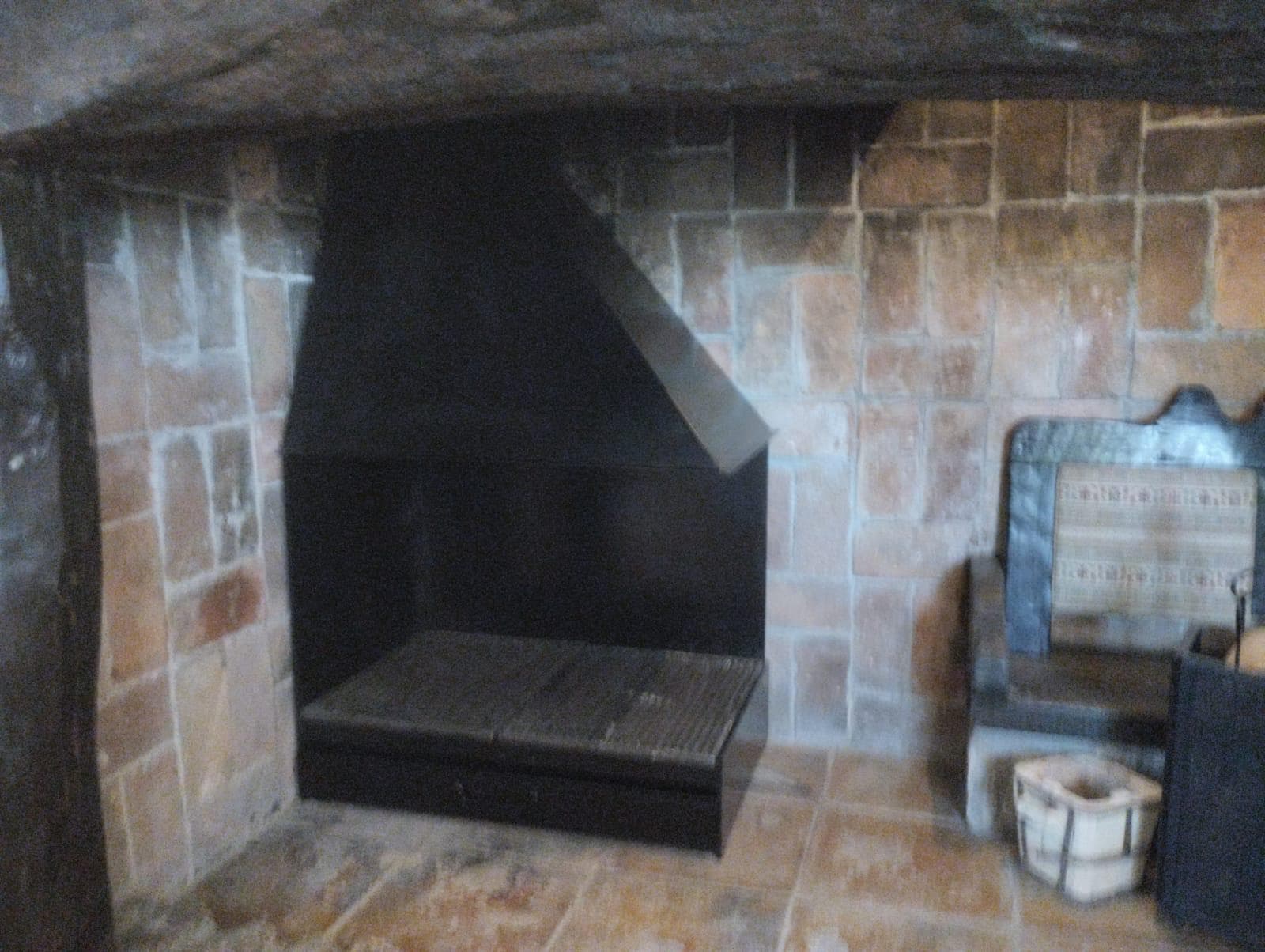
A closed metal box with its own glass door that sits inside a masonry opening or an existing fireplace. It has vents, a grate and an ash pan, and some models include a fan.
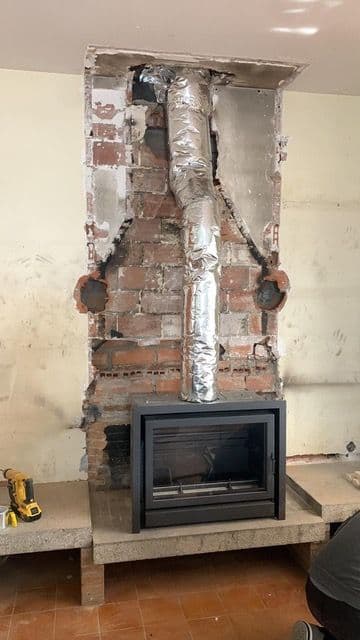
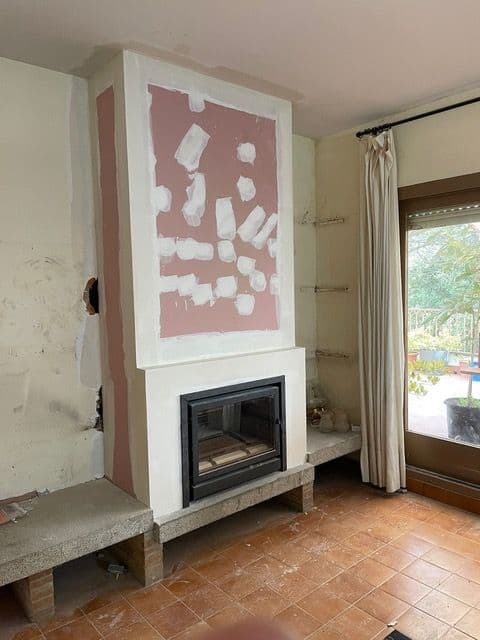
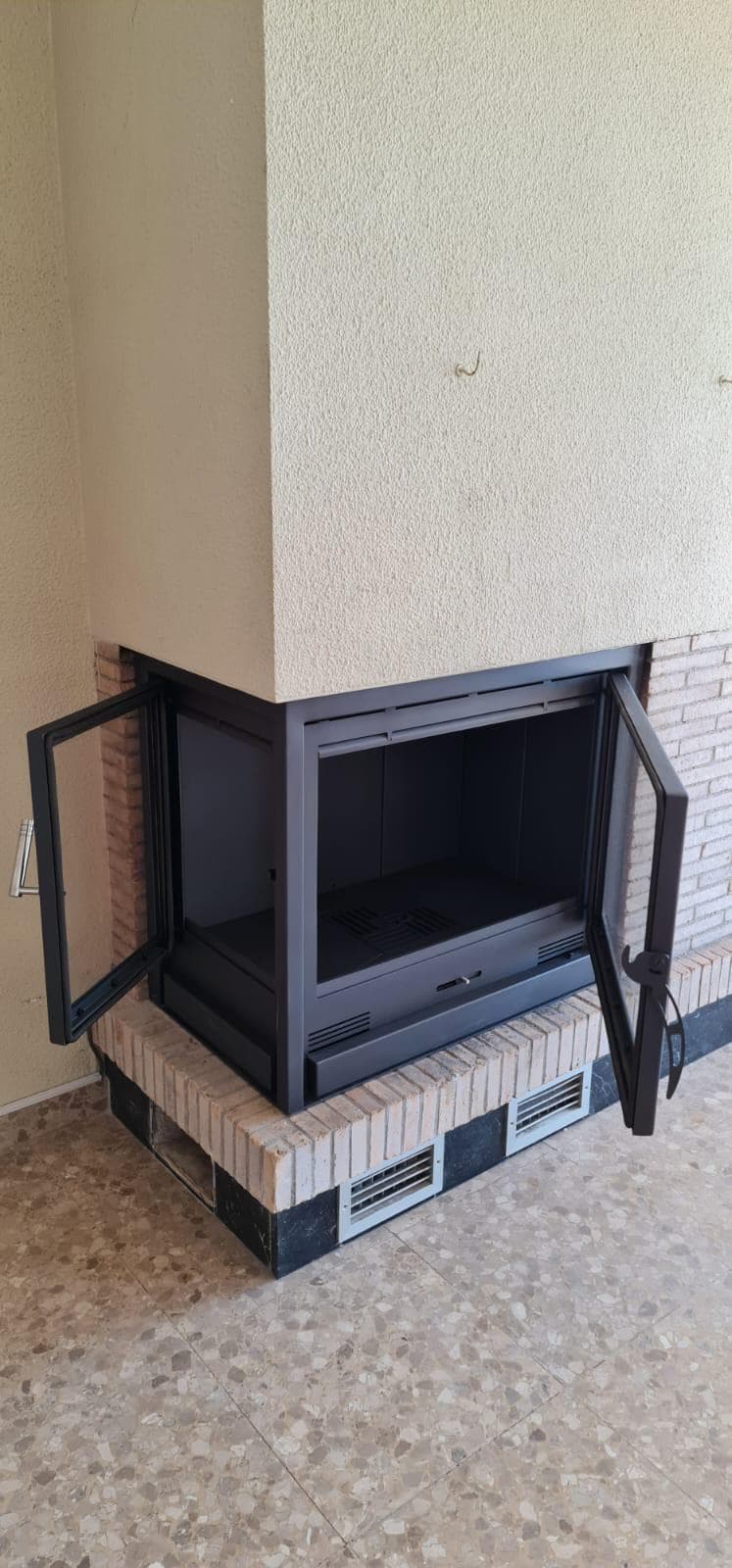
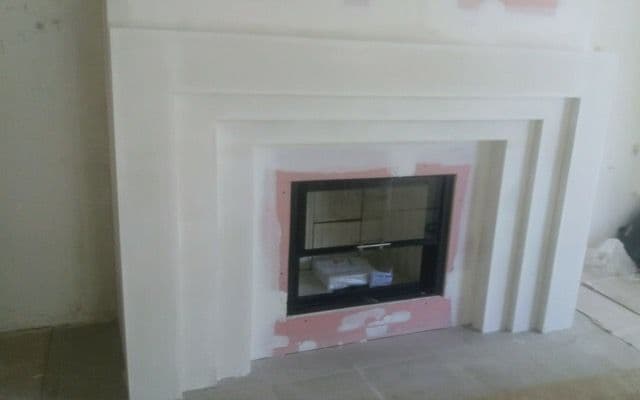
It is the most direct way to turn an open fireplace into a closed one: the cassette is fitted, connected to the flue and the front is finished, for example with new plasterboard.
| Feature | Open | Closed | Cassette or insert |
|---|---|---|---|
| View of the fire | Complete, no glass | Through glass, on one or more sides | Through front or corner glass |
| Air control | No: the draught is excessive | Yes, with the door and draught regulator | Yes, with the appliance's air inlets |
| Heat output | Low: much of it goes up the chimney | High | High; with a fan, it spreads faster |
| Building work | Refractory masonry hearth and hood | Bespoke hearth or box and glass enclosure | Fitting into a new or existing opening and finishing the front |
| To upgrade an existing fireplace | It is the starting point | Yes, with a bespoke enclosure | Yes, the most direct solution |
| Cleaning | Ash in the hearth; a spark guard is advisable | Ash, glass and chimney sweeping | Ash pan, glass and chimney sweeping |
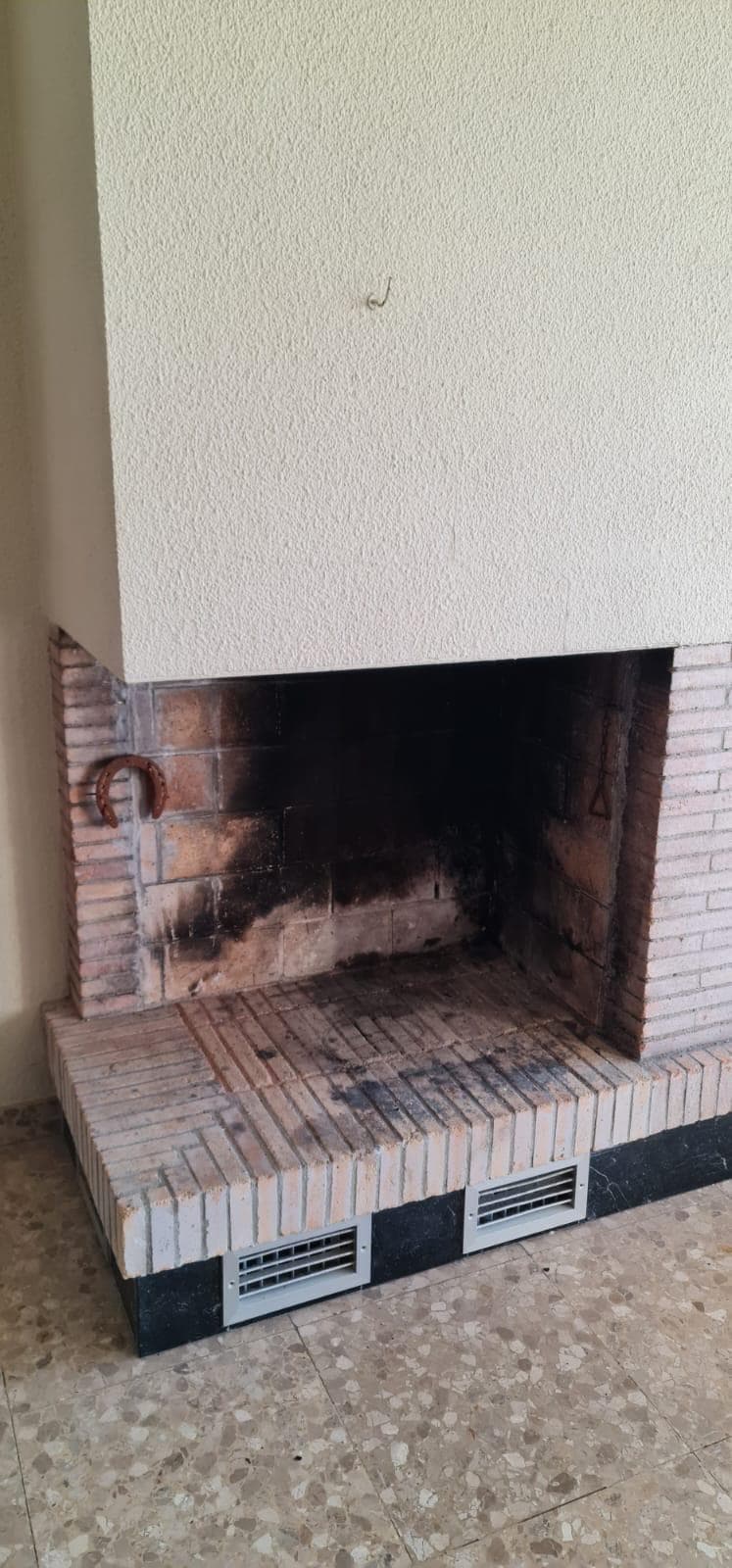
| Real project | Before restoration | Bespoke glass enclosure | Cassette in an old fireplace |
Heating with wood
What sets a boiler fireplace apart is that it has a built-in water tank or back boiler. Normal use of the fireplace heats that water, which feeds the radiators throughout the house and the domestic hot water.
Its great advantage is that the fire you already light to enjoy in the living room also works as central heating: heat that an ordinary fireplace would leave in a single room reaches the whole house.
We install boiler fireplaces combined with other energy sources, such as gas, heating oil, solar energy, geothermal energy or pellets, and with any heat emitter: radiators, underfloor heating or convectors. When the fire is out, the other system takes over.
It suits detached houses where the fireplace is lit every day in winter and there is a radiator or underfloor heating system to connect it to. Before deciding, we look at the existing installation and where to place the fireplace so the water circuit is feasible.
Formats
Every living room calls for a format. These are some of the ones we have made and installed, each with its real project in the portfolio.
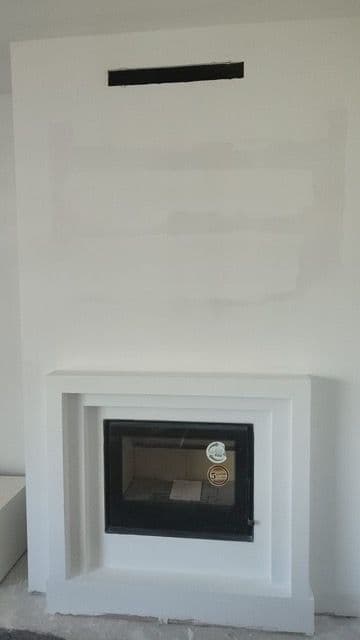
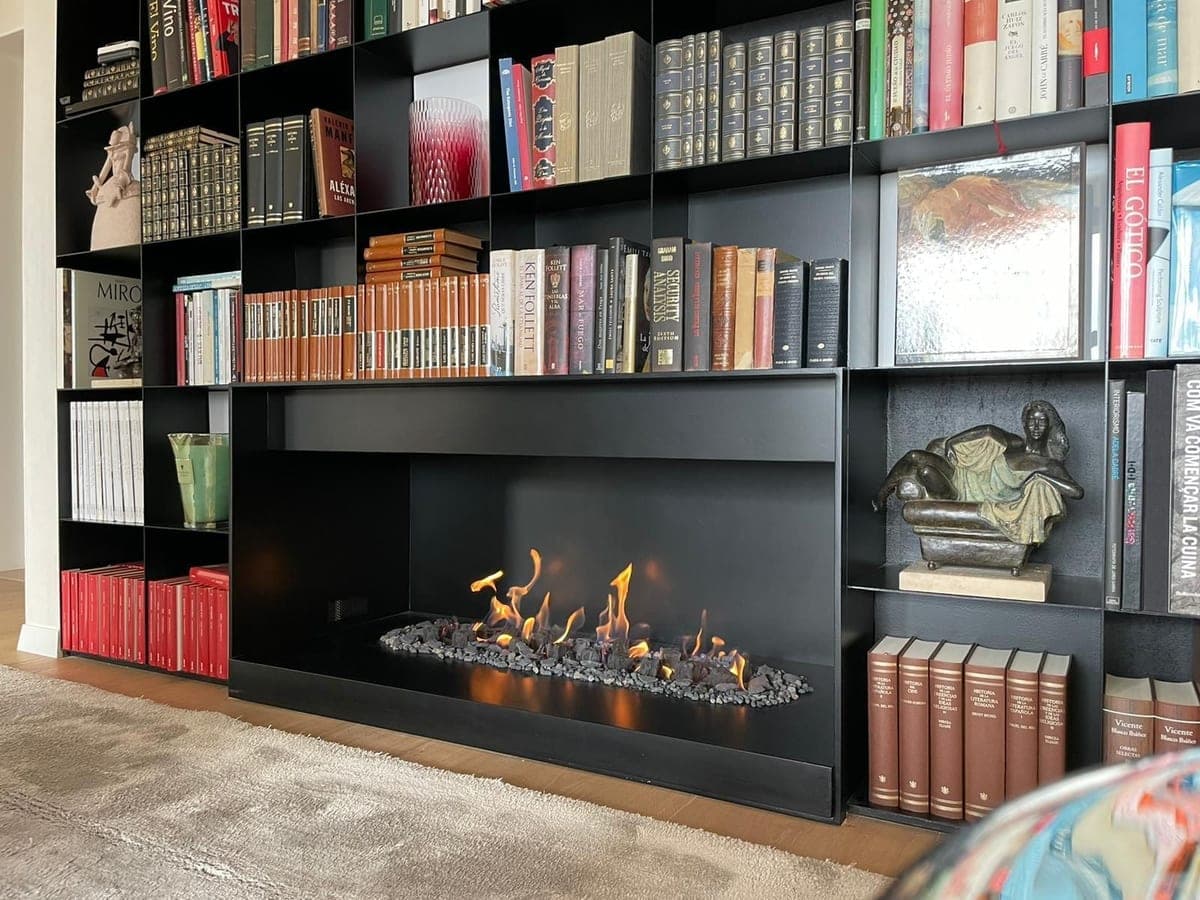
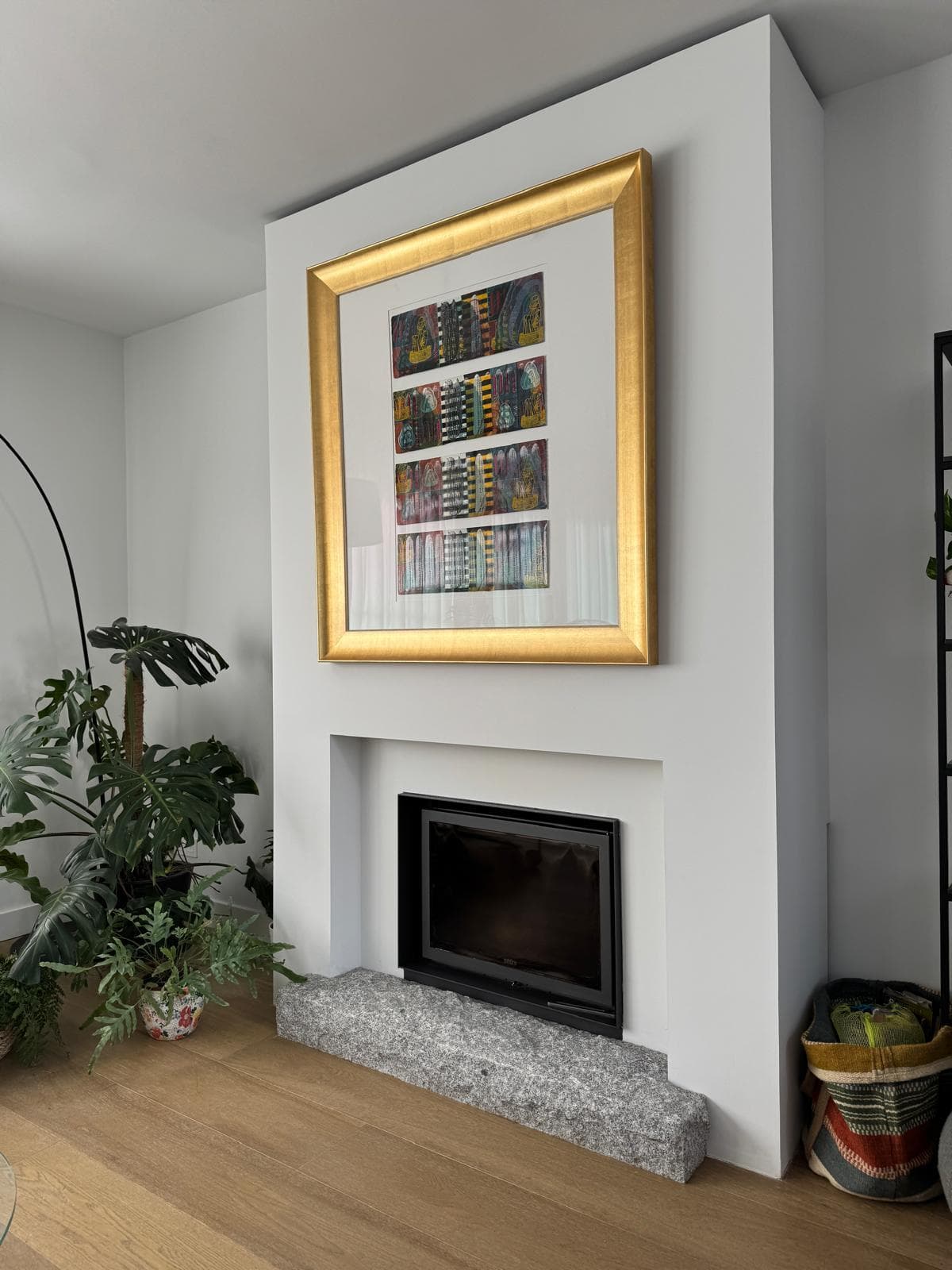
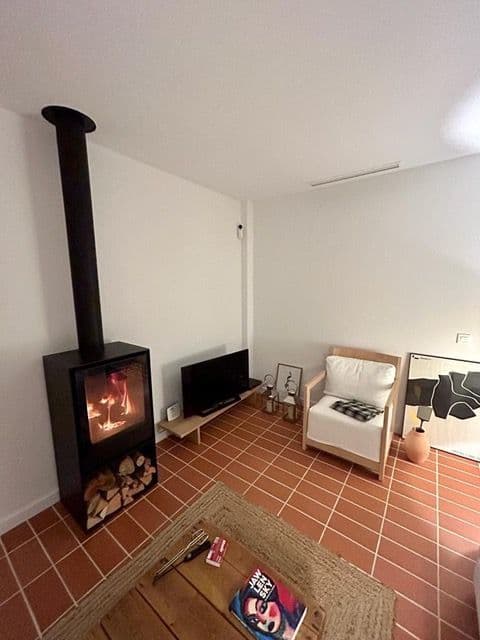
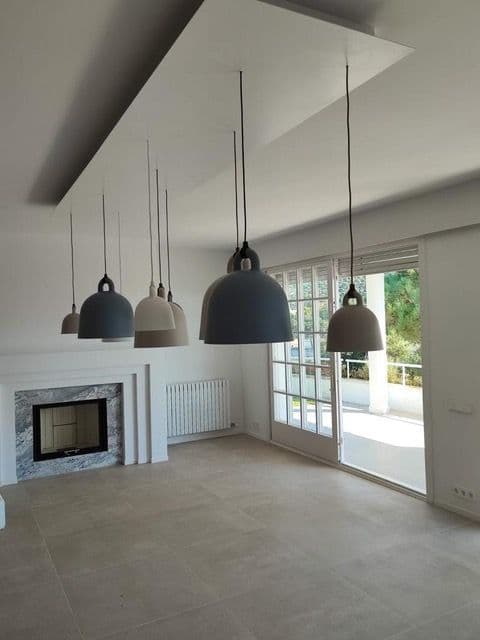
The fire is seen from the front and the appliance is built into the wall, with the flue hidden and a clean frame around it. It is the easiest format to fit into a contemporary living room.
See the built-in cassette with plasterboard frame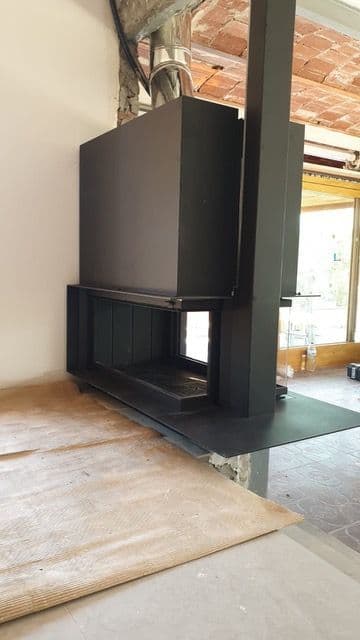
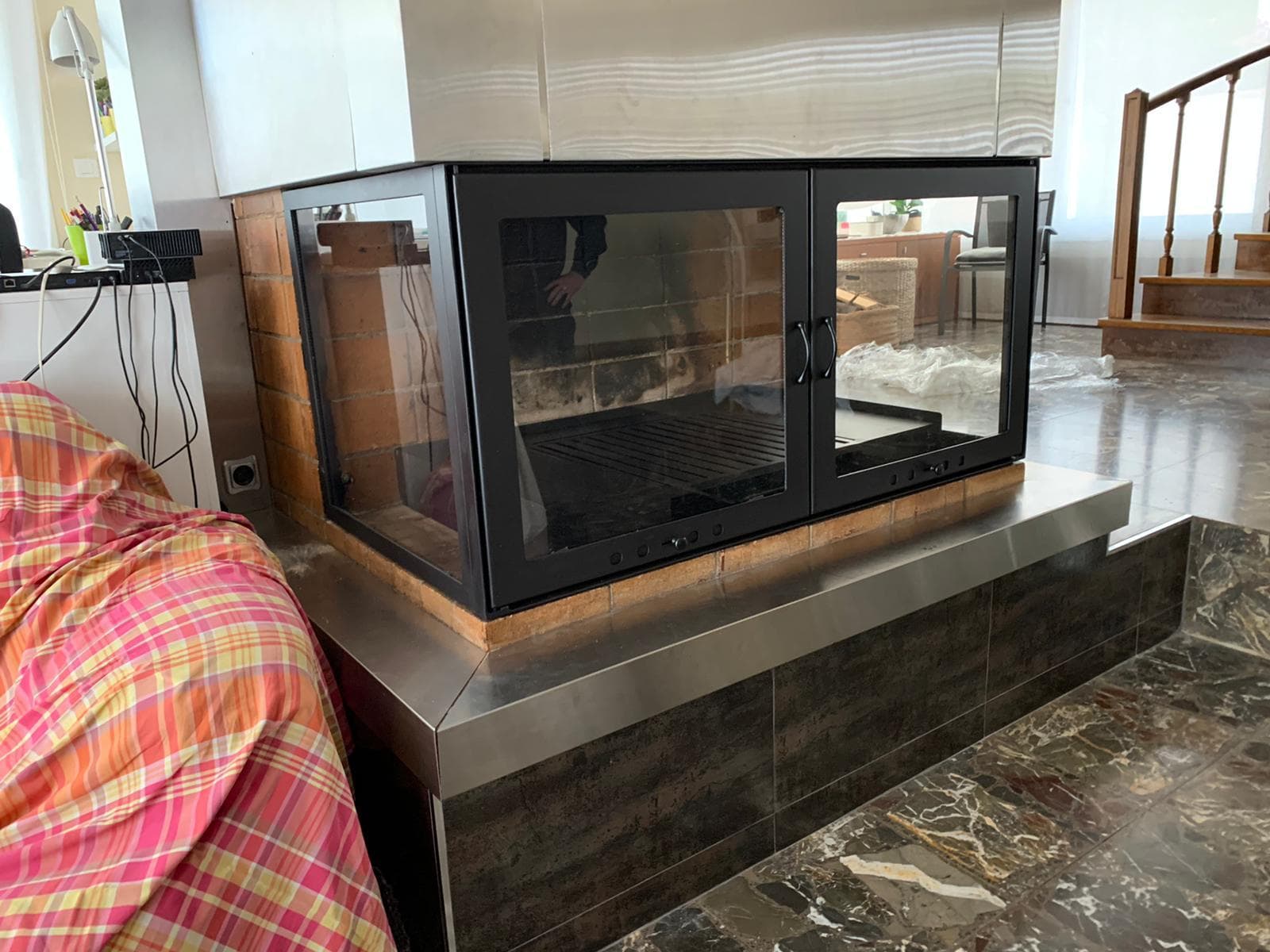
Glass at the front and on both sides, so the fire can be seen from almost anywhere in the room. The front door slides up and down guillotine-style, and the side and rear doors open for cleaning.
See the three-sided project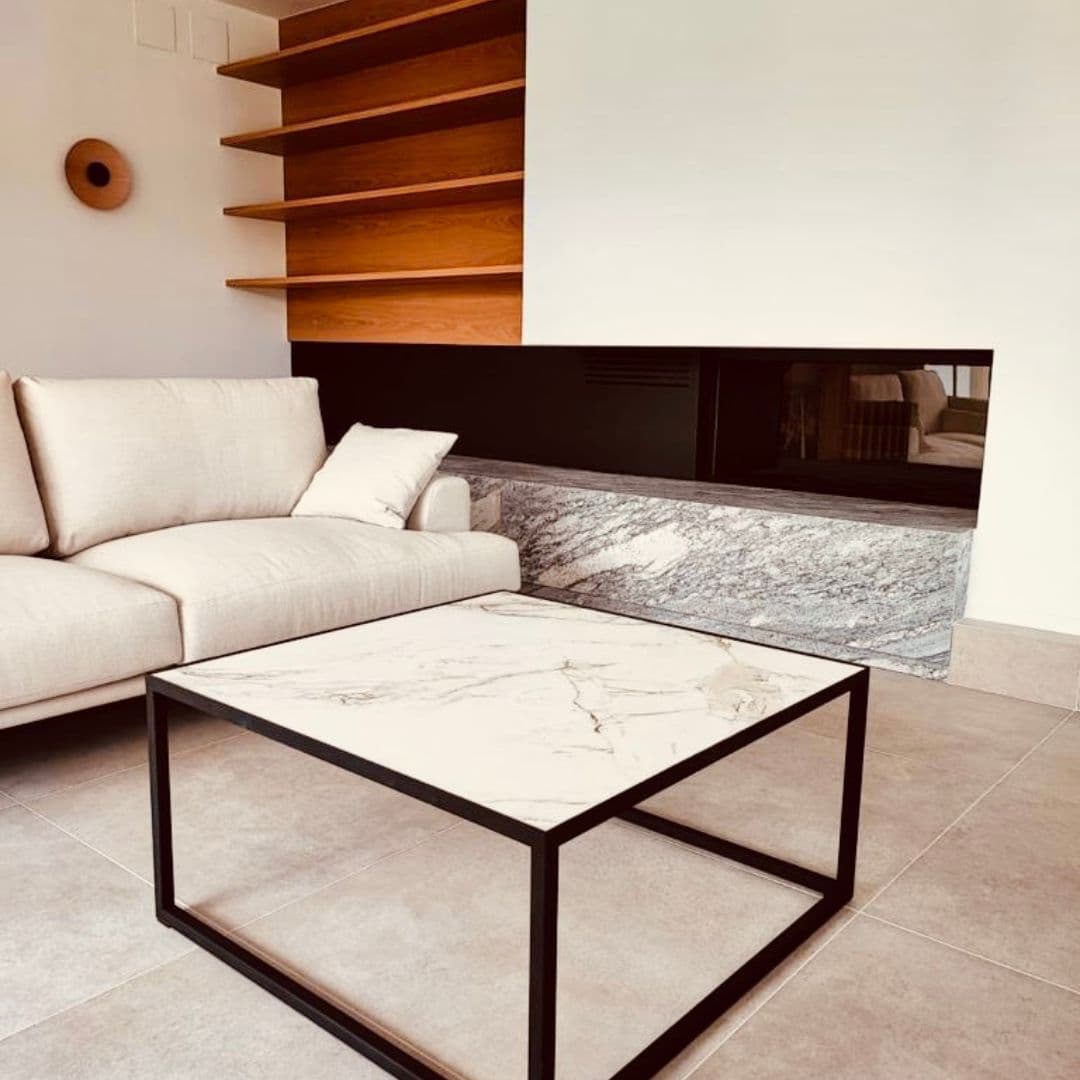
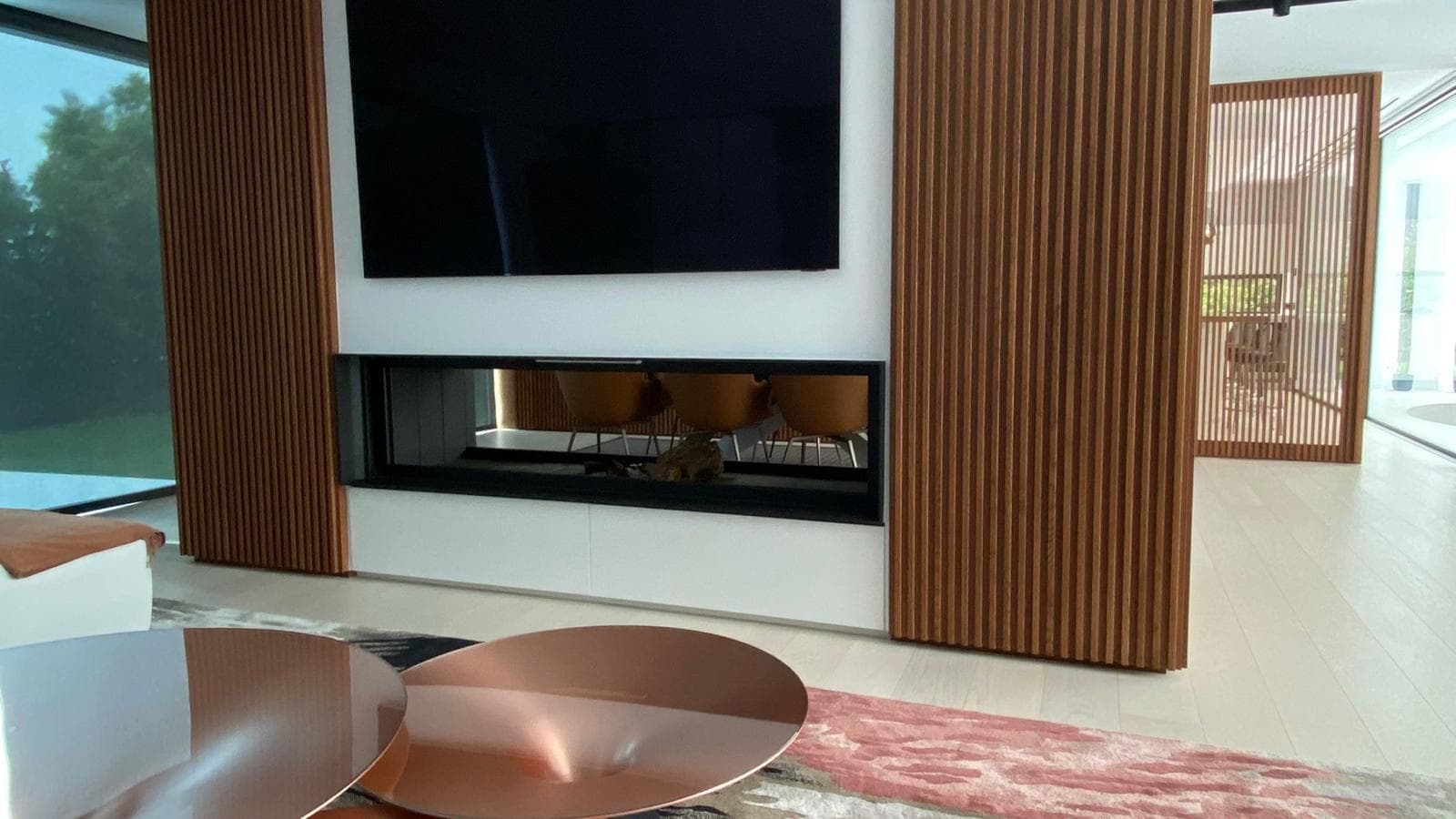
Open at the front and back, it can be seen from two rooms at once and divides the living and dining areas. We installed this one with fan-assisted smoke extraction.
See the see-through project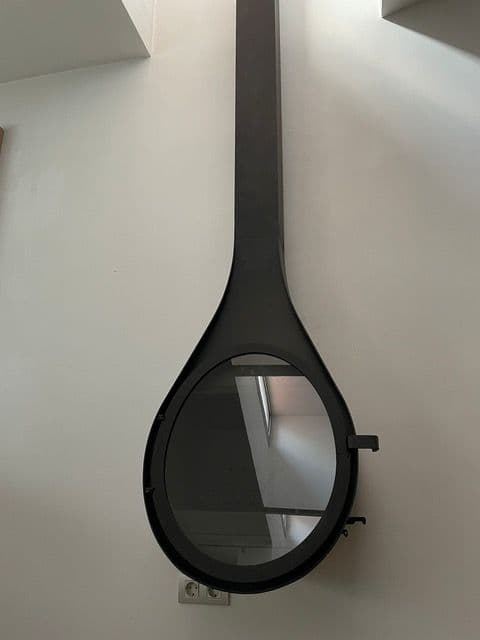
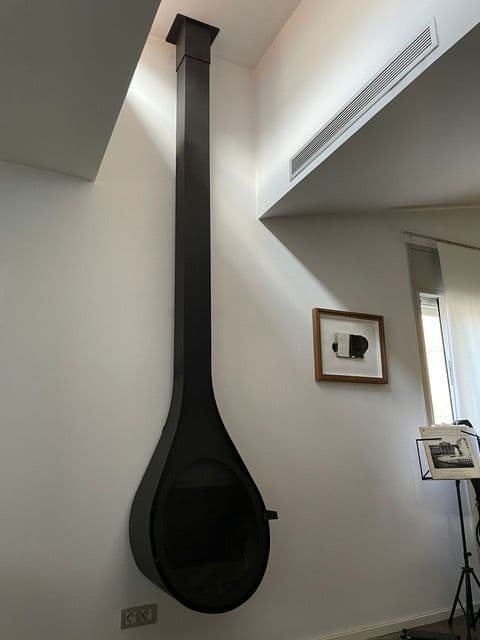
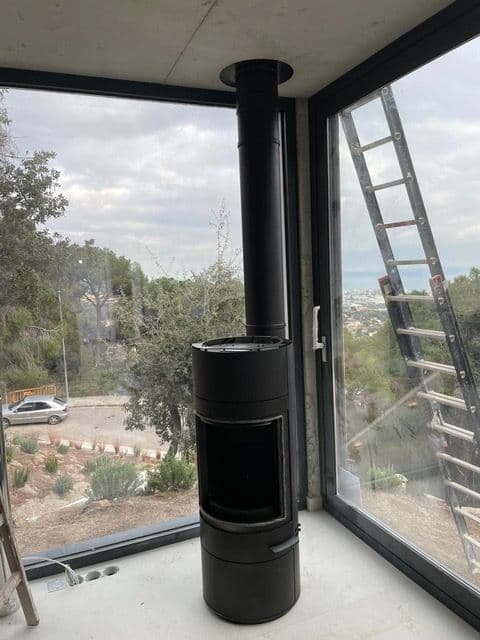
Hung from the wall, with the flue on show as part of the design. It frees up the floor and becomes the centrepiece of the living room.
See the suspended fireplace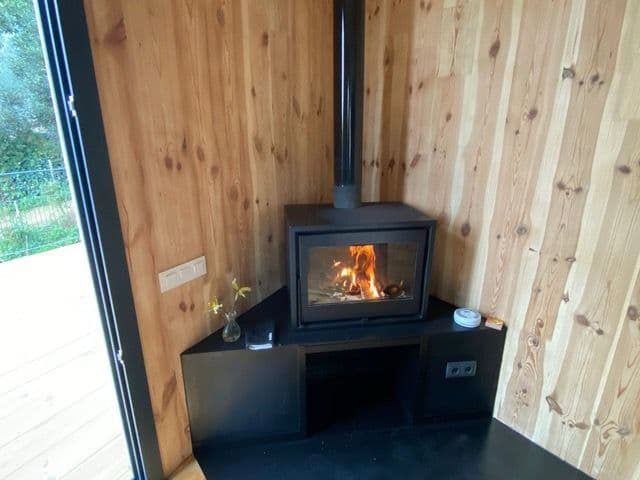
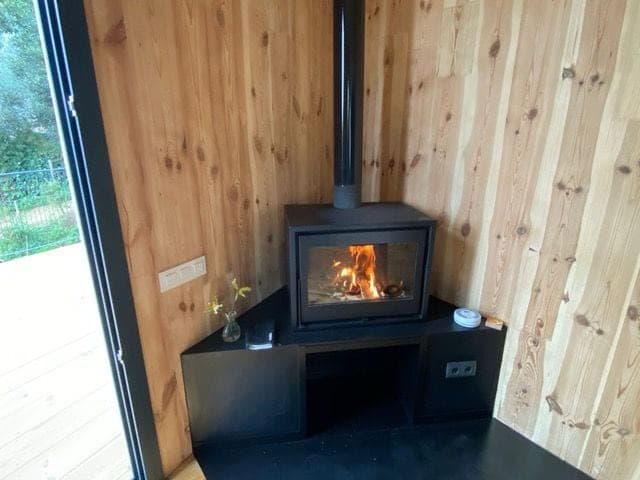
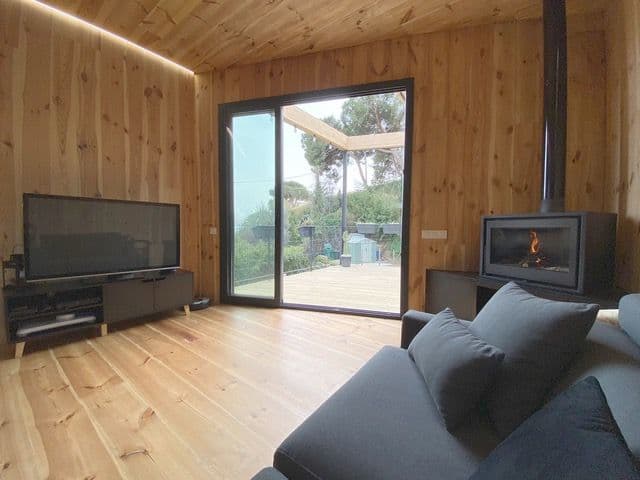
It makes use of a corner with a front view of the fire. For this project we made a bespoke iron bench for the appliance to sit on.
See the corner project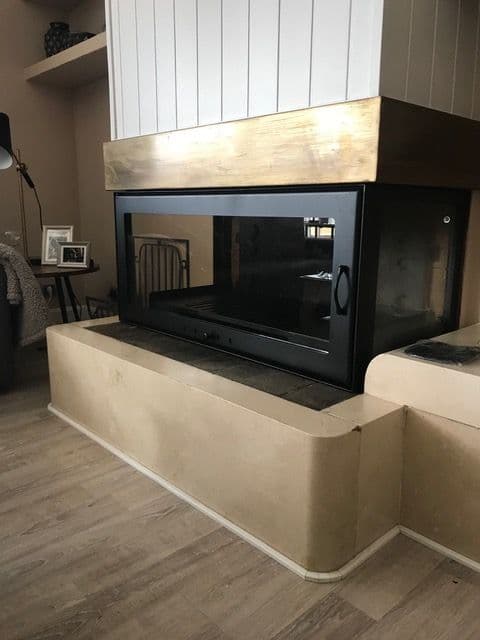
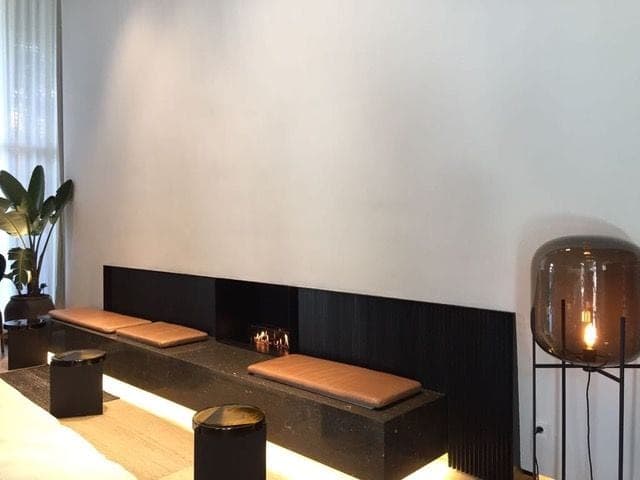
Glass at the front and sides, on a curved masonry bench. The glass doors are made to measure to close an existing hearth and make it more efficient.
See the enclosure on the benchMade to measure
A bespoke wood-burning fireplace starts on the drawing board. We draw the piece with its dimensions, make it to the exact size of the opening and finish it in the material the house calls for.
We have finished fireplaces in natural stone over a plasterboard frame, with brass or iron fronts, on iron benches and with new plasterboard surrounds. The finish completely changes the character of the fireplace without touching the hearth.
The dimensions of an old opening hardly ever match those of a standard appliance. Making the front, cassette or enclosure to measure avoids fillers and awkward trims, and leaves the fireplace looking as if it had always been there.
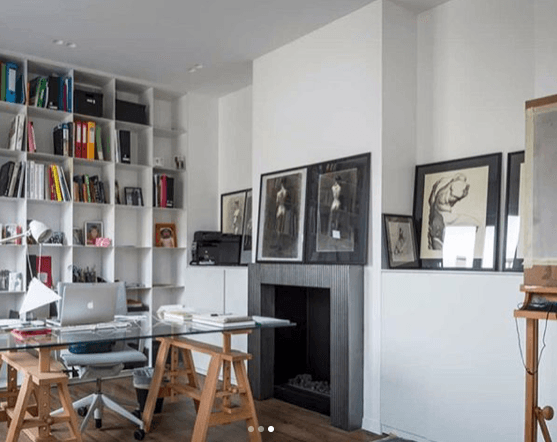
Fireplace fronts in brass and in toothed, machined iron, made to measure.
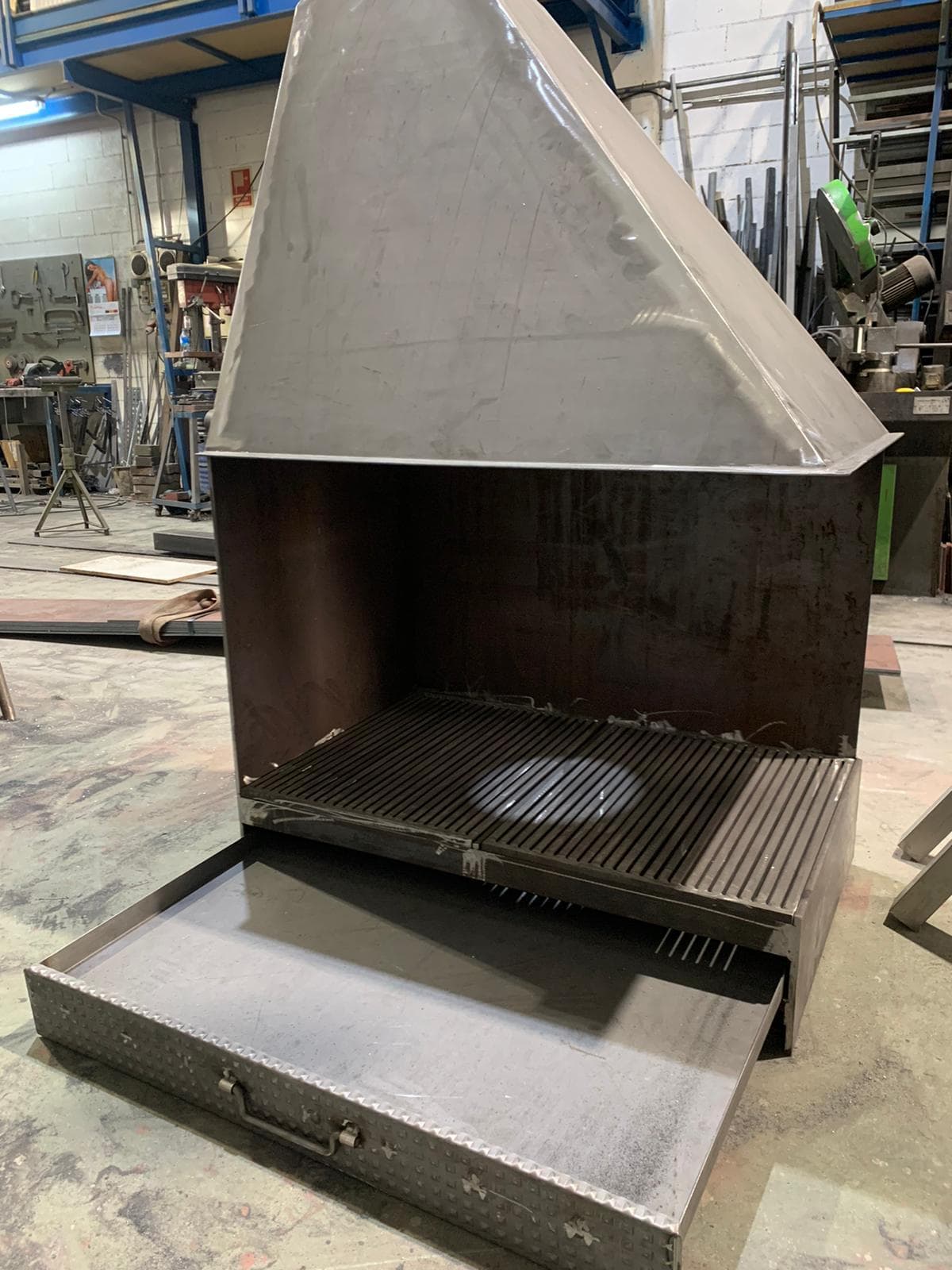
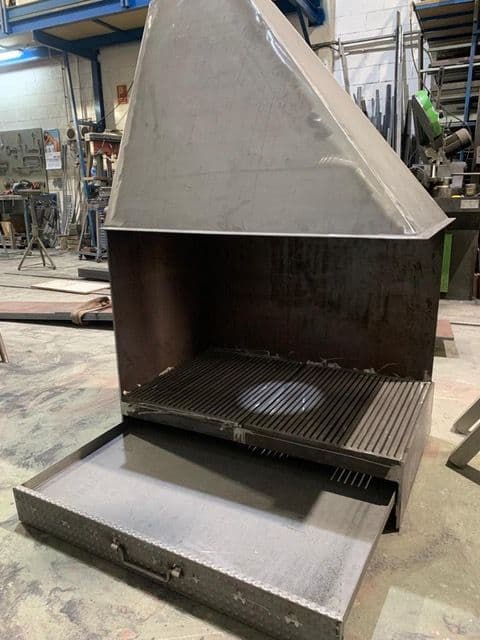
Hearth with a steel hood made to measure, ready to install.
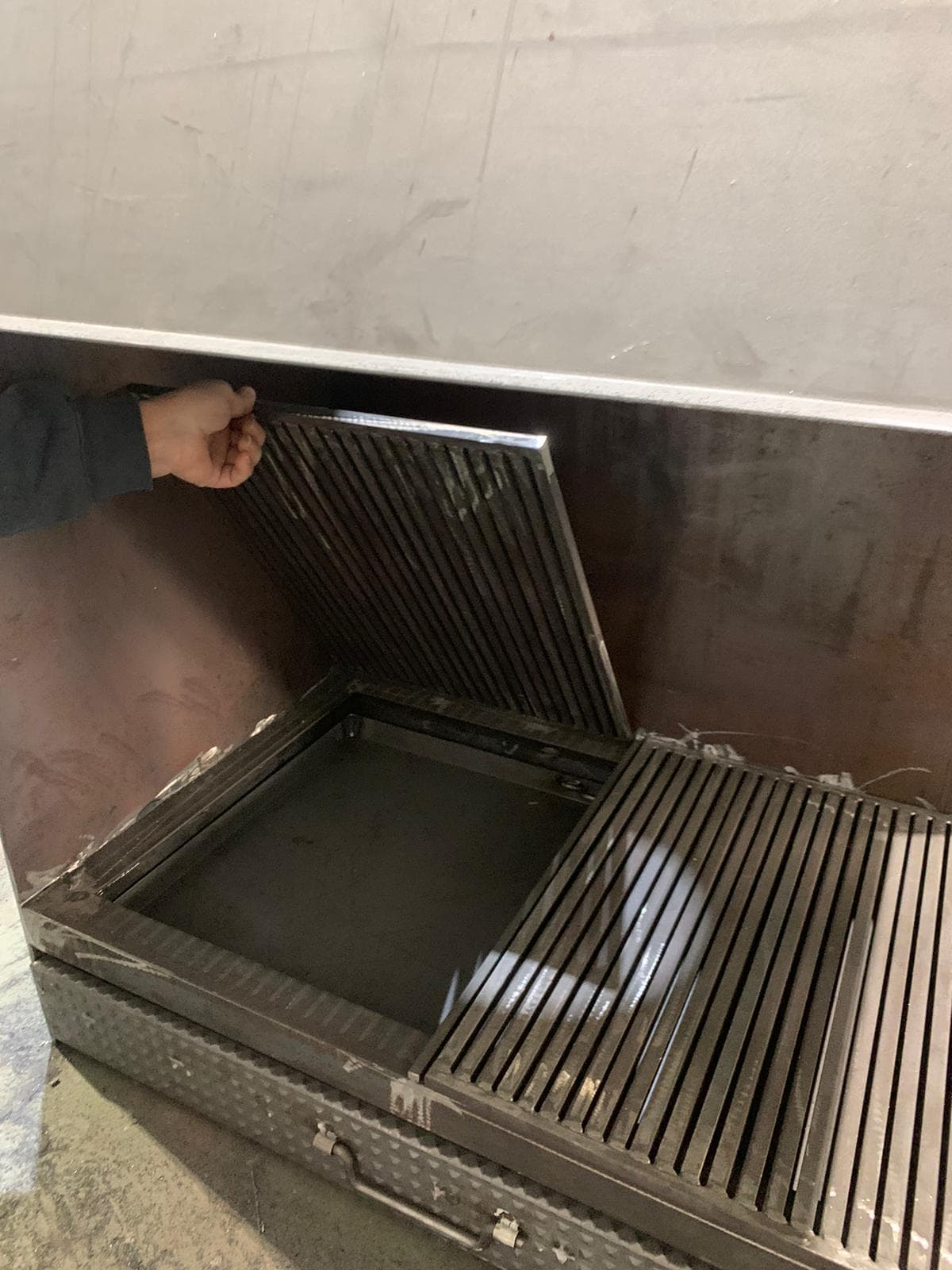
Detail of a bespoke cassette: the grate lifts up to empty the ash.
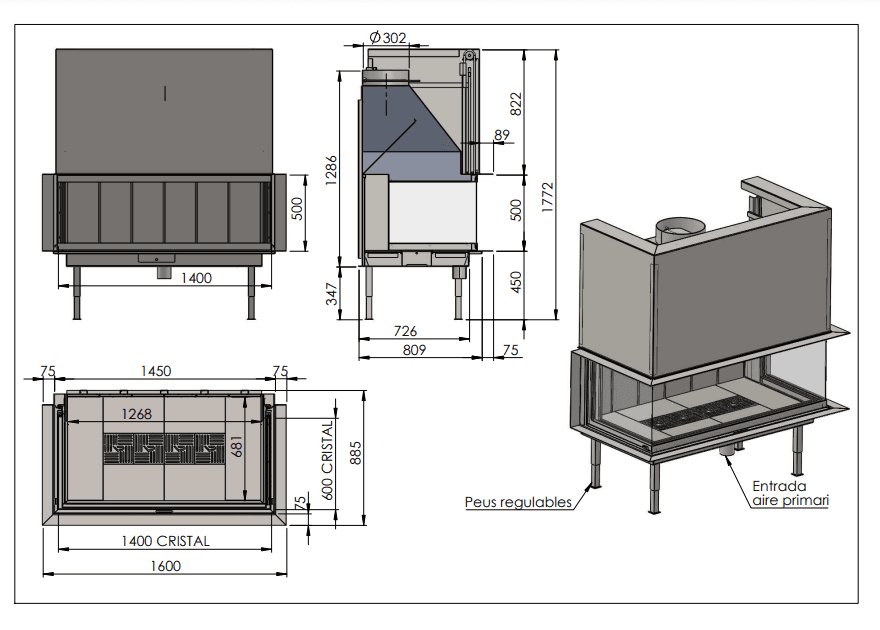
Every piece is drawn first with its measurements: glass, front, air inlet and adjustable feet.
Styles
The same technique allows very different styles. What defines the character of a wood-burning fireplace for the living room is its format, its finish and how it fits in with the rest of the house.
Natural stone, exposed brick and a generous hearth. A rustic wood-burning fireplace can be closed and efficient without losing that feel, for example with a guillotine door and a frame clad in natural stone.
A masonry hearth with its brass or iron front and a rendered hood. If you already have a classic fireplace, you can keep the front and close the hearth with a cassette or a glass door.
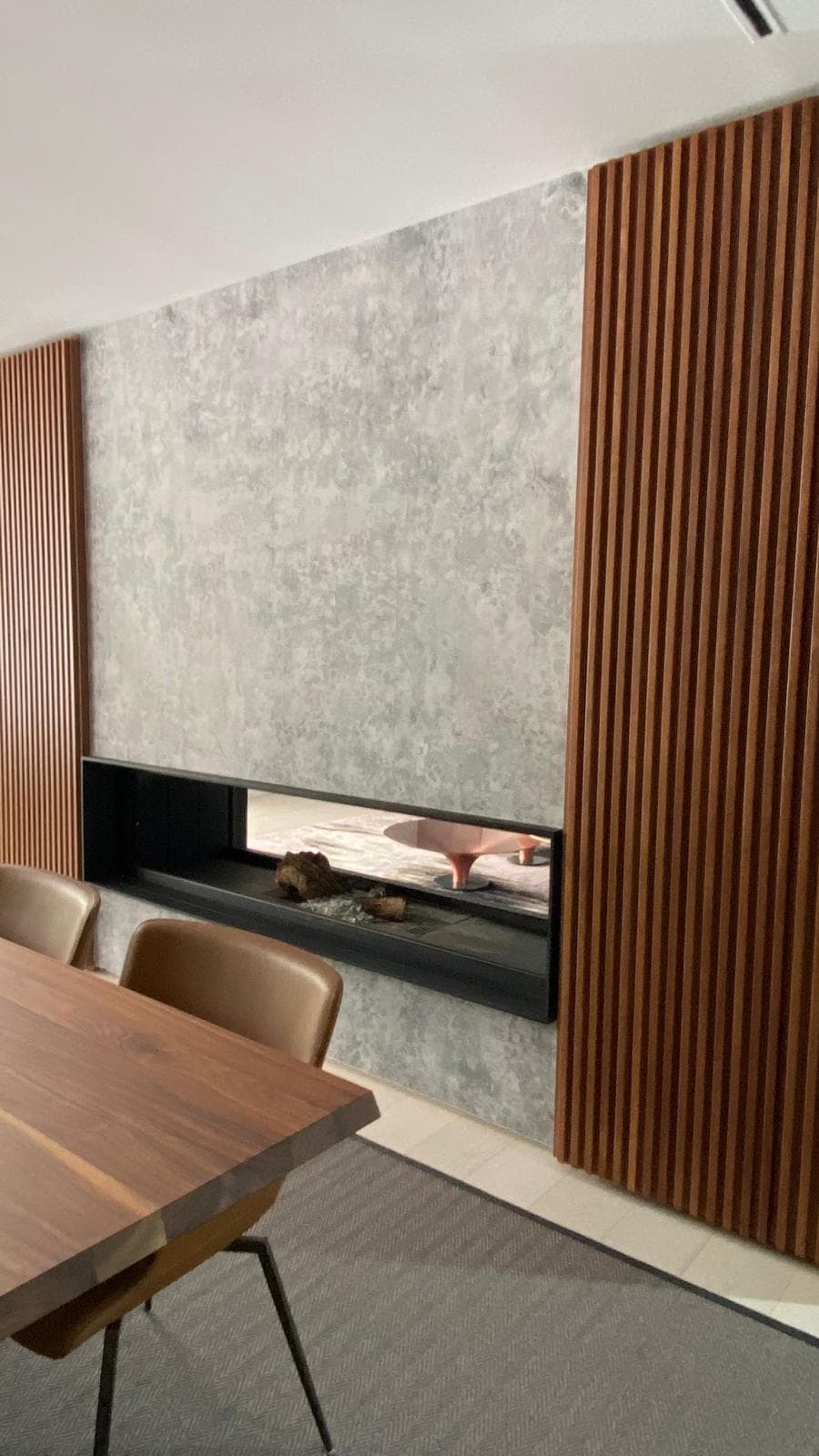
See-through or three-sided formats, suspended fireplaces, frameless flat fronts and the fire at eye level. There is more in our article on modern wood-burning fireplaces (in Spanish).
Restoration
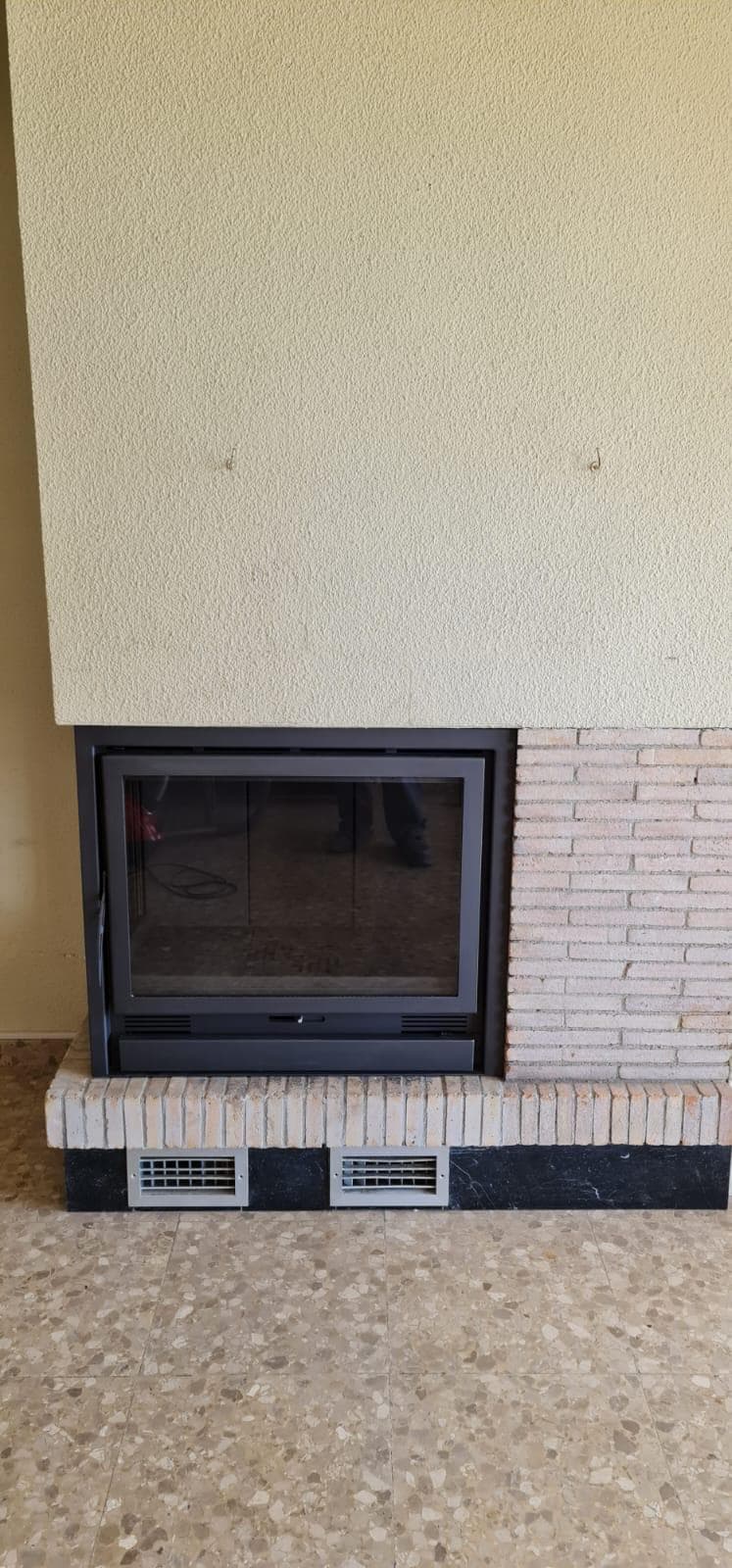
Many homes have an open fireplace that is hardly ever lit because it gives off little heat. There is no need to knock it down: it can be restored and turned into an efficient closed fireplace. These are the routes we have taken in real projects:
Another option is to place a stove inside the opening; we explain it on our wood-burning stoves page (in Spanish).
Portfolio
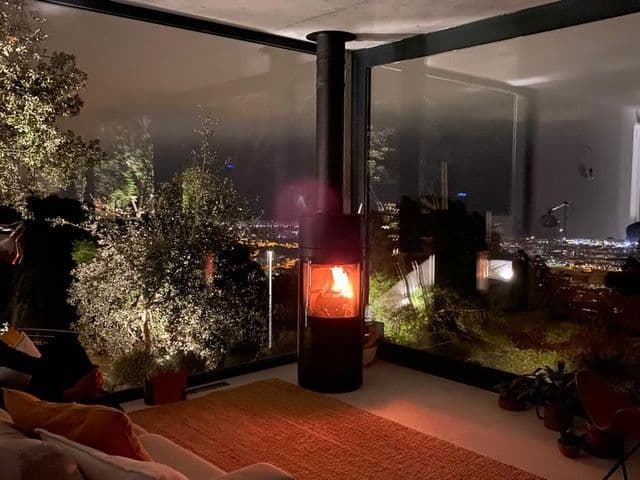
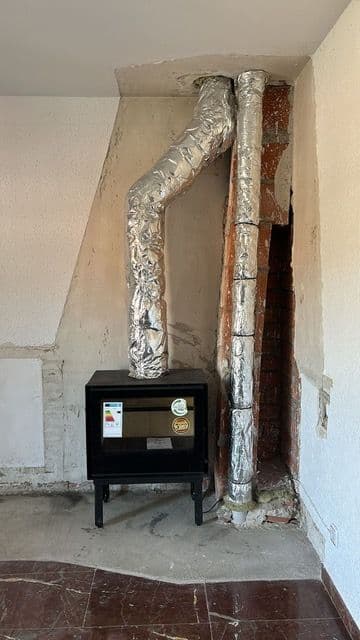
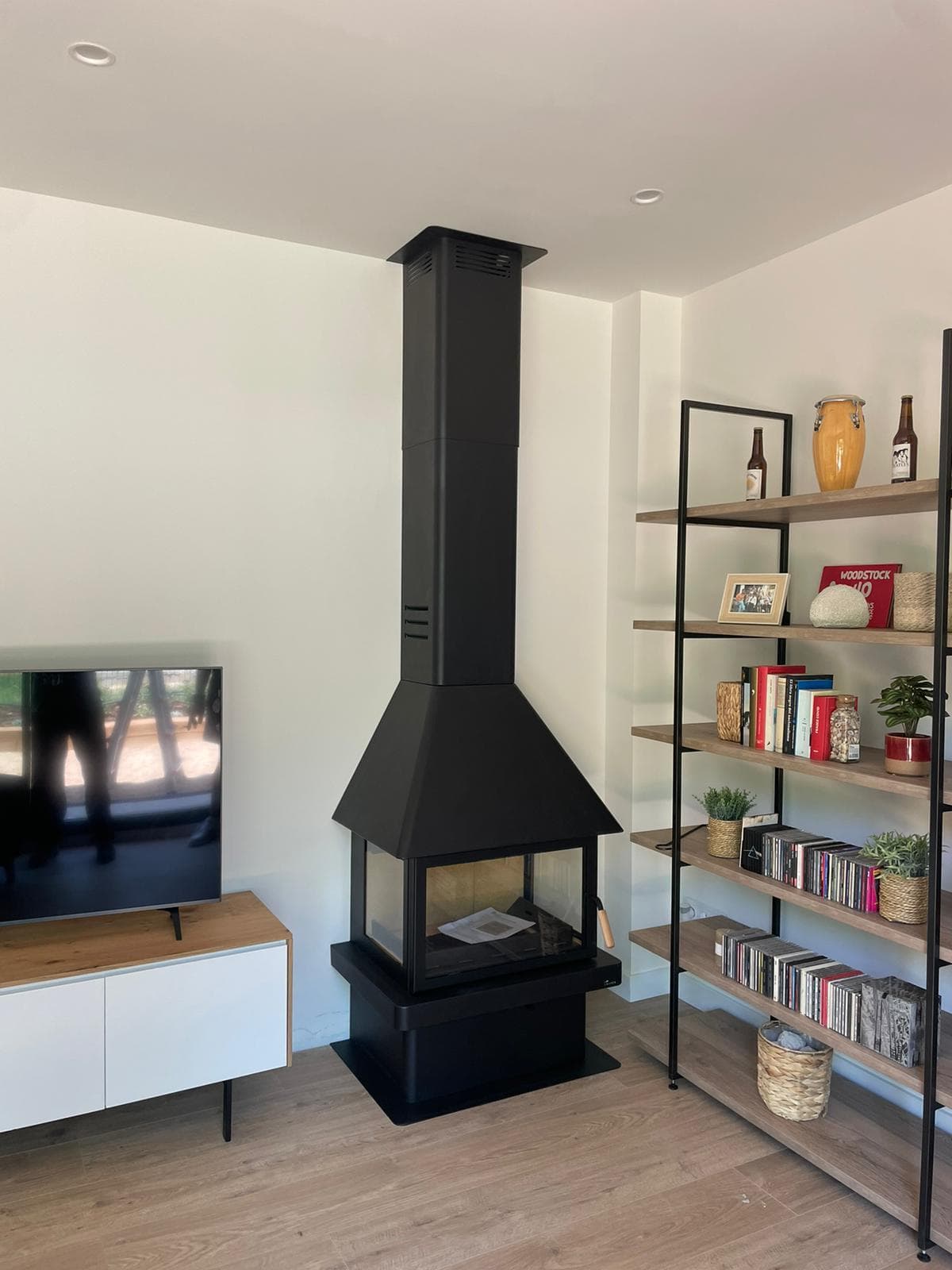
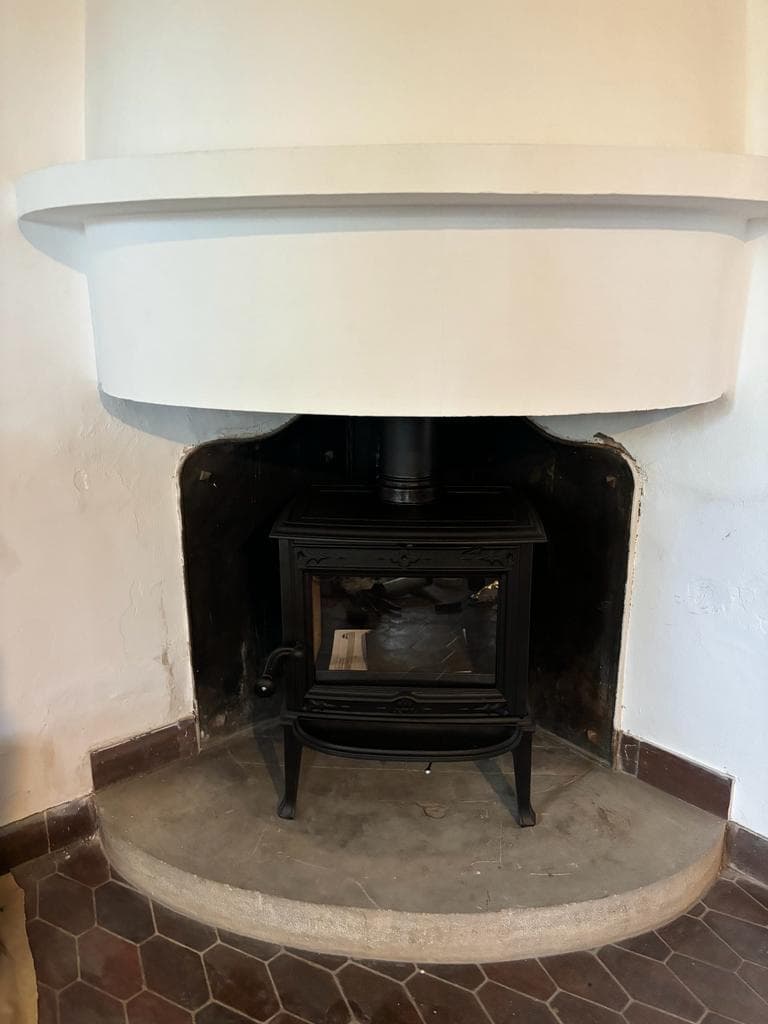
A selection of wood-burning fireplaces, cassettes and stoves we have designed and installed. Each project has its own page with more photos.
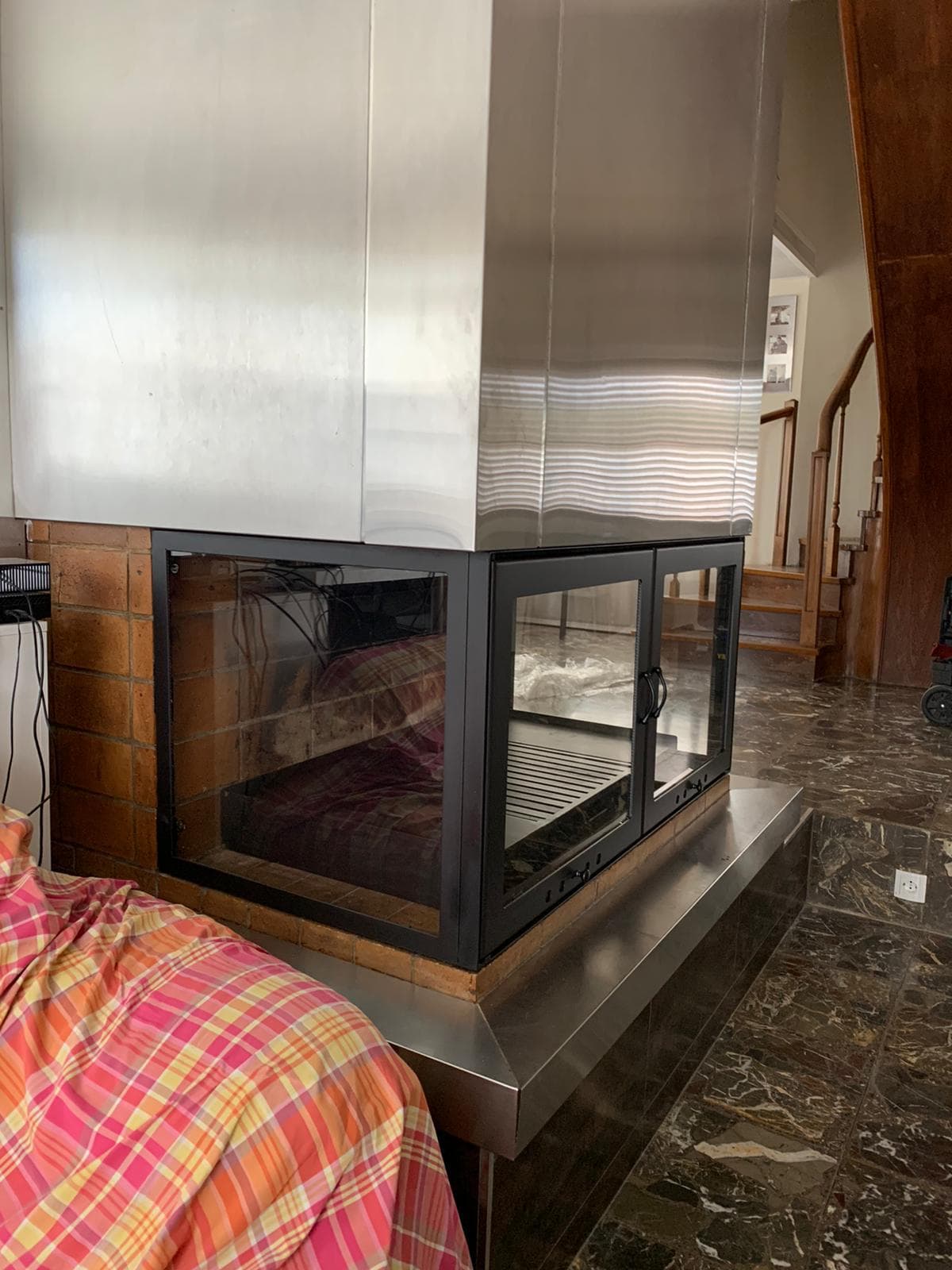 Made to measure
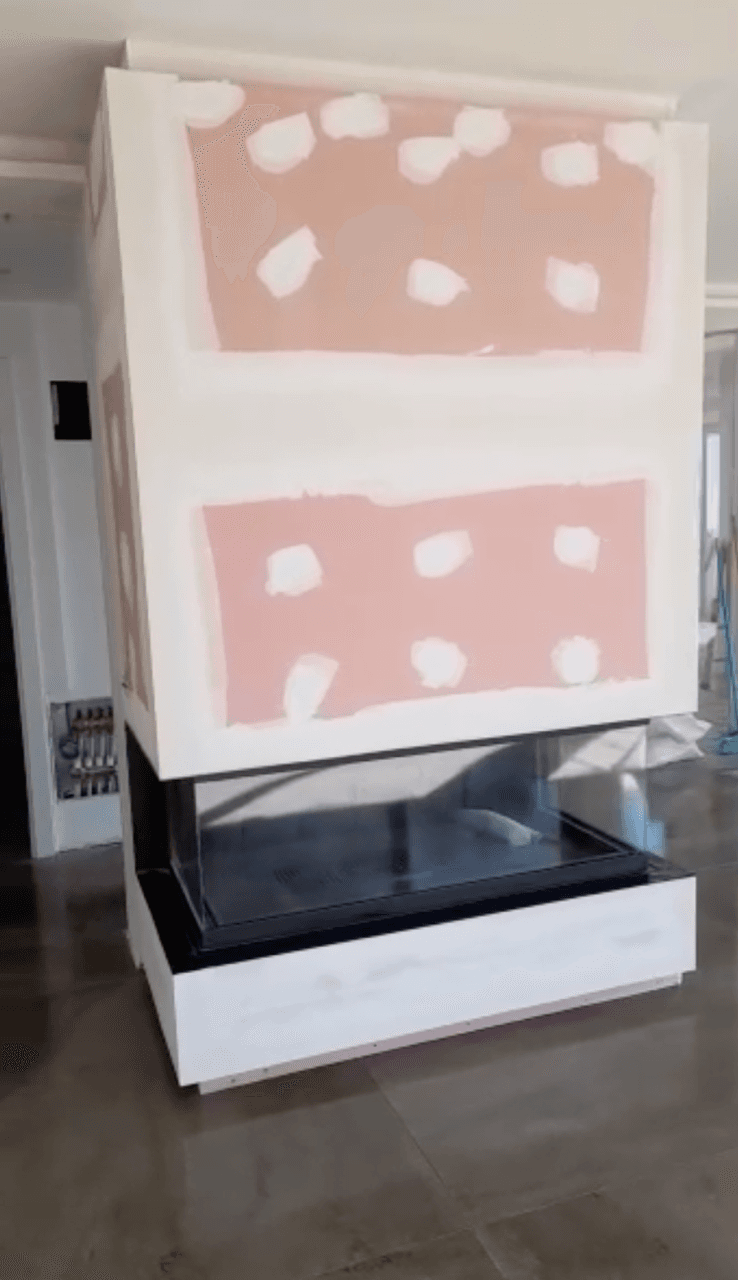 Made to measure
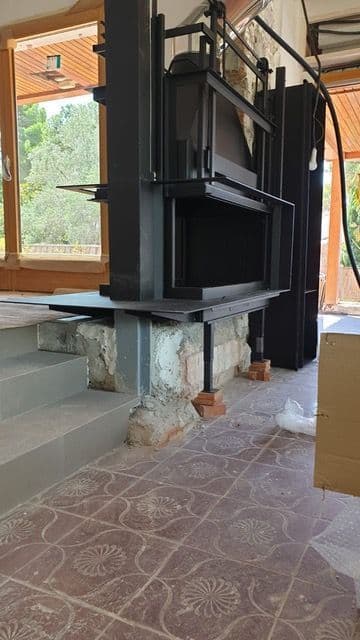 Made to measure
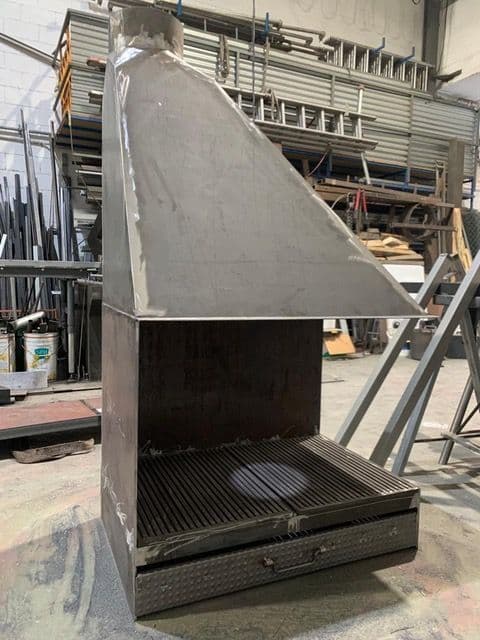 Made to measure
Installation
A wood-burning fireplace works only as well as its draught. Before fitting it we study the flue, the air supply and the structure, and our certified installers fit it in line with current regulations.
Smoke needs a clear route to the roof, with the right cross-section and height for a good draught. In masonry fireplaces the flue is hidden in a hood or built into the wall; when the route requires it, fan-assisted smoke extraction can be used, as in the see-through fireplace in the video above.
A closed fireplace controls the air that enters the combustion, but the room has to be able to supply it. In very airtight houses an outside air inlet must be planned so the fire is not starved and smoke does not blow back into the room.
Nearby combustible materials, such as beams, furniture or wooden cladding, must be kept at the distance specified by the manufacturer or protected with insulation. The floor in front of the opening is protected from embers with stone or another non-combustible material.
A masonry hearth, a stone-clad cassette or a three-sided fireplace is very heavy. We check where the piece will bear and how the load is spread before work begins.
We take care of the whole process, in four stages.
We look at the space, agree with you on the type of fireplace, format and finish, and work out where the smoke will go.
We make the bespoke pieces and organise logistics, permits and the work schedule.
Our certified installers fit the hearth, the flue and the enclosures in line with current regulations.
We complete the finish and leave the fireplace ready: all you have to do is put the logs in and light the fire.
Maintenance
Burning wood produces soot and creosote, a residue that sticks to the inside of the flue. If it builds up, it reduces the draught and can even catch fire inside the chimney. That is why the flue must be swept regularly, and more often the more the fireplace is used.
What helps most day to day is burning dry wood: damp wood burns badly, makes more smoke and dirties the flue and the glass more. Remove the ash when it builds up and, if the fireplace is closed, check that the door seals close properly.
There is more detail in our guide how to clean your fireplace and in the answer on how to prevent creosote and soot build-up, both in Spanish.
Fireplace or stove
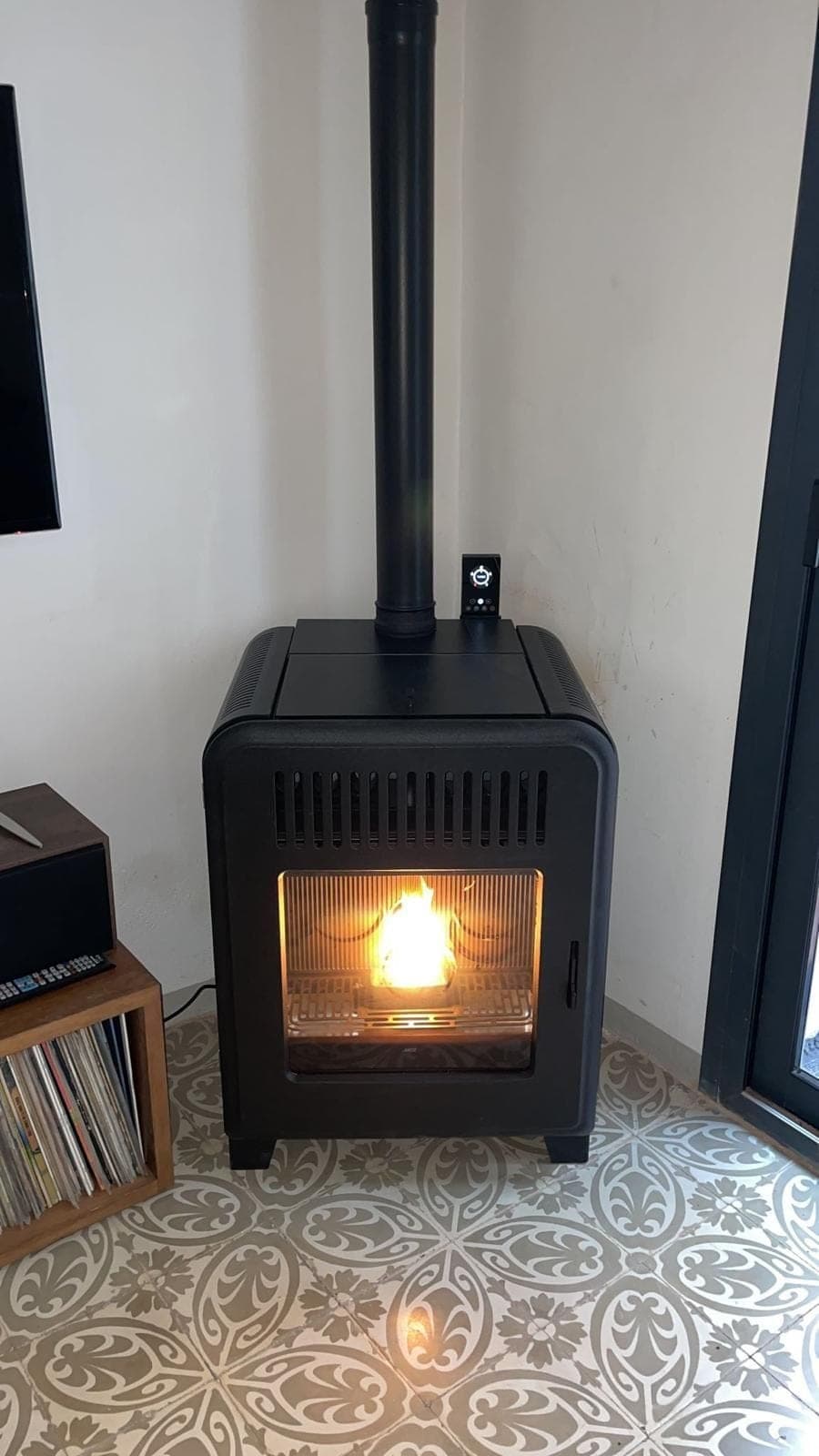
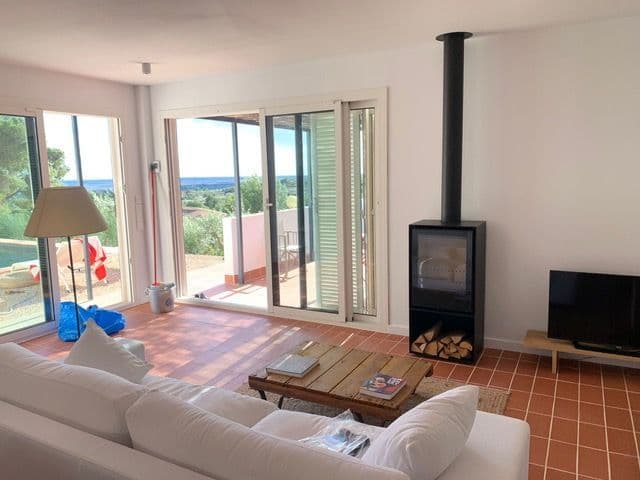
A wood-burning fireplace is part of the architecture: a masonry hearth or a built-in cassette, with the flue hidden in a hood or in the wall. A wood-burning stove is a freestanding metal appliance, in steel or cast iron, placed in the room with the flue usually on show.
A stove needs less building work and can even go inside an old fireplace; a fireplace allows bespoke pieces and formats a stove does not have. We compare them in more detail on our wood-burning stoves page, in Spanish, and you can see a stove fitted inside a fireplace.
Quote
There is no single price: every wood-burning fireplace is designed for a specific space. These are the factors that affect the quote the most:
We prepare a no-obligation quote based on your space and what you are looking for; our team will get in touch within the next few days.
A well-designed wood-burning fireplace heats the room, anchors the living room and becomes the place where the whole family ends up gathering. We design it with you, make it to measure and install it.
Ask for a no-obligation quote or come and see us at the showroom.
Frequently asked questions
The questions we are asked most before choosing, installing or upgrading a wood-burning fireplace.
An open fireplace shows the fire without glass, but makes little use of the heat. A closed one shuts the hearth with a door and glass and controls the air, so it heats much more. A cassette is a closed metal box fitted into an opening, often in an old fireplace. A stove is a freestanding steel or cast iron appliance, with the flue usually on show.
Much less. In an open fireplace the draught is excessive: too much cold air comes in and the gases leave so quickly that they give off hardly any heat to the room. In a closed one the air is regulated, the gases stay longer in the chamber and combustion is more complete, so the same wood gives considerably more heat. The exact figure for each model is on its technical data sheet.
It depends on the floor area and ceiling height, how well the house is insulated, whether the living room opens onto other rooms and whether the fireplace will be the main heating or a back-up. An oversized fireplace runs starved of air and gets dirtier. That is why we work out the output in the preliminary survey, using each model's technical data sheet.
It is a wood-burning fireplace with a water tank or back boiler. The fire heats that water, which feeds the radiators throughout the house and the domestic hot water. It can be combined with gas, heating oil, solar, geothermal energy or pellets, and with radiators, underfloor heating or convectors. How much it saves depends on the house and how it is used, and we study that for each project.
Yes, if it is properly installed and maintained. Safety depends on the draught and the flue, the clearances to combustible materials, protecting the floor in front of the opening and sweeping regularly so creosote does not build up. A closed fireplace also stops sparks jumping into the room. Our installers are certified and follow current regulations.
It depends on the fireplace's output, the hours of use, the type of wood and its moisture content, and whether it is open or closed: a closed one needs considerably less wood to give the same heat, and well-seasoned wood goes further. There is a step-by-step method in how to calculate the wood needed for a season, in Spanish.
Yes. There are two common ways: fit a cassette into the opening and finish the front with new plasterboard, or install a bespoke enclosure with a glass door and draught regulator. Either way you keep the view of the fire and gain efficiency. First we check the flue and the condition of the hearth to choose the solution.
Yes. A disused wood-burning fireplace can be converted into an open gas fireplace using its vertical flue, as we did with this old brick fireplace. First the condition of the hearth and flue must be checked and the gas supply confirmed. There is more information on our gas fireplaces page.
In many flats it is possible, but it depends on the smoke being able to reach the roof, on what the building's rules and the owners' association allow, and on local by-laws. Each case is studied before quoting.
Full answer in Spanish: regulations for installing wood-burning fireplaces
No. Burning wood produces smoke and gases that must always be taken outside through a flue with enough draught. If there is no way to fit a flue in your home, the alternatives are bioethanol or electric fireplaces, which do not need one.
Hardwoods such as holm oak and oak burn more slowly and leave long-lasting embers; pine catches quickly but burns away sooner and, if it is not dry, dirties the flue more. In every case, what matters most is that the wood is well seasoned.
It can, if the house is single-storey and open-plan, the stove has the right output and the heat can circulate. In houses with many rooms or several floors you usually need a fan, ducted warm air or a combination with another system.
Yes, it is one of the most common ways to make use of an open fireplace. The cassette is fitted or the stove is placed inside the opening and connected to the flue, which must be checked first and often relined.
It depends mainly on how much it is used and on the wood: a fireplace lit every day in winter needs more cleaning than one used occasionally, and damp wood dirties the flue far more. It is best to have it checked before each season.
Showroom
If you are thinking of buying a wood-burning fireplace, seeing it in person helps you decide on the format, size and finish. We will go through your project with you and, if you cannot come, there is a virtual tour on the showroom page. Please confirm your visit by phone.
We appreciate you confirming your visit to:
Service area
We work in Barcelona and across the province, the rest of Catalonia and Andorra.
Brands
Download the wood-burning catalogues of Jøtul, Rocal, Lacunza, Spartherm, Romotop, Austroflamm, Bodart & Gonay, JC Bordelet, Kratki, M Design, Traforart, Ferlux, Carbel, Kanuk, Supra, Atra, Llar Calor, Denia and MCZ in PDF.
Keep reading