More than 30 years in the trade
We are a family business devoted to fireplaces, stoves and heating and cooling. We know what works in a Barcelona flat and what works in a detached house.
Family business with more than 30 years of experience

Room-heating, ducted and inserts
We install pellet stoves with the flue, the power supply and the location all sorted. Automatic heat from a renewable fuel, controlled with a thermostat and remote just like an air conditioner.
Clima Difusión
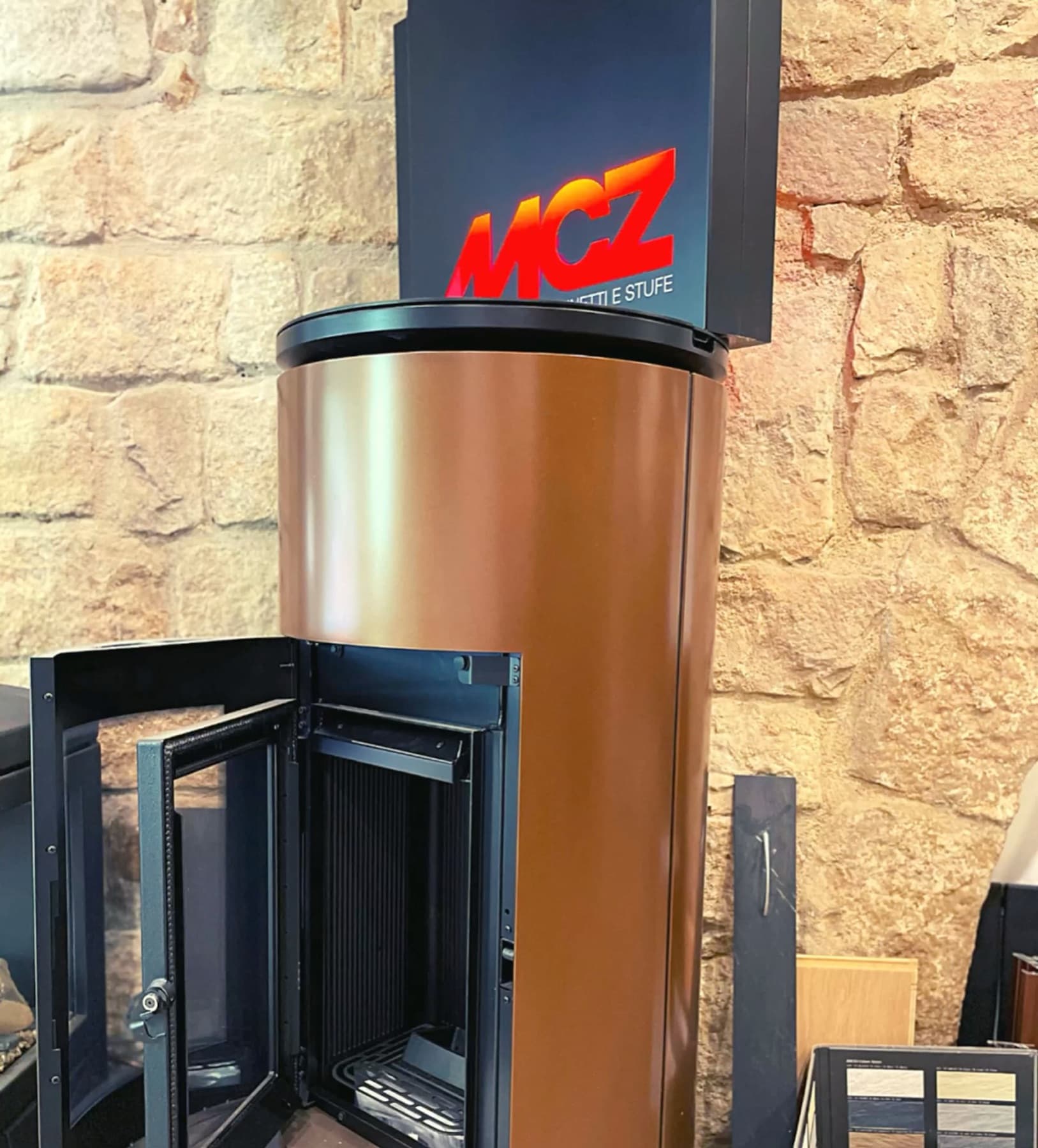
At Clima Difusión we specialise in selling and installing pellet stoves and fireplaces. We have been working with fireplaces and heating and cooling for more than 30 years, and we advise clients in Barcelona and across the province so they get the right appliance, the right output and the right spot for it.
Pellet stoves run on biomass, a renewable energy source. We work with pellet stoves and pellet insert cassettes from a wide range of brands, with the latest in design and technology.
We take care of the whole installation (the flue, the power socket and the location) and of the after-sales service, so the stove works properly from the very first time you light it.
Quick answer
A pellet stove burns biomass and is run with sensors, a thermostat and a remote, much like an air conditioner. It needs electricity and must not be unplugged until it has fully shut down. With a single fan it heats one or two rooms; with ducts, several. At Clima Difusión we install pellet stoves and pellet insert cassettes.
Updated: October 2026
| Fuel | Wood pellets: compressed biomass from a renewable source |
|---|---|
| Ignition | Automatic, with an electric igniter |
| Control | Temperature sensors, control panel and remote |
| Electricity | Required; never unplug the stove while it is lit |
| Reach | One or two rooms with one fan; several, with ducts |
| Flue | Always required; we work out the route in every home |
| Routine cleaning | Burn pot, ash pan and glass, with the stove cold |
| Formats | Room-heating stove, ducted stove or insert cassette |
| Where to see them | At our Barcelona showroom; Saturdays by appointment |
| Quote | No obligation, based on your home and the model |
Why Clima Difusión
We are a family business devoted to fireplaces, stoves and heating and cooling. We know what works in a Barcelona flat and what works in a detached house.
Family business with more than 30 years of experience
We handle the flue, the power supply and the location, and leave the stove up and running. You don't have to coordinate anyone else.
All our installers are certified and we follow current regulations
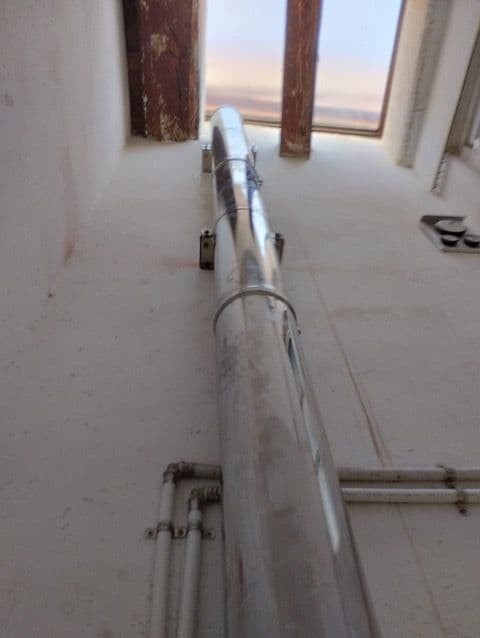
The flue is what decides whether a stove draws well or not. When needed, we build a new flue all the way up to the roof.
Our catalogue includes models that meet the EU ecodesign rules, which set minimum efficiency levels and emission limits.
A wide range of brands and the latest in design and technology, so you can choose by output, size and style.
Catalogues from MCZ, Lacunza, Ferlux, Eva Calòr and Red 365 Energy
We help you choose the output and format before you buy, and we stay with you afterwards with after-sales service and maintenance.
No-obligation quote
How it works
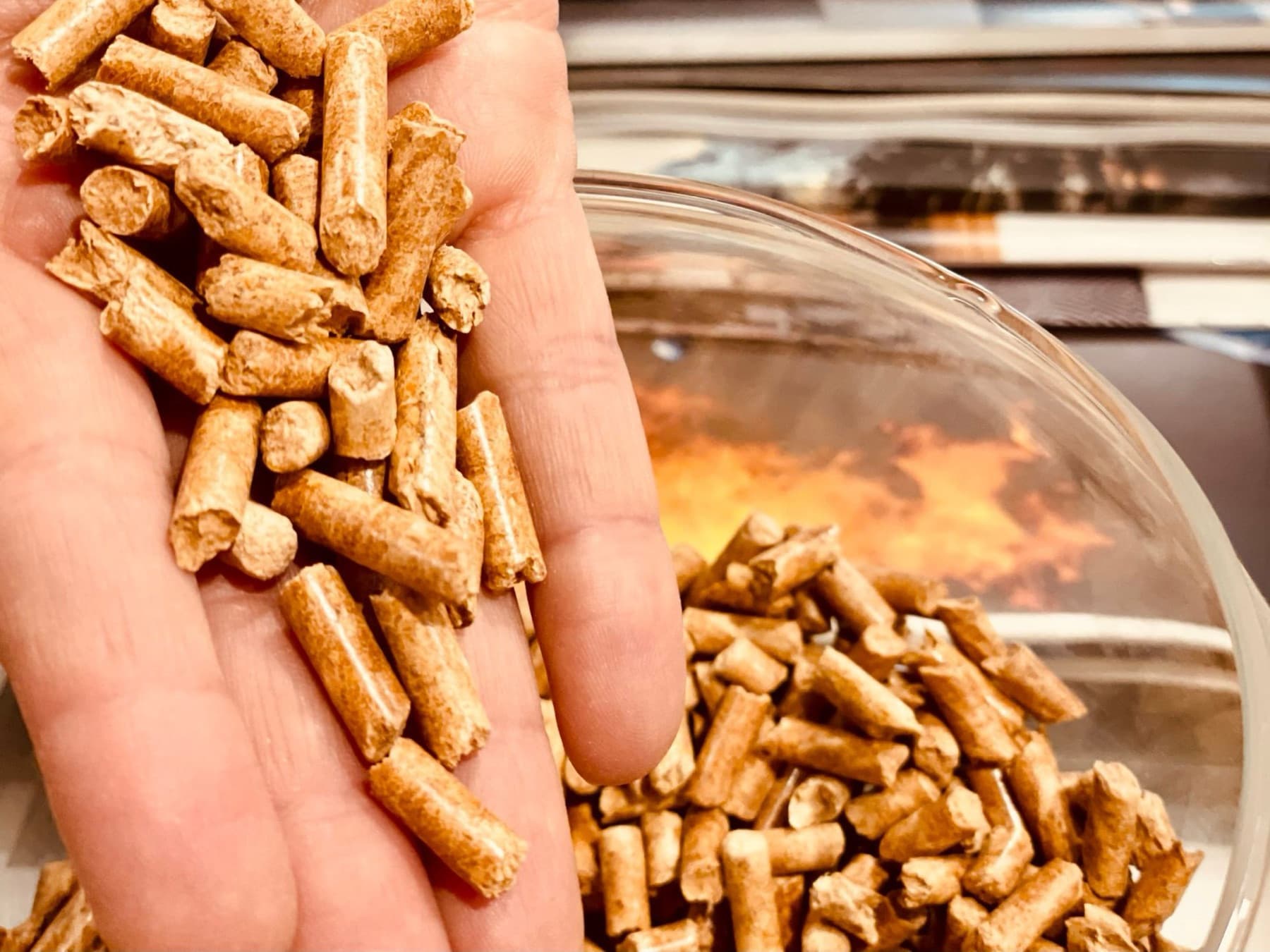
Pellet stoves and fireplaces run on biomass: small cylinders of compressed sawdust. Biomass is a group of renewable energy products and raw materials that come from organic matter formed through biological processes. It is a renewable energy of solar origin, which plants store through photosynthesis.
The pellets are kept in a hopper inside the stove itself. An auger feeds them little by little into the burn pot, where an electric igniter lights them, with no paper or firelighters. An extraction fan pushes the fumes out through the flue and a second fan spreads the warm air around the room.
The stove has several heat sensors: you set the temperature on the control panel or the remote and the stove adjusts the amount of pellets and the fan speed by itself. It works very much like an air conditioning unit, and many models also let you programme on and off times.
All pellet stoves, whether they heat air or water, work the same way at heart. Two things are worth knowing from day one: the glass is the part that gets hottest, and the stove is always switched off from the panel or the remote, never by cutting the power before it has fully stopped.
Types
They all burn the same fuel; what changes is how they spread the heat and where they are installed. Basic pellet stoves, with a single fan, heat one room or two adjoining ones; through a network of ducts, a single stove can heat several.
 Room-heating
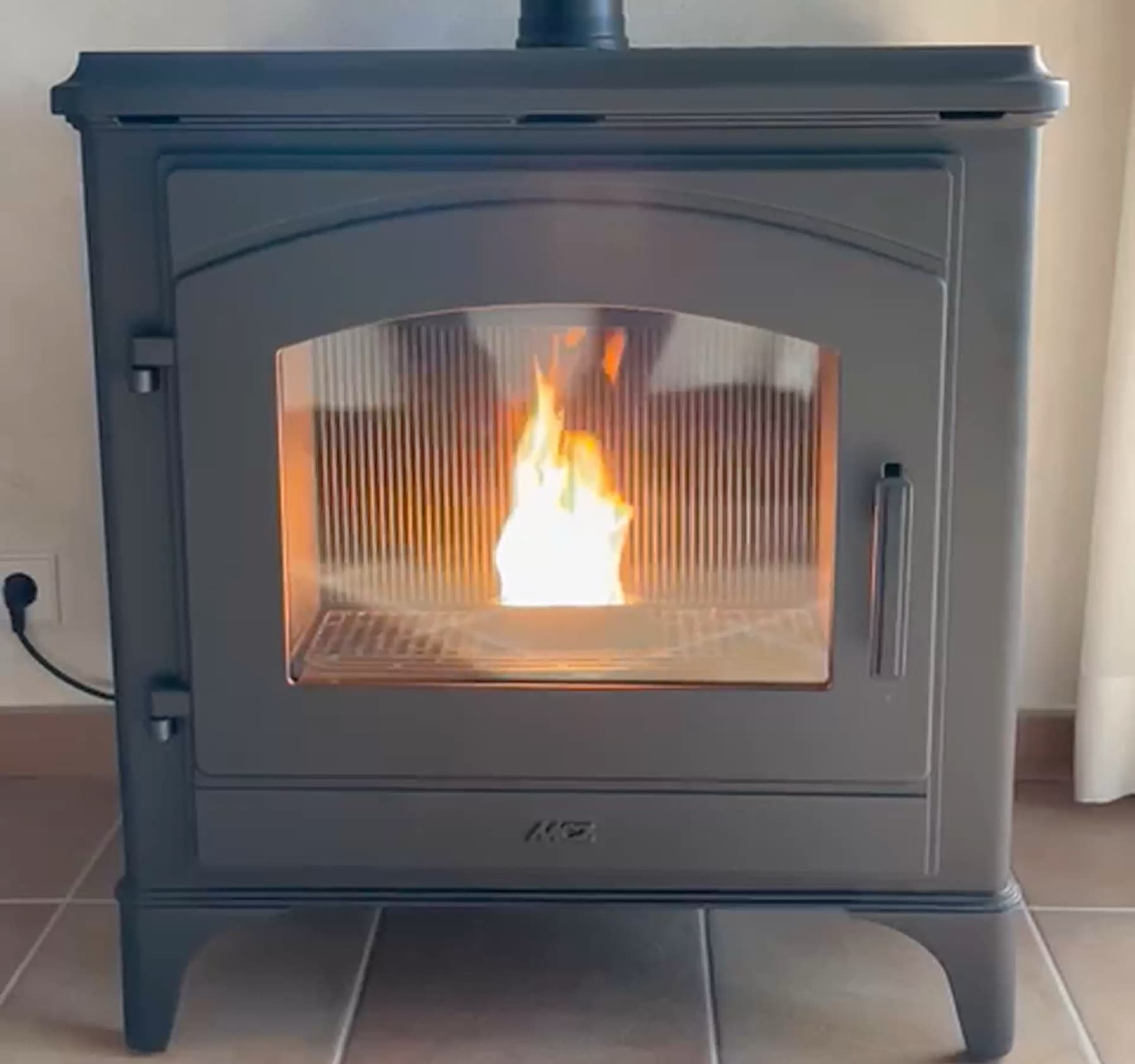
This is the most common pellet stove: a front fan blows warm air into the room, and before long the room is at the temperature you set.
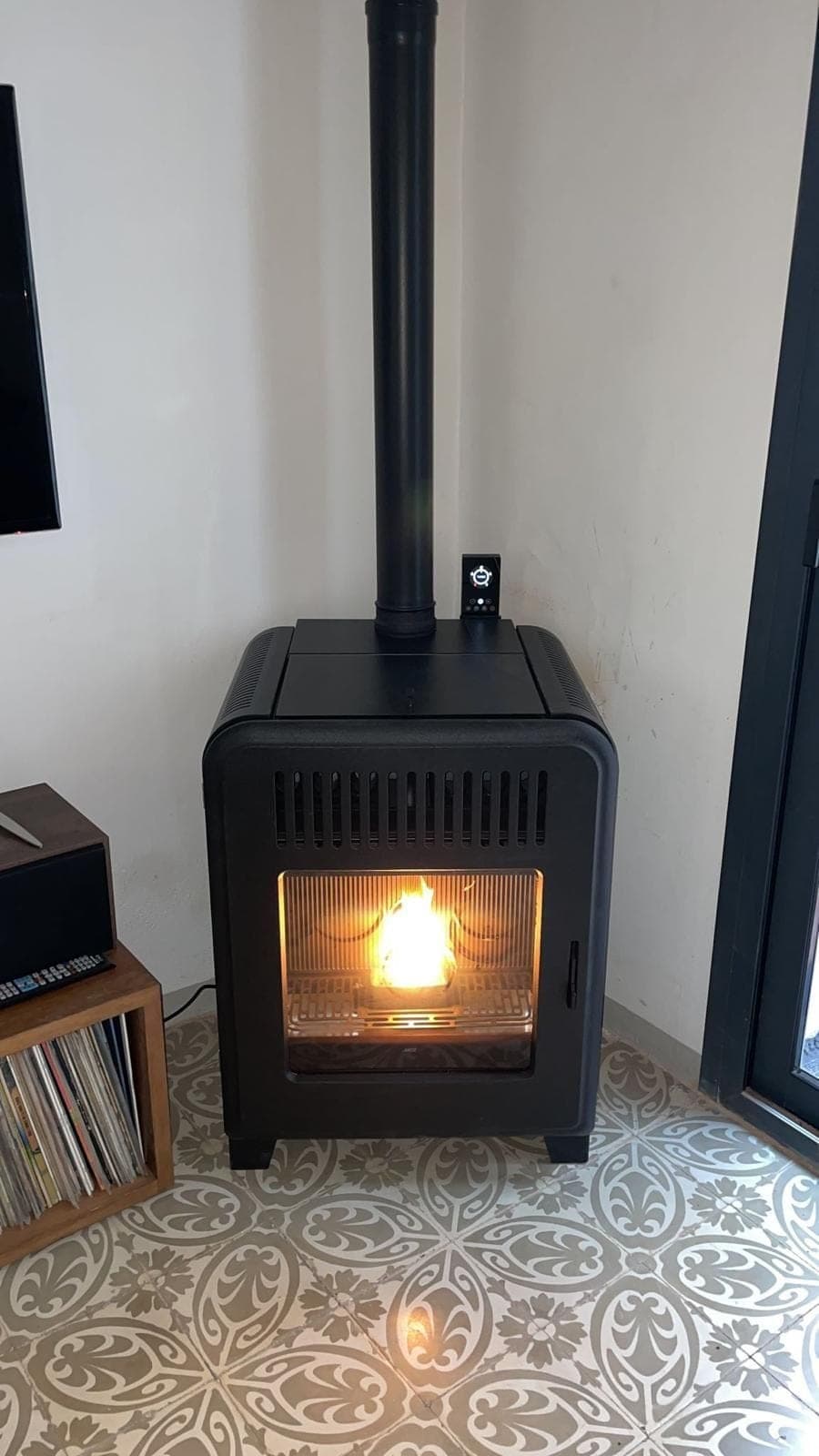
It is the easiest to install, as it only needs a flue and a nearby socket, and it suits living rooms, dining rooms and second homes. Many leave the flue pipe on show as part of the decor.
 Compact
A flat or a single room doesn't need a big appliance. Small pellet stoves have a lower output and a compact body, and fit into a corner or next to a piece of furniture.
What matters is matching the output to the floor area and the insulation: an oversized stove runs at minimum almost all the time, performs worse and dirties the burn pot and glass sooner.
| Feature | Room-heating | Ducted | Hydro stove (water) |
|---|---|---|---|
| What it heats | The room it stands in and, at most, the one next door | Several rooms at once, through ducts | The water in your radiators or underfloor heating |
| How it spreads the heat | Front fan into the room | Fans that push warm air through the ducts | Heat exchanger connected to the heating circuit |
| What installation involves | A flue and a power socket | The same, plus the duct route and the vents | The same, plus the connection to the water system |
| Where it usually fits | Living rooms, flats and second homes | Houses with rooms close together, ideally in new builds or renovations | Houses with radiators or underfloor heating |
| What you do | Load pellets and clean the burn pot, ash pan and glass | The same as a room-heating stove | The same as a room-heating stove |
More formats
Besides the room-heating stove, pellets solve two other very common situations: heating several rooms with a single appliance, and making use of an existing fireplace that hardly ever gets lit.
Through a network of ducts, pellet stoves can heat different rooms with a single appliance. Warm air comes out of the stove itself and through vents in the connected rooms.
Before choosing a ducted stove you need to work out where the ducts will run, how long they will be and how many rooms you want to heat. It is much easier to plan in a new build or as part of a renovation.
A pellet insert cassette fits into the opening of an existing fireplace or into new cladding and turns it into an automatic heat source, with a thermostat and remote. It is a good way to make use of an open fireplace that hardly ever gets lit.
It needs the same kind of flue and a power point; before suggesting one we check the condition of the existing flue. If you would rather stick with wood, we also close open fireplaces with cassettes: see our wood-burning fireplaces.
Which space
A pellet stove fits almost any home. What changes from one case to another is where the fumes go out and what needs checking before work starts.
| Space | What usually fits | Flue | What we check first |
|---|---|---|---|
| Flat | Room-heating stove, often a compact one | A flue to the outside is needed; if there isn't one, we look at whether a new one can be built | Possible flue route, building rules and a nearby socket |
| Detached house | Room-heating, ducted or hydro stove | Usually vertical, up to the roof | Location, floor area to heat and whether ducting makes sense |
| Second home | Programmable room-heating stove | Usually vertical, up to the roof | That it can be programmed so the house is warm when you arrive |
| Unused wood fireplace | Pellet insert cassette | Uses the existing flue, checked and adapted | Condition of the hearth and the flue |
A pellet stove cannot work without taking its fumes outside: it burns biomass and produces combustion fumes, so there are no ‘flueless’ models that can be installed safely. If your flat has no flue, the question is whether a new one can be built and where it could run, according to regulations and your building's rules. We look at that with you before talking about models.
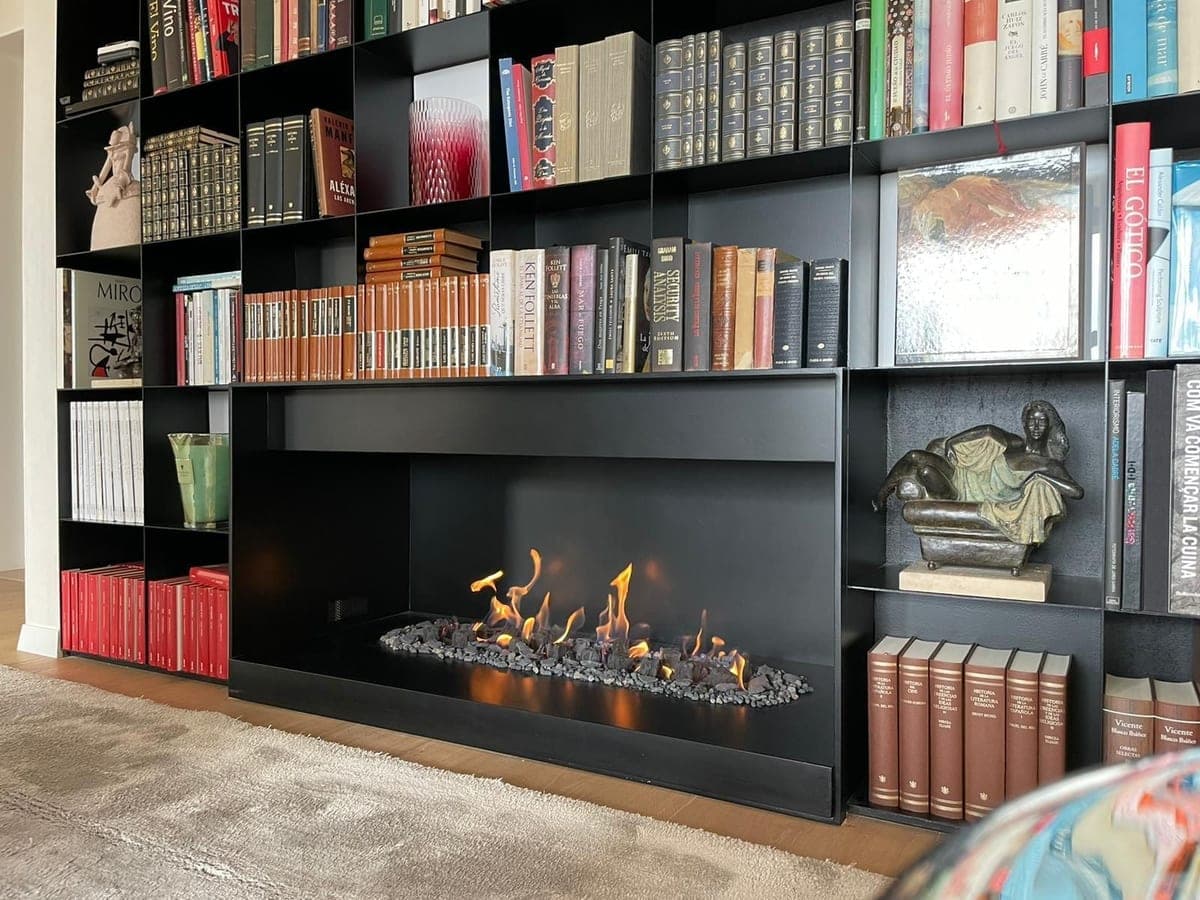
In the living room, the stove usually goes in a corner, next to a piece of furniture or with the vertical flue pipe on show, like in the projects on this page. Because it programmes and regulates itself, you can come home to a warm house without preparing firewood. If what you are really after is the look of the flame, compare it with our bioethanol fireplaces: they need no flue, but give off much less heat.
Portfolio
Some of the pellet stoves in our portfolio. Each one has its own page with more photos in the pellet portfolio.
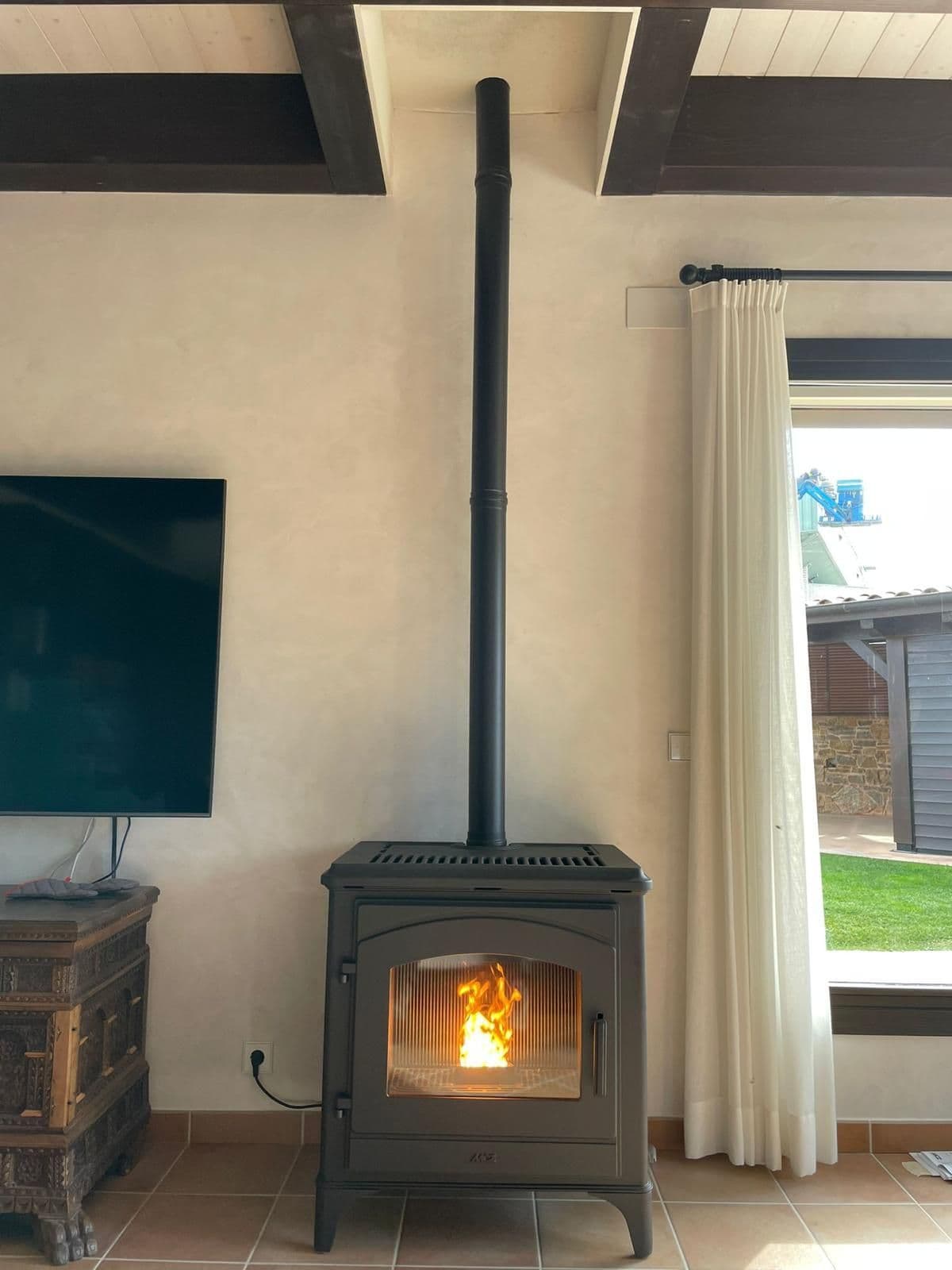
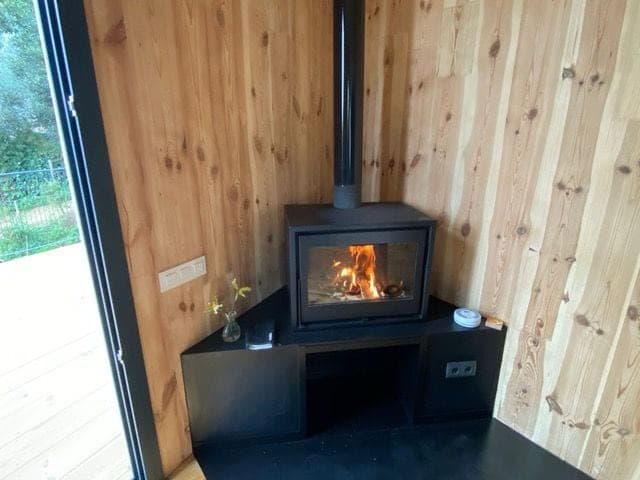
Black stove in a living room, with the flue pipe running vertically up to the wooden ceiling.
See the project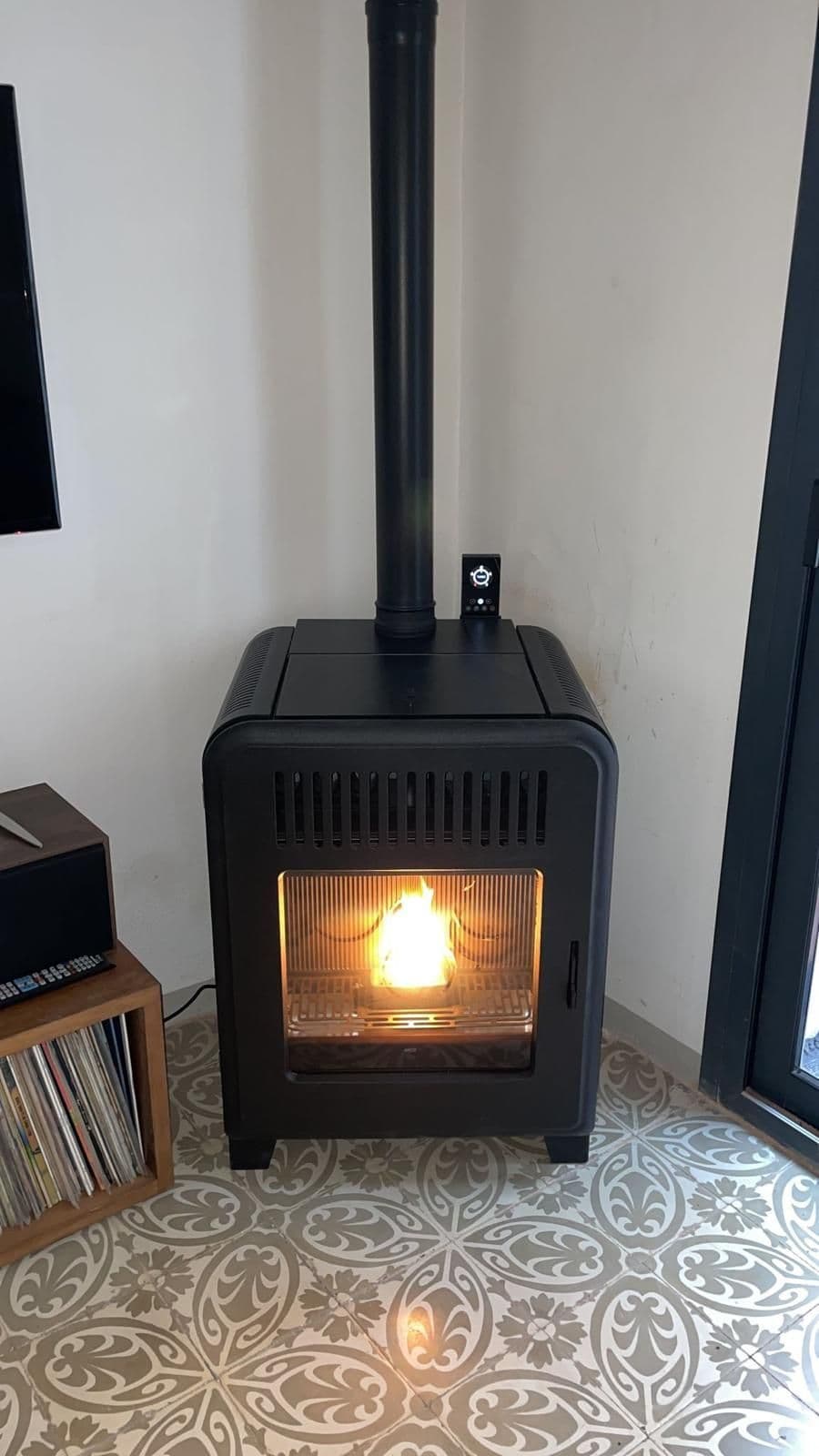
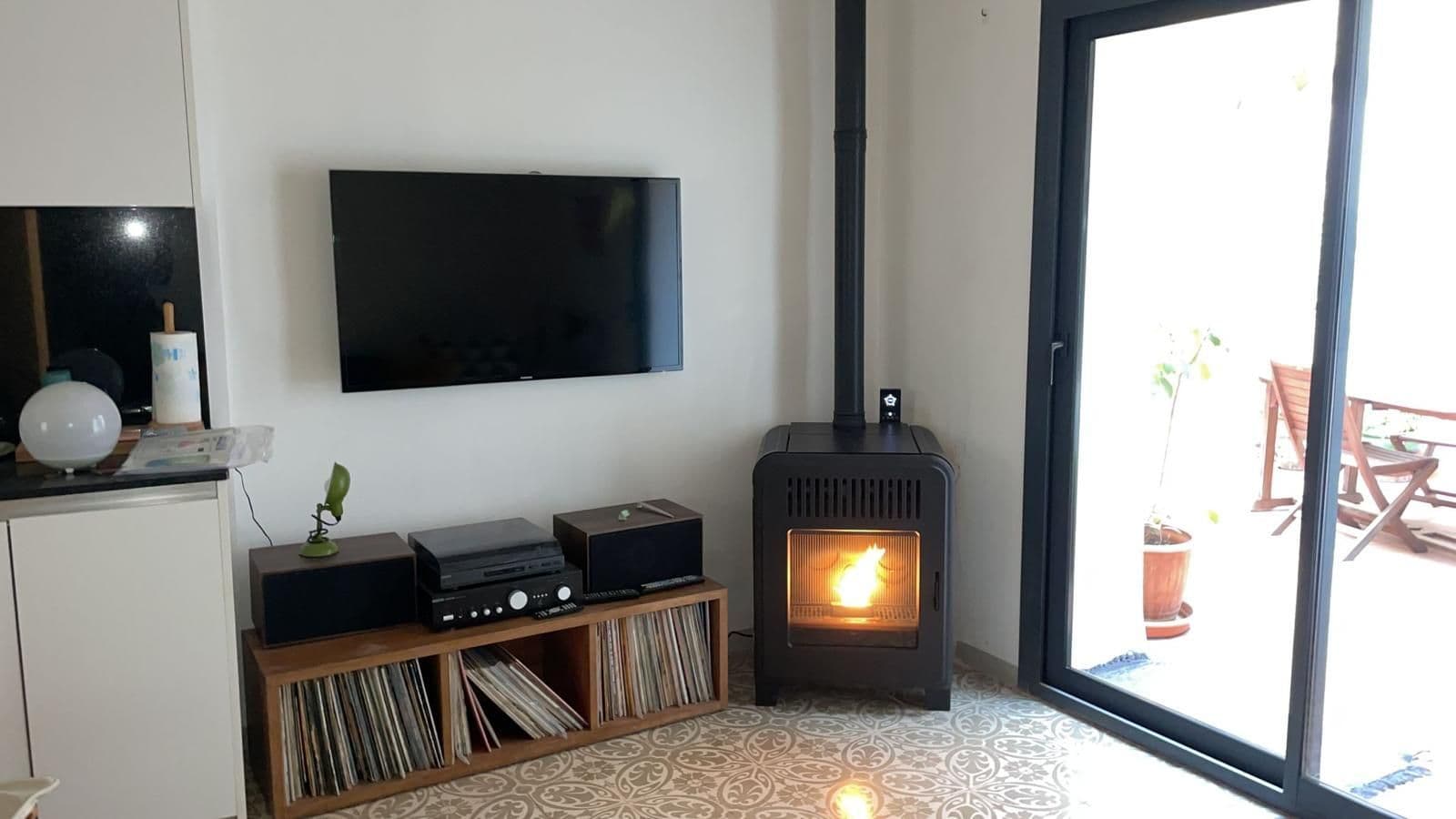
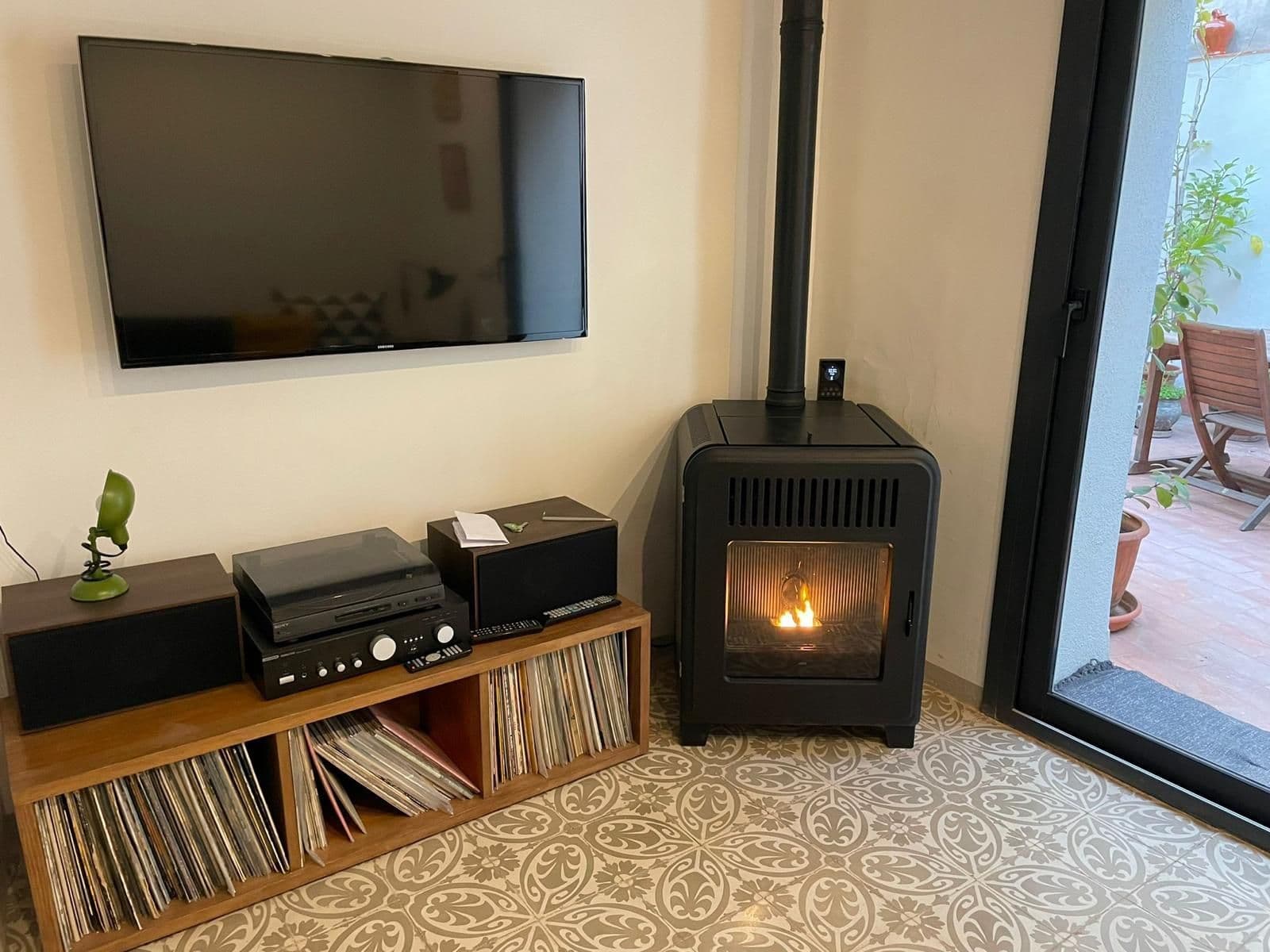
Compact stove in a living room that opens onto the terrace, next to the record cabinet.
See the project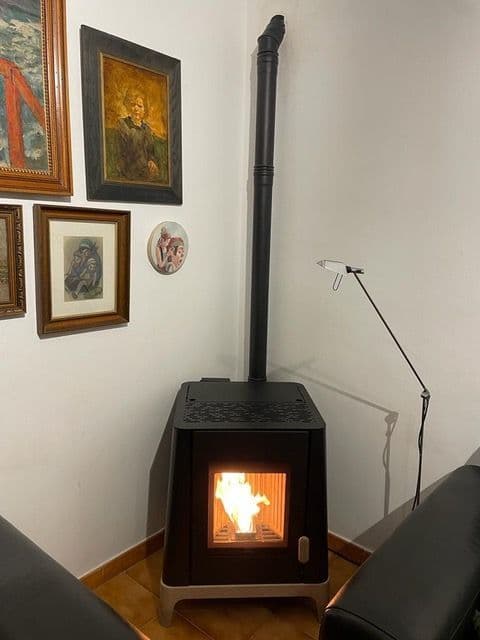
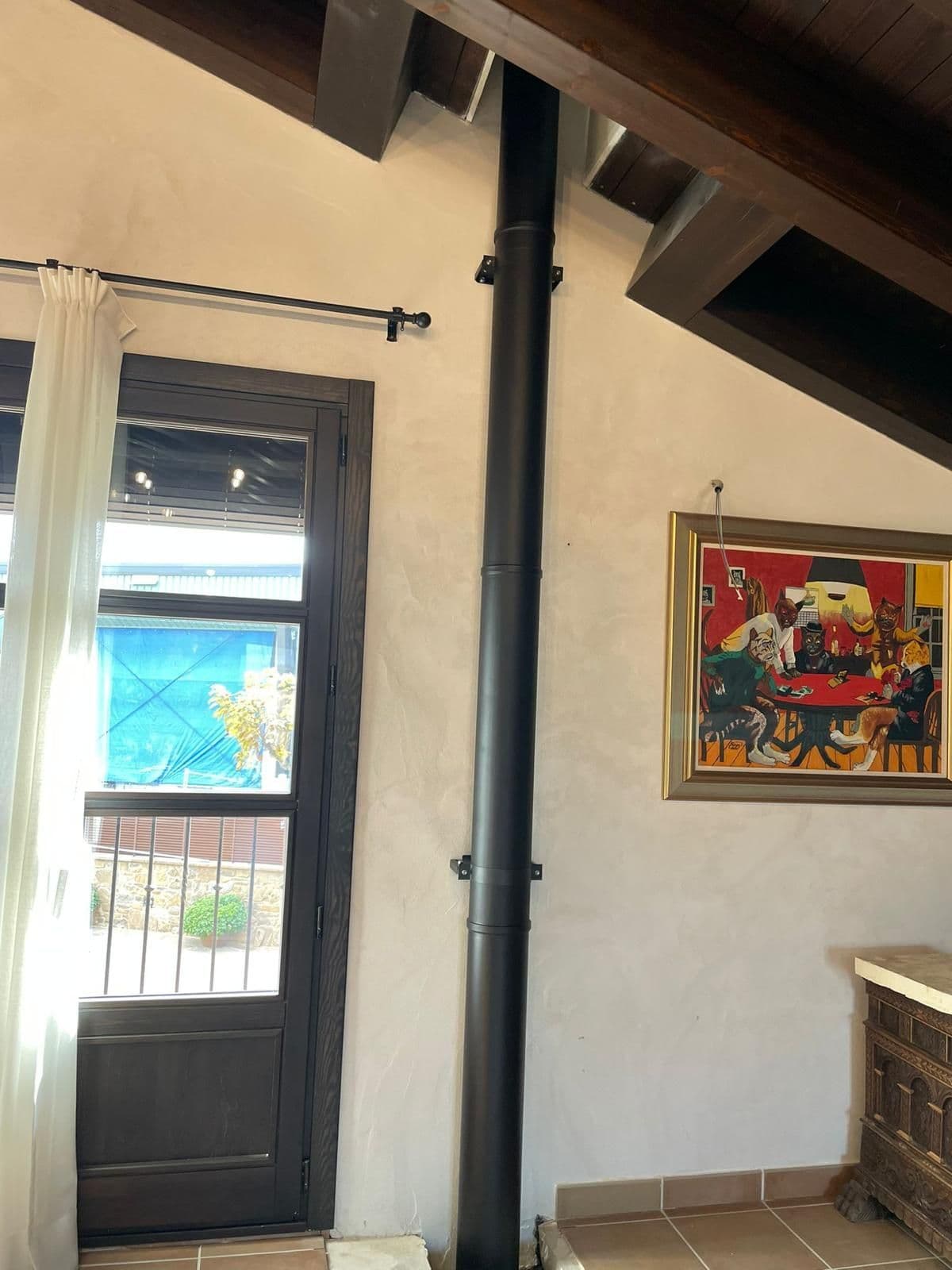
With a new flue up to the roof, made with double-insulated stainless steel pipe.
See the project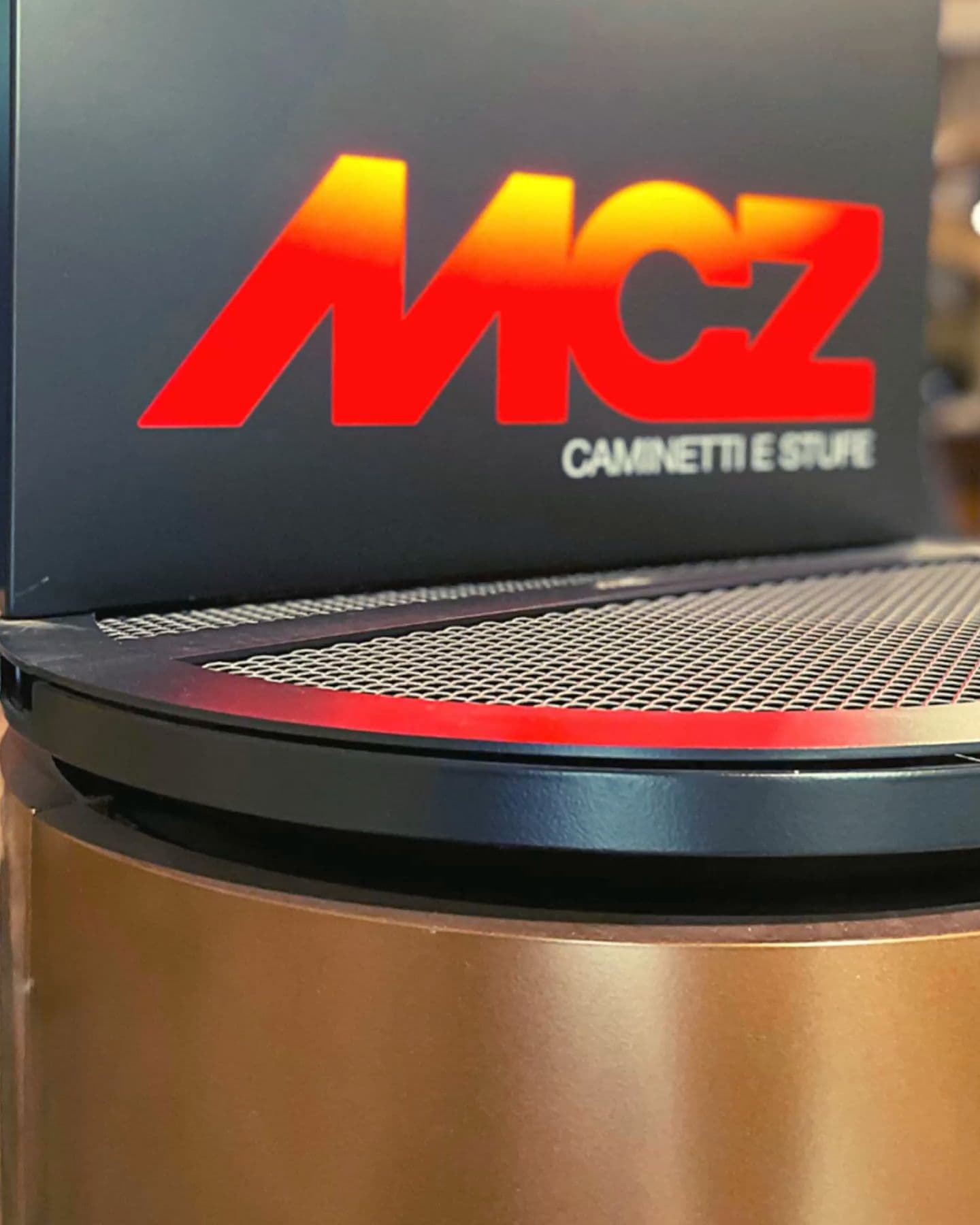
MCZ model with an Ecodesign certificate, the EU standard for the efficiency and emissions of heating appliances.
See the projectInstallation
A pellet stove is a combustion appliance with electronics: for it to work well and safely, the installation matters as much as the model. Before suggesting a stove we check four things.
Every pellet stove needs to vent its fumes outside through a suitable, sealed flue. We study the possible route: using an existing flue or building a new one. When needed, we take it up to the roof with double-insulated stainless steel pipe, as with this pellet stove.
The stove needs electricity for the igniter, the auger, the fans and the electronics. We make sure there is a socket nearby and explain why it must never be disconnected while it is lit.
We choose the output based on floor area, insulation and the rooms you want to heat, and find a spot from which the warm air can circulate well, keeping the distances to furniture and walls set by the manufacturer.
If you choose a ducted stove, we design the duct route and the position of the vents in each room before work begins.
We handle the whole process, in four stages.
We choose the type of stove, the output and the spot with you, and work out where the fumes will go out.
We take care of the appliance and materials, logistics, permits and the work schedule.
We fit the flue and the stove, connect it and check that everything works.
We leave the job finished. All you have to do is fill the hopper and choose the temperature.
After-sales
A pellet stove needs little maintenance, but not none. It produces very little ash, which is easy to remove; the key is doing it regularly so combustion stays clean and the glass doesn't blacken.
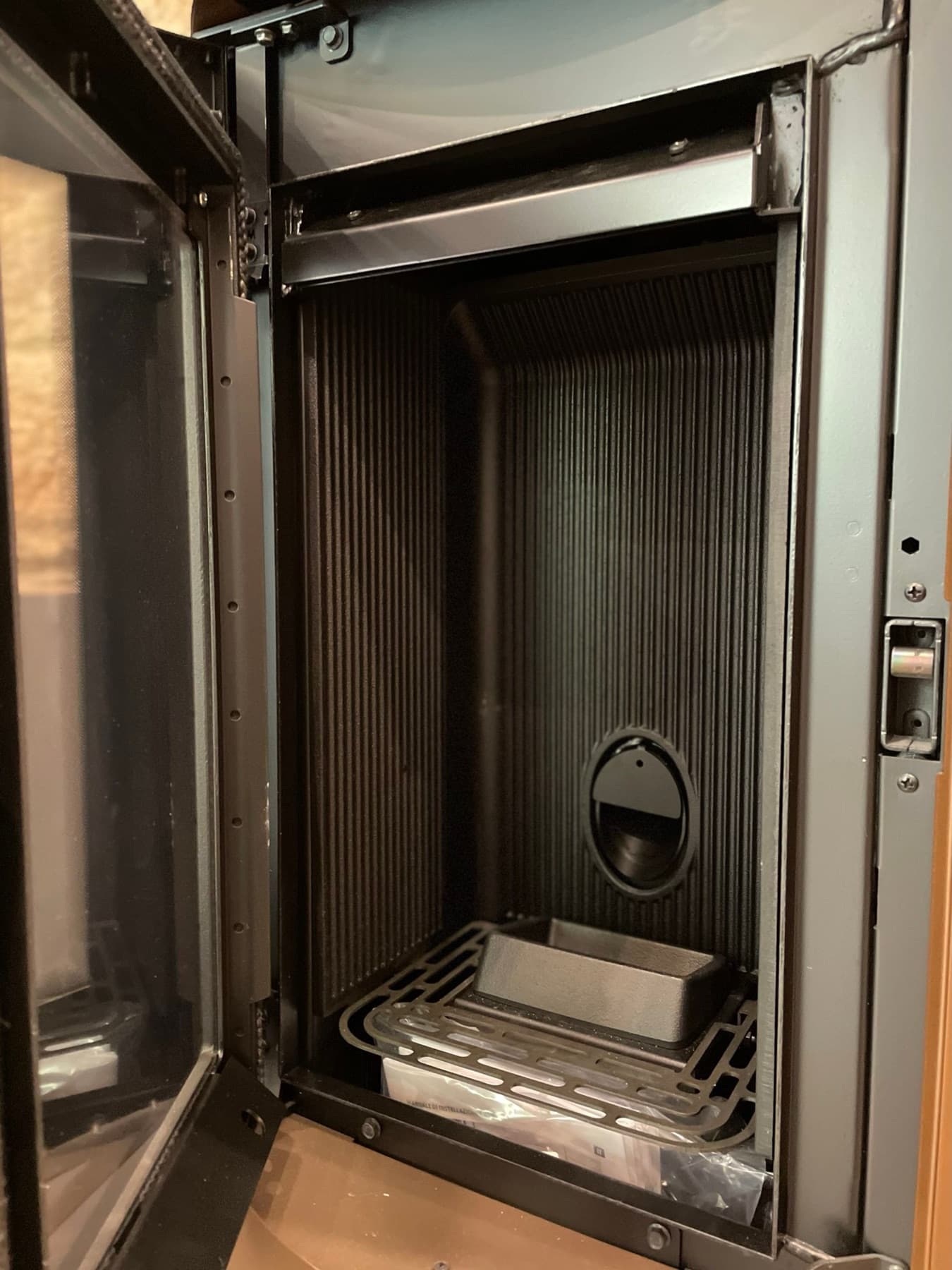
With the stove cold: empty and clean the burn pot, remove the ash from the ash pan and clean the glass. How often depends on how many hours you use it and on the pellet quality, and each model's manual tells you.
Certified quality pellets greatly reduce ash and build-up in the burn pot.
The technical service: cleaning the flue gas circuit and the extraction fan, checking seals, sensors and ignition, and inspecting the flue. We tell you how often it is advisable according to your stove's manufacturer and how much you use it.
If you also have a wood-burning fireplace at home, our guide on how to clean your fireplace may help.
Quote
There is no single price: the cost of an installed pellet stove depends above all on the appliance and on the flue. These are the factors that affect the quote most:
We prepare a no-obligation quote based on your home and what you need.
A well-chosen, well-installed pellet stove gives you programmable heat from a renewable fuel, with very little cleaning. We take care of everything: choosing the model and output, sorting out the flue and leaving it up and running.
Ask for your no-obligation quote and our team will get in touch within the next few days.
FAQ
A pellet stove is convenient and efficient, but it is normal to have questions before choosing one: how much it heats, what it needs to be installed or what happens in a power cut. Here we answer the questions we hear most.
An auger carries pellets from the hopper to the burn pot, where an electric igniter lights them. An extraction fan pushes the fumes out through the flue and another fan spreads the warm air. Several temperature sensors regulate the output: you set the temperature on the panel or with the remote and the stove adjusts itself, much like an air conditioner.
It depends on the type. A basic pellet stove with a single fan heats one room or two adjoining rooms. If you need to reach more rooms, a ducted stove sends warm air through ducts and heats several rooms with a single appliance. The output is chosen according to floor area, insulation and the layout of the house.
Because it needs power to shut down properly. When you press ‘off’, the extraction fan keeps running for a few minutes to burn the pellets left in the burn pot and push the fumes outside. If you cut the power before it has stopped, that cycle is interrupted and smoke can stay inside. Always switch it off from the panel or with the remote.
The auger and the fans stop, so the flame dies down gradually with the pellets left in the burn pot. What the stove does when power returns depends on the model: many run a cleaning or cooling cycle first and then light up again. Each stove's manual explains it, and we go through it with you when we install it.
It depends on the output it runs at, how many hours you use it and how well insulated the house is. Each model's data sheet shows how many kilos of pellets it burns per hour at minimum and maximum output; with that figure and your hours of use you can work out the monthly cost. If you are interested in a specific model, we work it out with you from its data sheet.
There is no fixed price. It depends on the type of stove (room-heating, ducted or insert), on the output and model and, above all, on the flue: using an existing flue is not the same as building a new one up to the roof. We prepare a no-obligation quote based on your home and what you need.
A little, yes. Unlike a wood-burning fireplace, a pellet stove has fans and an auger motor, which make a soft noise while they run. The level depends on the model and the fan speed, which many models let you turn down. If noise is a concern, for example for a bedroom, we take it into account when choosing the stove.
ENplus is a quality certification for wood pellets, and A1 is its strictest class: pellets with little moisture and little ash. Good pellets leave the burn pot and the glass cleaner and burn more evenly. Always use the type of pellet your stove's manufacturer recommends, and store it somewhere dry.
Ecodesign is the EU regulation that sets minimum efficiency levels and emission limits for heating appliances. For solid fuel stoves, such as pellet stoves, it has applied since 2022. Our catalogue includes stoves that meet it, such as this MCZ pellet stove with Ecodesign certificate.
A room-heating stove warms the air of the room it stands in and, if it is ducted, of other rooms through ducts. A hydro stove heats water: it can feed the radiators or underfloor heating and, depending on the model, also provide domestic hot water. A room-heating stove is simpler to install; a hydro stove makes sense if the house already has water-based heating.
Further down you can download pellet stove catalogues from MCZ, Lacunza, Ferlux, Eva Calòr and Red 365 Energy. We work with a wide range of brands and advise you on the model that suits your home, the way you will use the stove and your budget.
No. Every pellet stove burns biomass and produces fumes that must be taken outside through a suitable flue: there are no pellet stoves that work without one. If your flat has no flue, the question is whether a new one can be built and where it could run. We look at that with you before talking about models.
It is a stove that, as well as heating the room it stands in, pushes warm air through ducts into other rooms. Its advantage is heating several rooms with a single appliance and a single flue. The duct route has to be planned, so it fits best in a new build or a renovation.
Generally, no. A wood-burning stove has no auger, burn pot or forced ventilation, so pellets do not burn well and can dirty or damage the appliance. It is only possible if the manufacturer expressly allows it, for example in some dual-fuel models or with specific accessories. If you want to use both fuels, choose an appliance designed for it.
It depends on how you use the fire. A pellet stove regulates its output by itself with the thermostat and can be programmed; wood gives a bigger flame and doesn't depend on electricity, but needs more loading and cleaning. If wood appeals to you, have a look at our wood-burning fireplaces and stoves.
Both heat well; what changes is how you use them. Heat pump air conditioning spreads heat across several rooms and also cools in summer; a pellet stove gives heat with a real flame and uses a renewable fuel. Running costs depend on electricity and pellet prices and on insulation. Since we install both systems, our advice is impartial.
Showroom
At the showroom you can see stoves and fireplaces up close and talk through questions about output, flues and installation with us. Please confirm your visit by phone.
We appreciate you confirming your visit to:
Service area
We work in Barcelona and across the province, the rest of Catalonia and Andorra.
Brands
Download the pellet stove catalogues from MCZ, Red 365 Energy, Lacunza, Eva Calòr and Ferlux as PDFs.
Keep reading