Made to measure
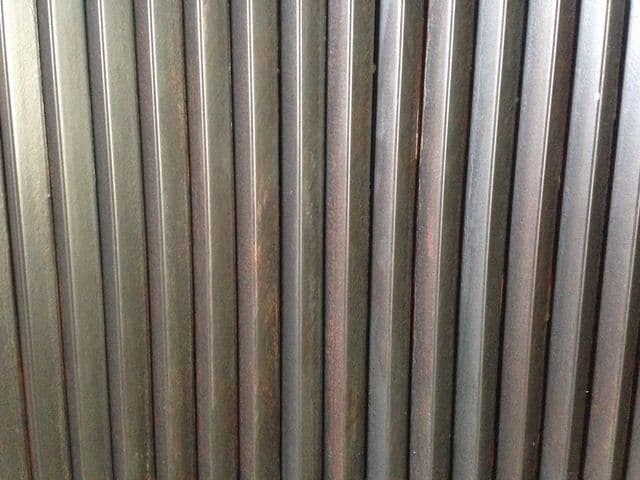
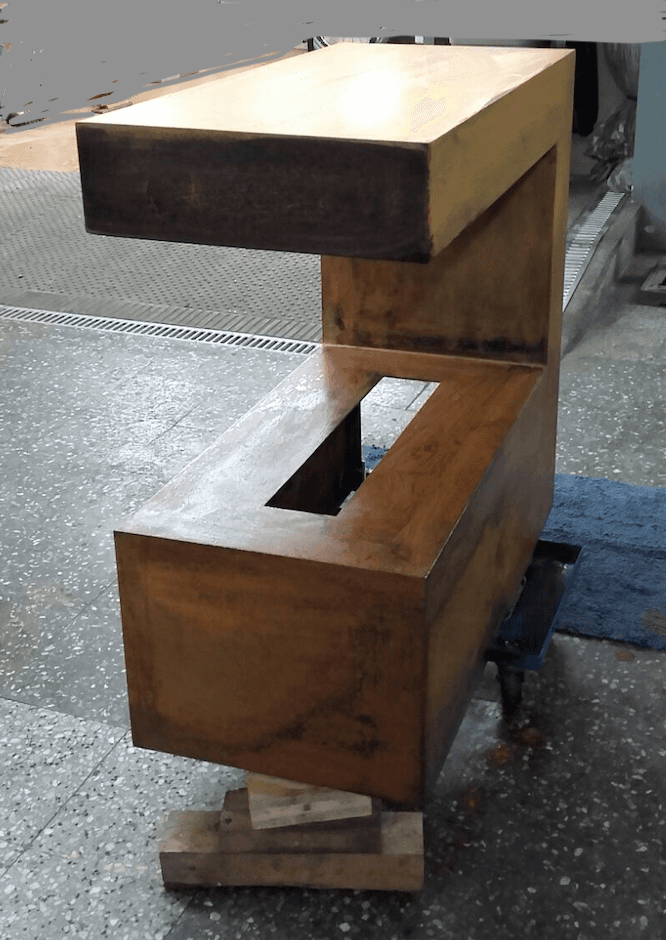
We don't stop at the catalogue: we design the piece for your space. We have made Corten steel boxes, machined iron backs and wall recesses to build the burner in.
Made-to-measure Corten steel box for an automatic burner

No flue needed · Manual, automatic and made to measure
A bioethanol fireplace gives you a real flame with no flue and no building work, so it suits flats, commercial premises and terraces. They come wall-mounted, freestanding or built in, and we also make them to measure, with automatic ignition and control from your home-automation system.
Clima Difusión
Bioethanol fireplaces don't need to vent fumes outside, which makes them extremely versatile: they can go where a wood or gas fireplace couldn't, with no ducts to open and no building work. Bioethanol is a biofuel and, as such, it is renewable.
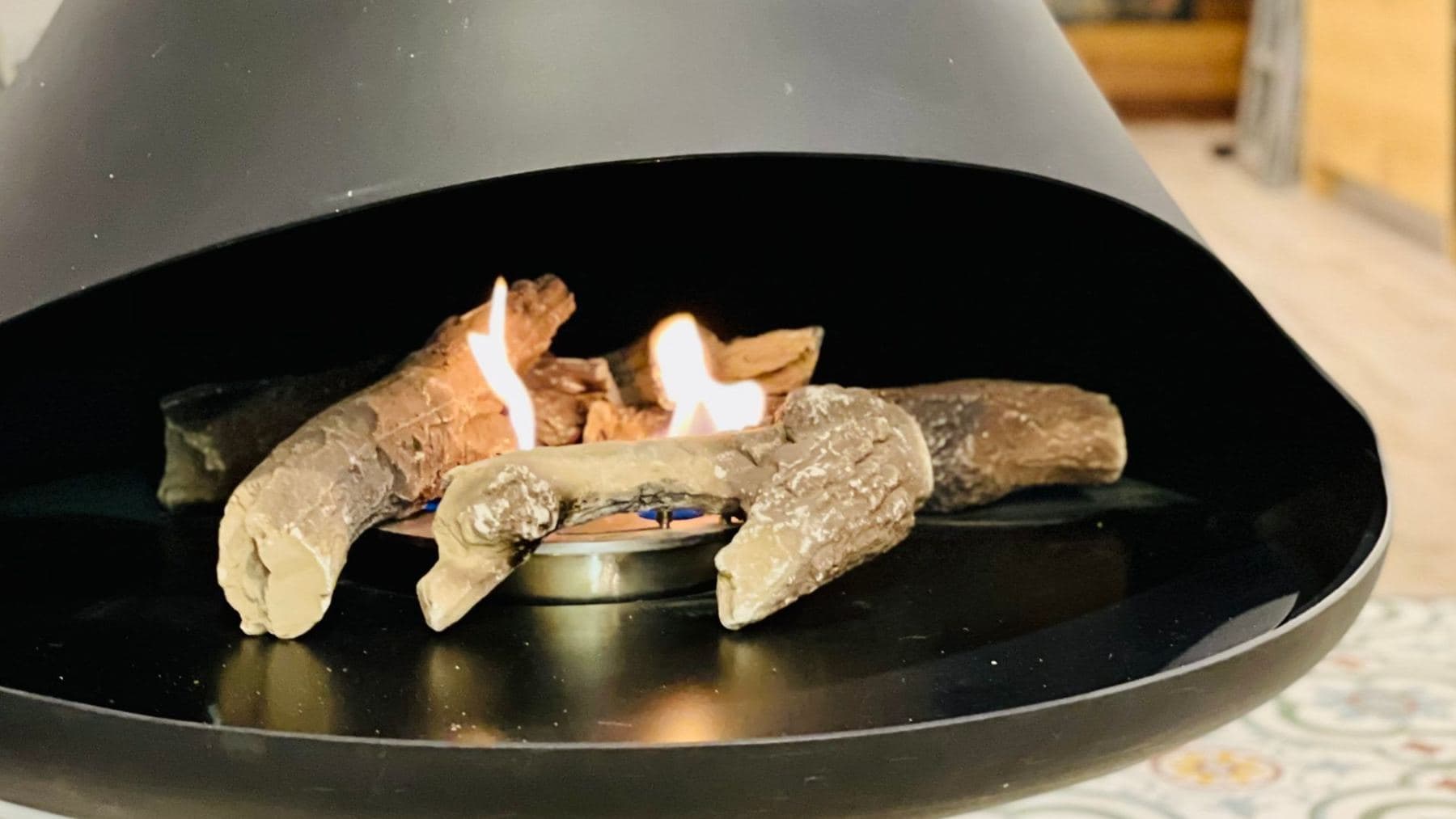
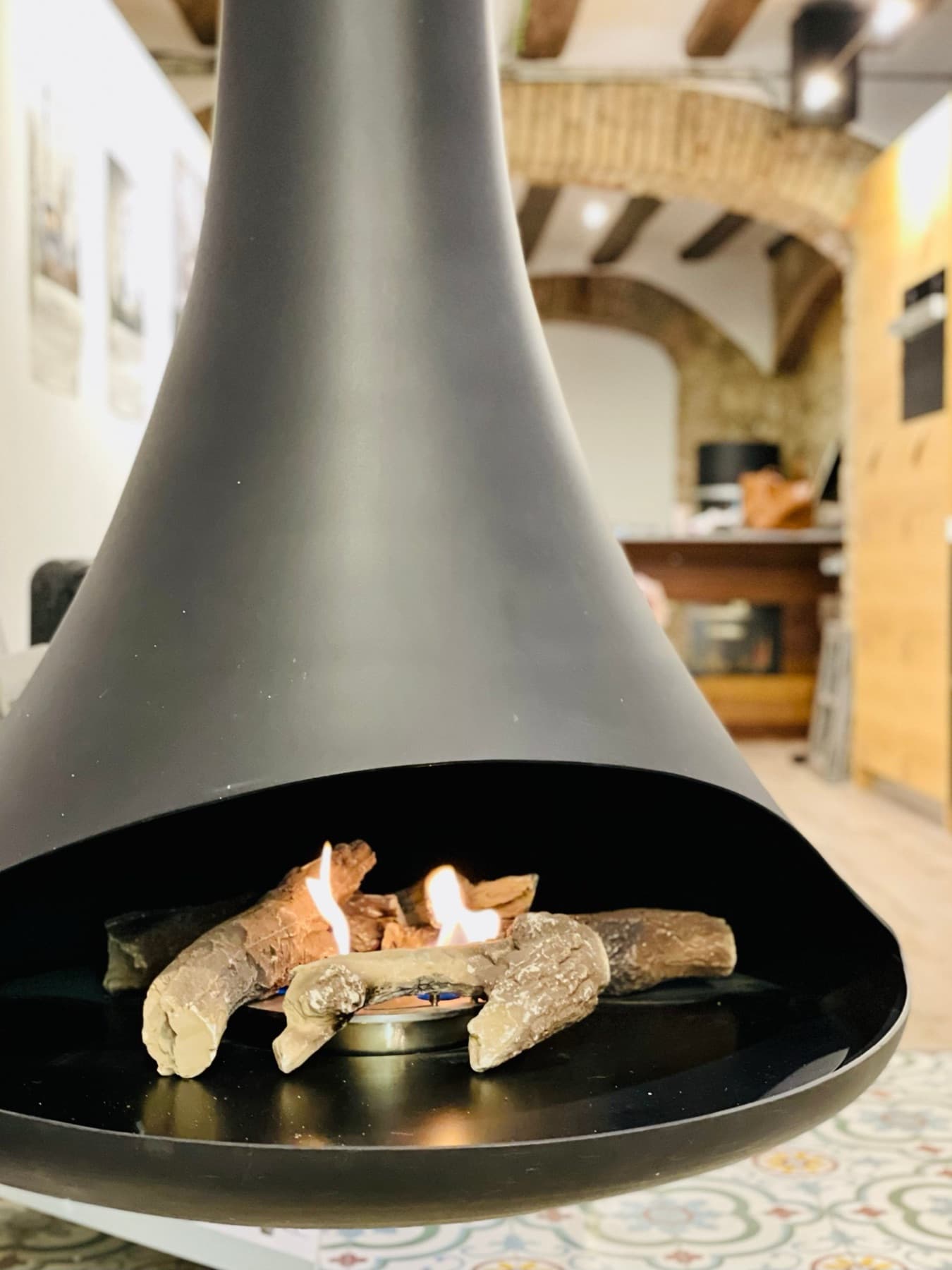
They don't give out a lot of heat and are mainly used as a decorative feature, indoors or outdoors. The flame is real and can be dressed with ceramic logs (stones are less advisable). Most are lit by hand, but there are also models with automatic or remote ignition.
At Clima Difusión we have spent more than 30 years designing, making and installing fireplaces for every fuel. For bioethanol we advise you on catalogue models and we also build made-to-measure bioethanol fireplaces: Corten steel boxes with automatic filling and ignition, machined iron backs painted on site, or linear burners built into the wall and controlled from the home's home-automation system.
Quick answer
A bioethanol fireplace burns a renewable fuel in a burner and doesn't need to vent fumes outside, so it can be installed without building work in flats, commercial premises or on terraces. Its role is mainly decorative: it gives little heat. There are manual and automatic models, and at Clima Difusión we also make them to measure.
Updated: October 2026
| Fuel | Bioethanol, a renewable biofuel |
|---|---|
| Flue | No need to vent fumes outside |
| Heat | Low heat output: mainly decorative |
| Where to use it | Indoors and outdoors: flats, commercial premises and terraces |
| Ignition | Manual on most models; automatic or remote too |
| Control | On automatic models, by remote or from the home-automation system |
| Decoration | Ceramic logs; stones are less advisable |
| Made to measure | Corten steel boxes, iron backs and burners built into the wall |
| Where to see them | At our Barcelona showroom; Saturdays by appointment |
Why Clima Difusión
We don't stop at the catalogue: we design the piece for your space. We have made Corten steel boxes, machined iron backs and wall recesses to build the burner in.
Made-to-measure Corten steel box for an automatic burner
We install bioethanol burners with automatic filling and ignition, operated by remote or from the home-automation system, so you don't have to go near the flame to light it.
Linear burner switched on from the home-automation panel
We build it into a wall, a bench, a piece of furniture or the opening of a disused masonry fireplace. We handle the design, manufacture and finishes: all you have to do is light the fire.
We also refurbish disused wood fireplaces with a bioethanol burner
If you'd rather have a standard model, we guide you through the catalogues of brands such as Planika, EcoSmart Fire, Glamm Fire or Kratki, and help you choose the format and burner size.
9 bioethanol catalogues to download as PDFs
Come and see fireplaces in person at our showroom in Ciutat Vella and talk through your project with us. Please confirm your visit beforehand.
Monday to Friday; Saturdays by appointment
We work with wood, gas, pellets, electric and bioethanol. That's why we can tell you honestly whether bioethanol is what you're after or whether another fuel would suit you better.
Family business with more than 30 years' experience
How it works
A bioethanol fireplace works with a burner: a steel container into which the liquid fuel is poured and which, once lit, keeps a live flame for as long as there is bioethanol left. There's no wood, no gas and no flue: just the burner and whatever surrounds it, be it a standard casing, a piece of furniture or the wall we build it into.
Burning bioethanol produces no smoke, so the fireplace needs no flue and no venting of fumes outside. That's why it can go in a flat with no chimney, in commercial premises or on a terrace. The flame does use up the air in the room, though, so the room must be ventilated as the manufacturer specifies.
With manual burners, you light the flame with a long lighter and put it out by closing the lid or the regulator. With automatic ones, an internal tank feeds the burner and ignition is electronic: by button, by remote or, as in the project in the video, from the home-automation system. If you're weighing up fuels, compare them with our gas fireplaces.
Types
A bioethanol fireplace can hang on the wall, be built in, stand on the floor or hang from the ceiling. These are the main formats, each with a photo of a real project.
They are fixed to the wall and leave the floor clear, so they suit small living rooms, bedrooms or studies. All they need is a solid wall and the clearances to furniture and curtains set by the manufacturer.
See the wall-mounted project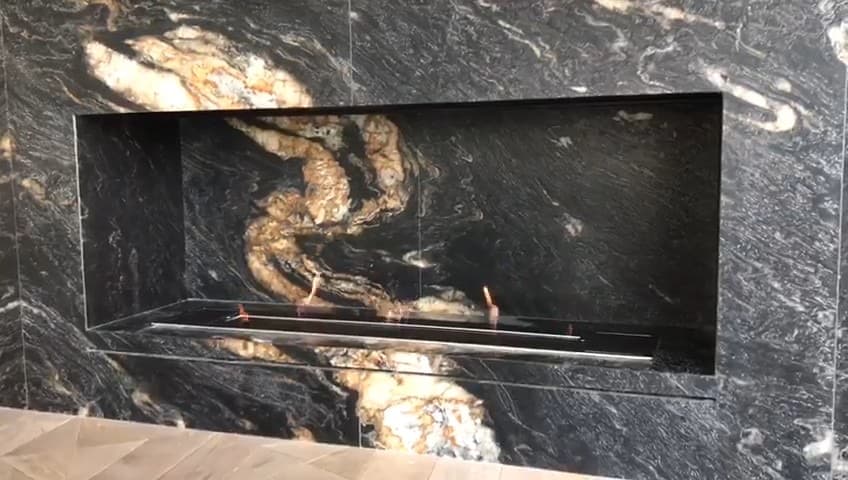
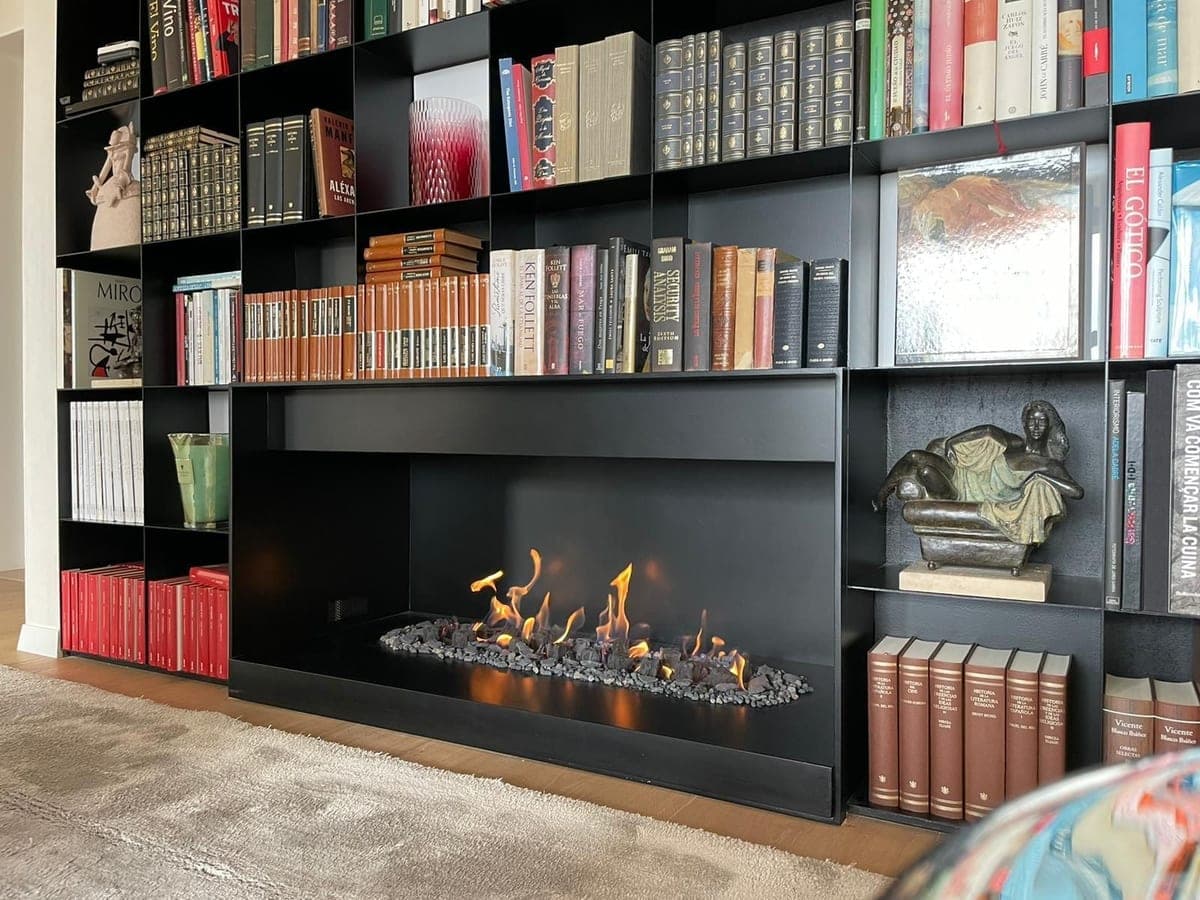
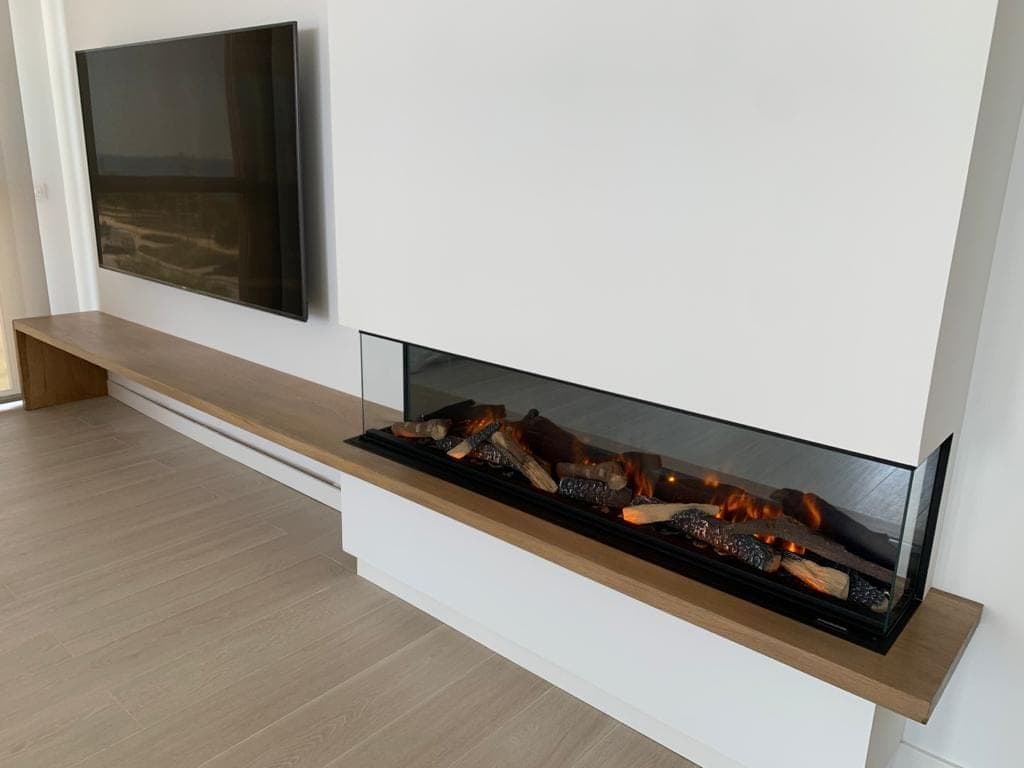
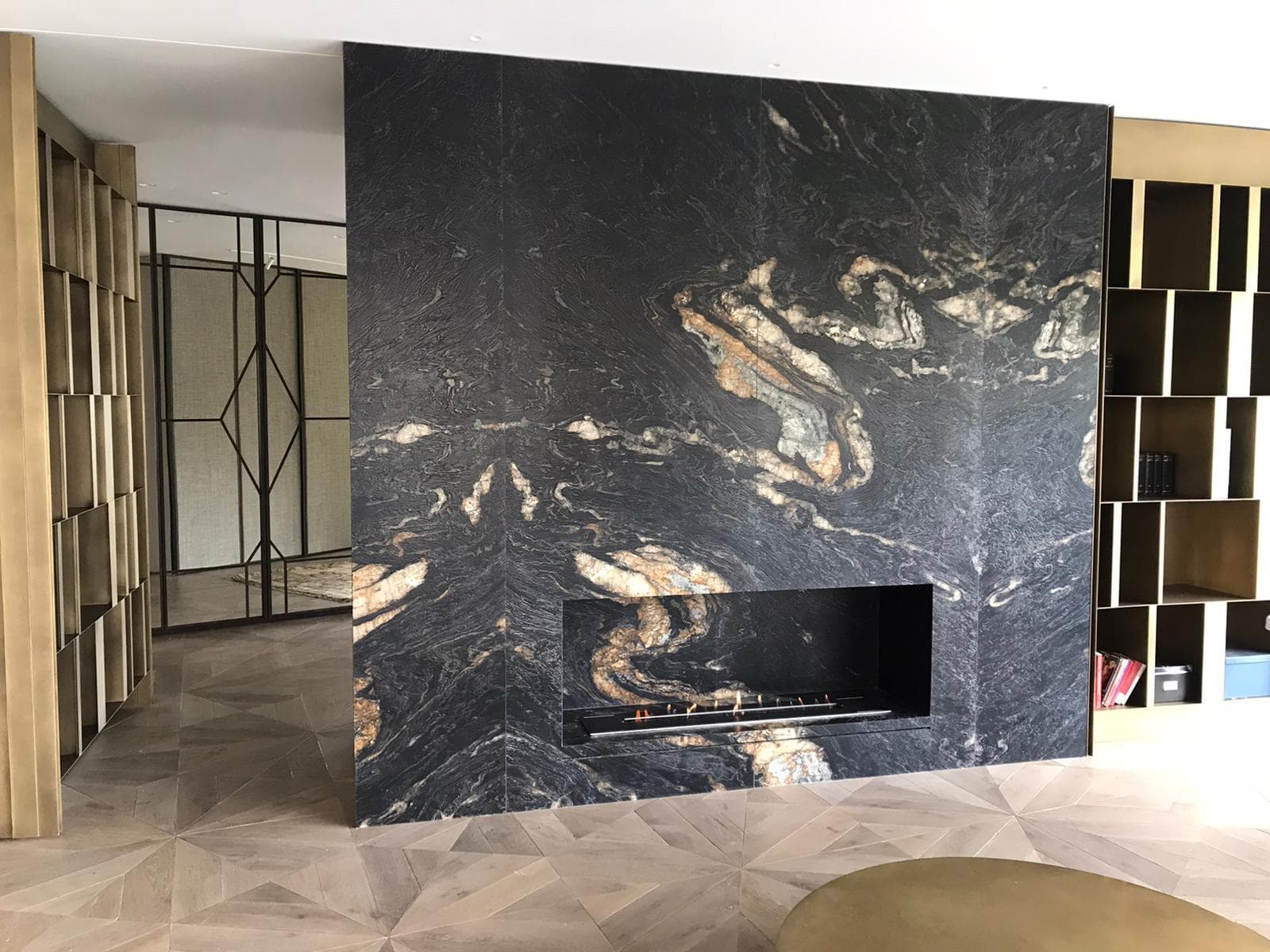
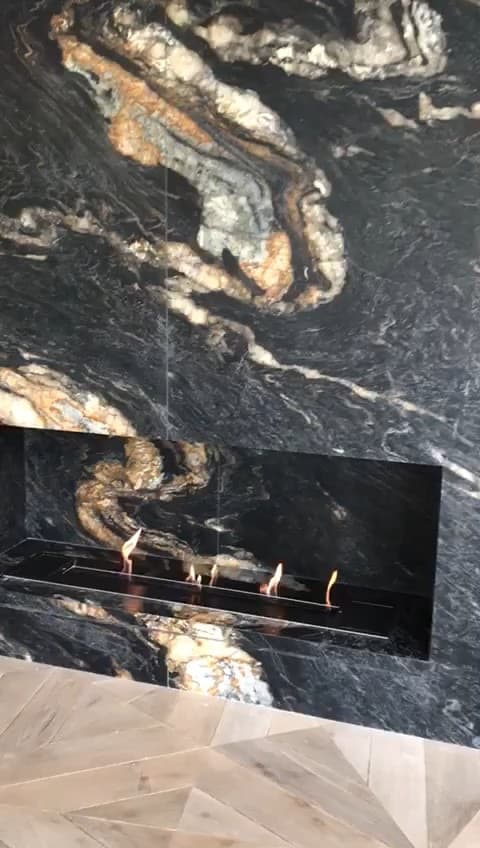
The burner sits inside a recess in the wall or in a piece of furniture, flush with the cladding. It is the cleanest look and the one that fits best into a refurbishment, like this linear burner in a clad wall.
See the built-in project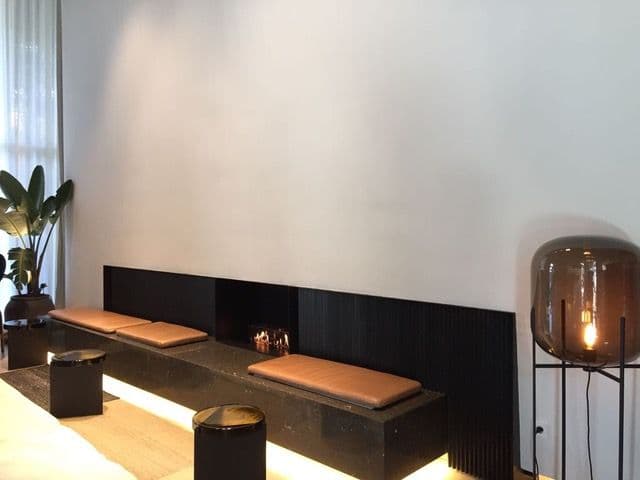
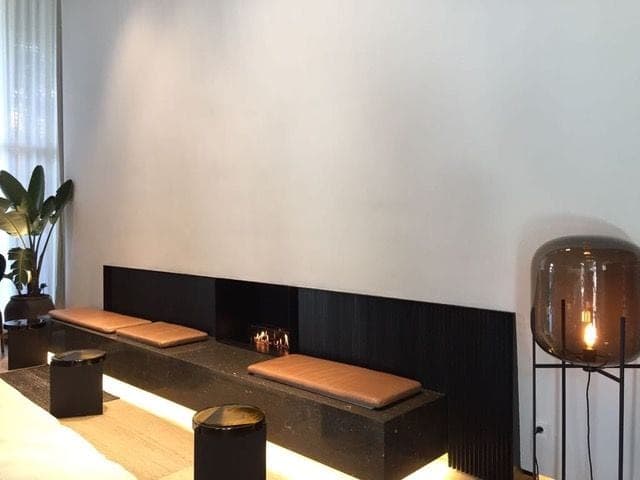
They stand on the floor like another piece of furniture: on their own, in a bench or as a room divider. We make them to measure too, like this bench with a machined iron angle back painted on site.
See the made-to-measure bench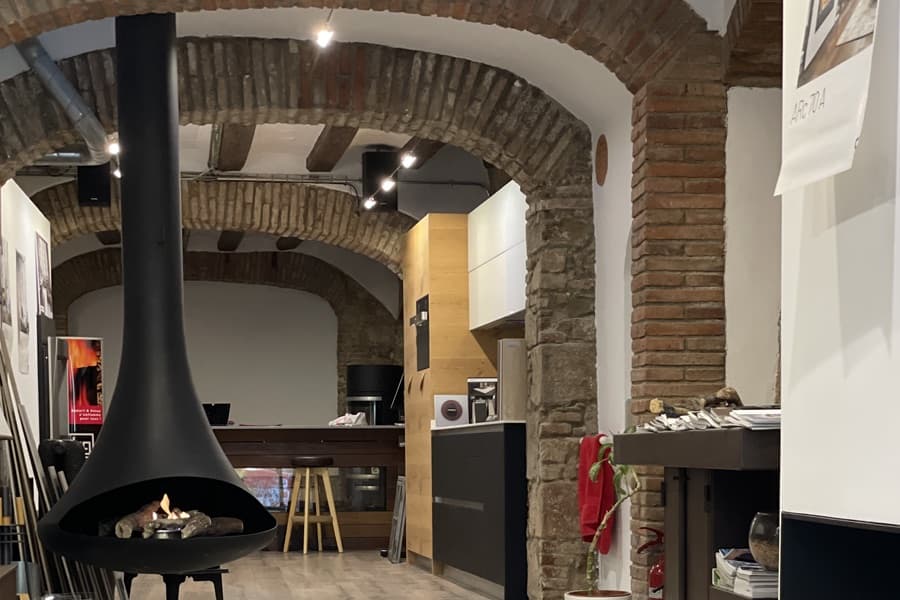
They hang from the ceiling and sit in the middle of the room, visible from every side. They are very sculptural pieces that take ceramic logs over the burner and work well in large, high-ceilinged spaces.
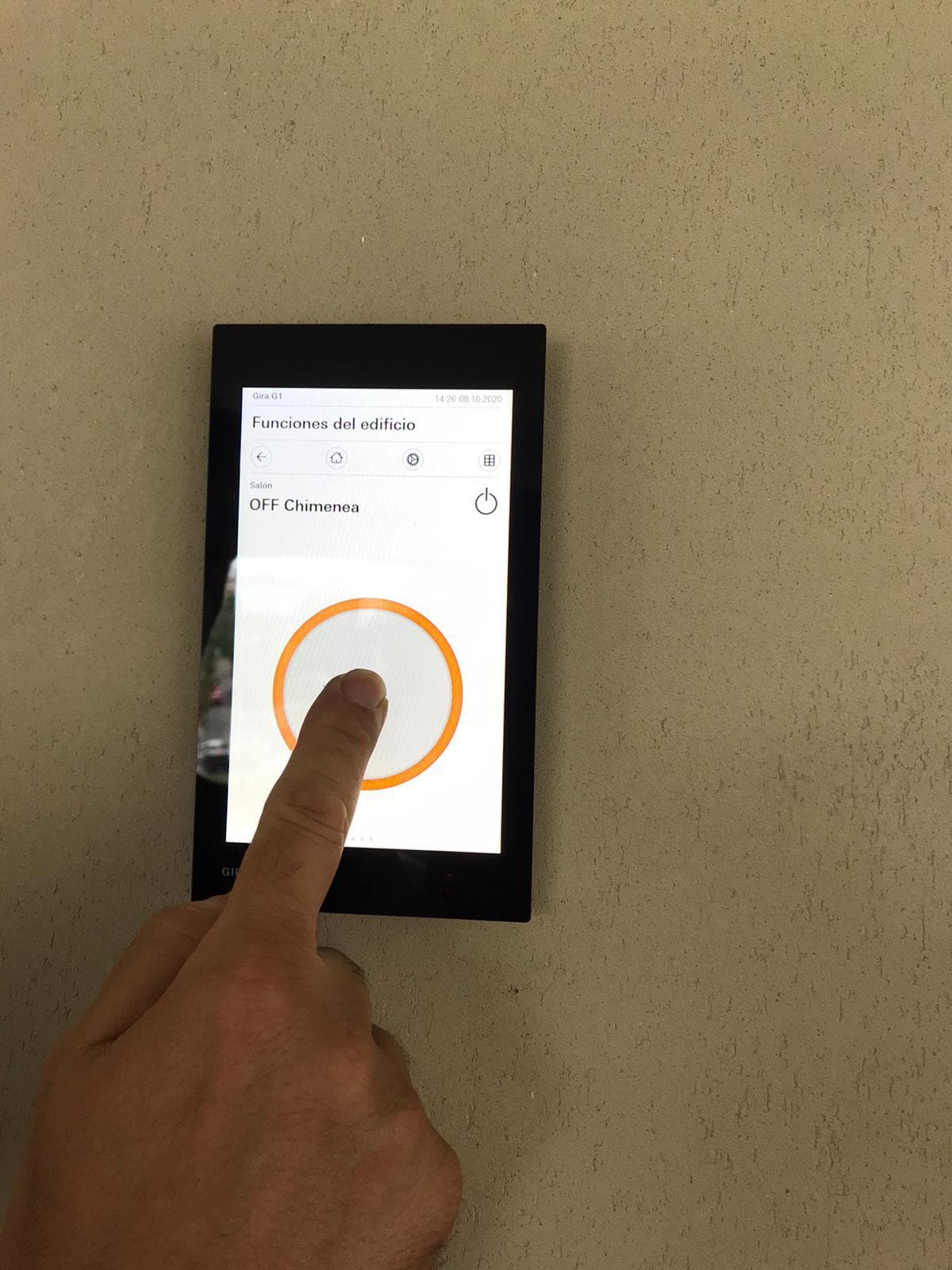
They have an internal tank and electronic ignition: you operate them with a button, a remote or the home-automation system, without going near the burner. The most convenient option if you'll light it often.
See the home-automation project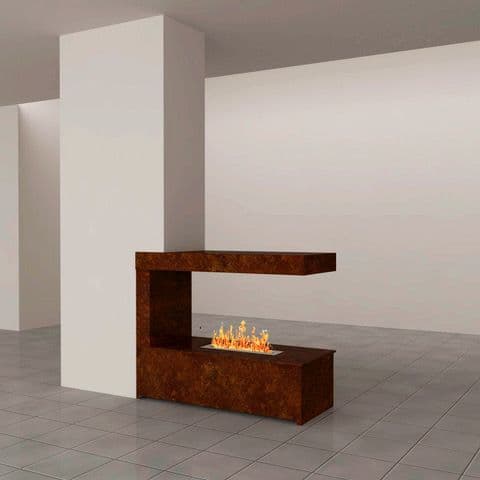
When no catalogue model fits, we make one. This design, a freestanding Corten steel box with automatic filling and ignition, was made to measure for the client's space.
See the Corten steel fireplaceStoves
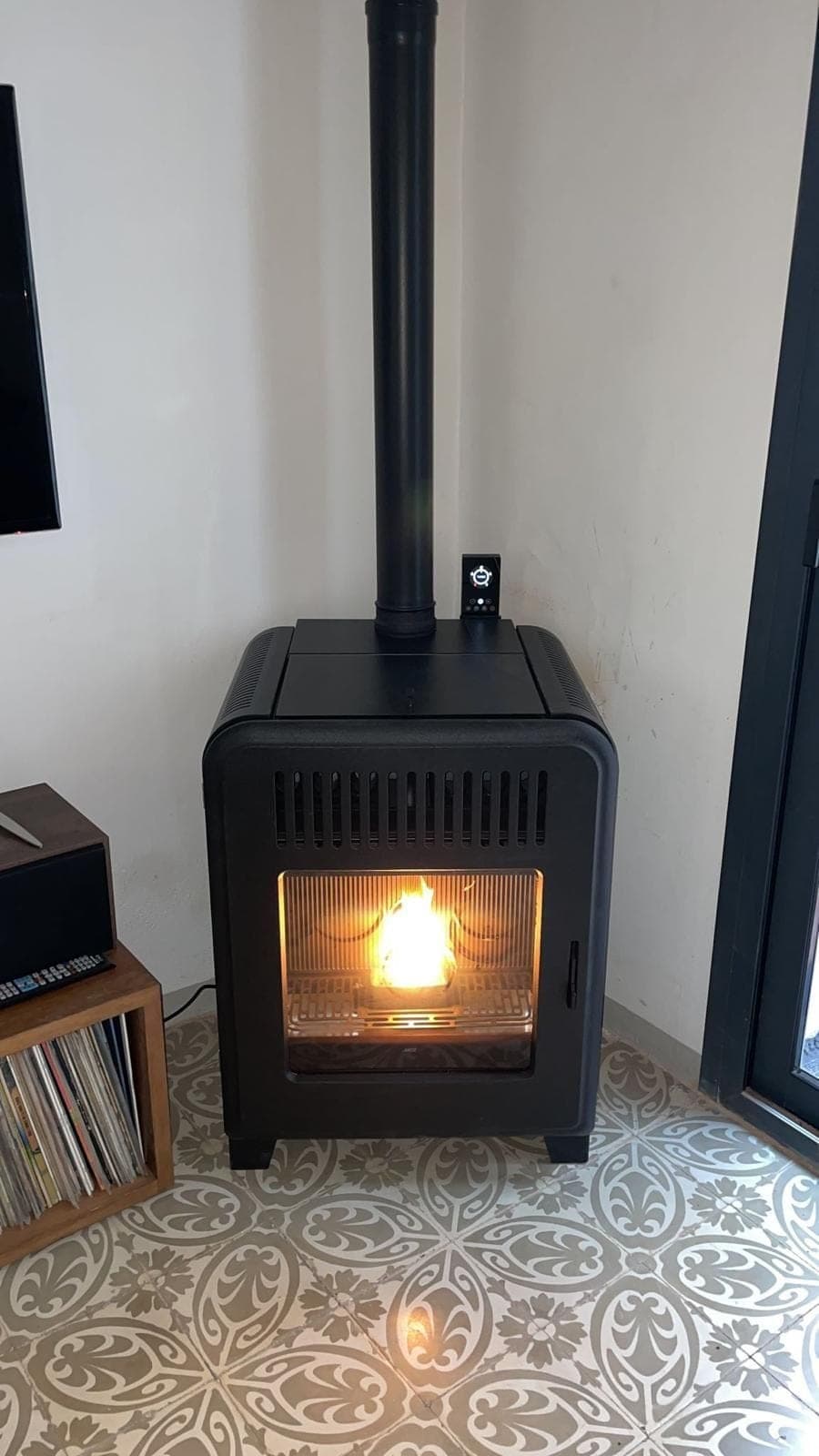
A bioethanol stove is a compact, enclosed unit, usually with glass, that hangs on the wall or stands on the floor. It works just like a bioethanol fireplace, with a burner and no flue, but in a smaller format and with no building work.
Its heat is limited too: it adds atmosphere, it isn't a heating system. If what you need is to heat your home, we'll point you towards a pellet stove or a gas fireplace.
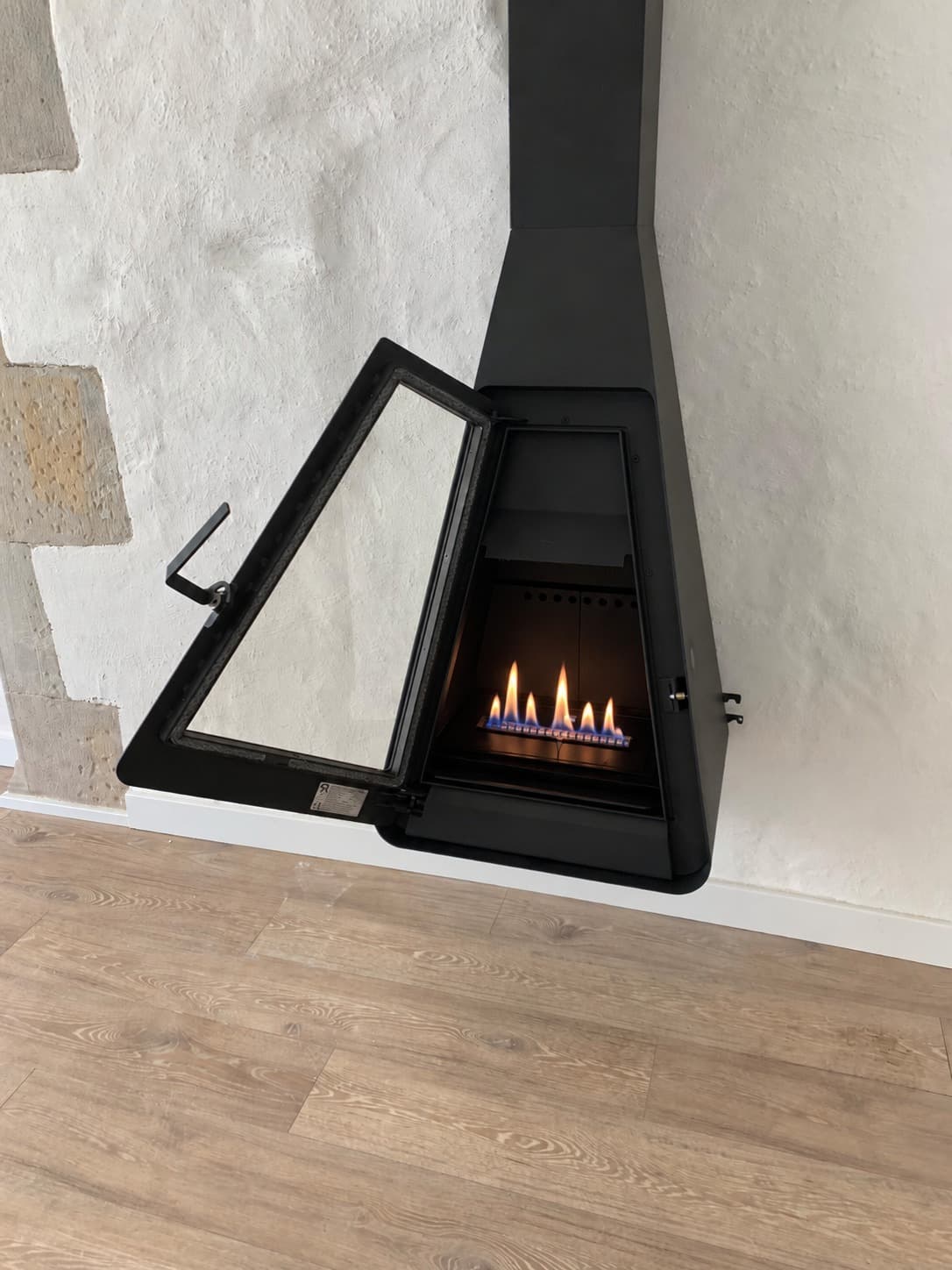
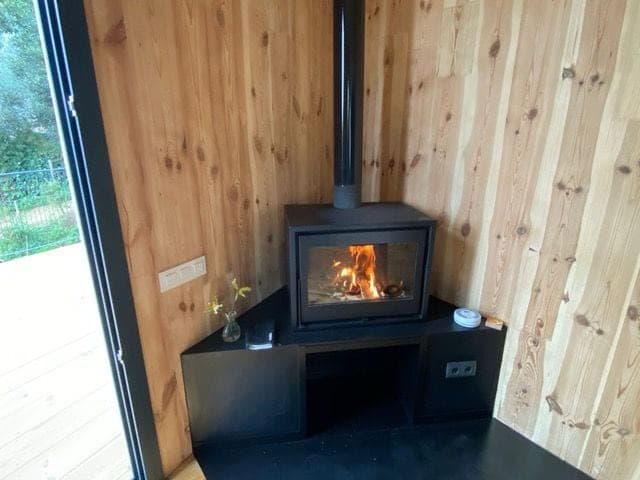
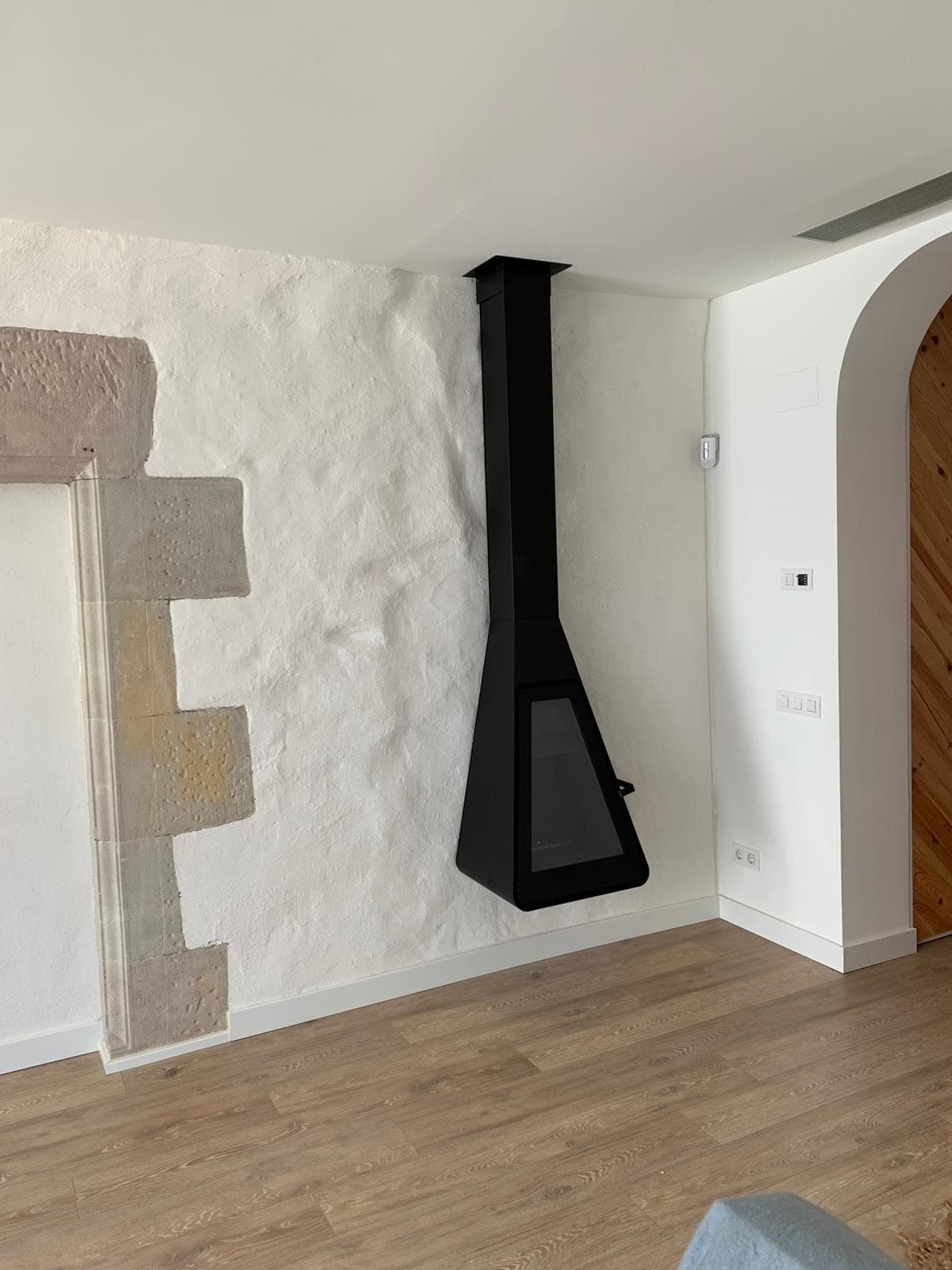
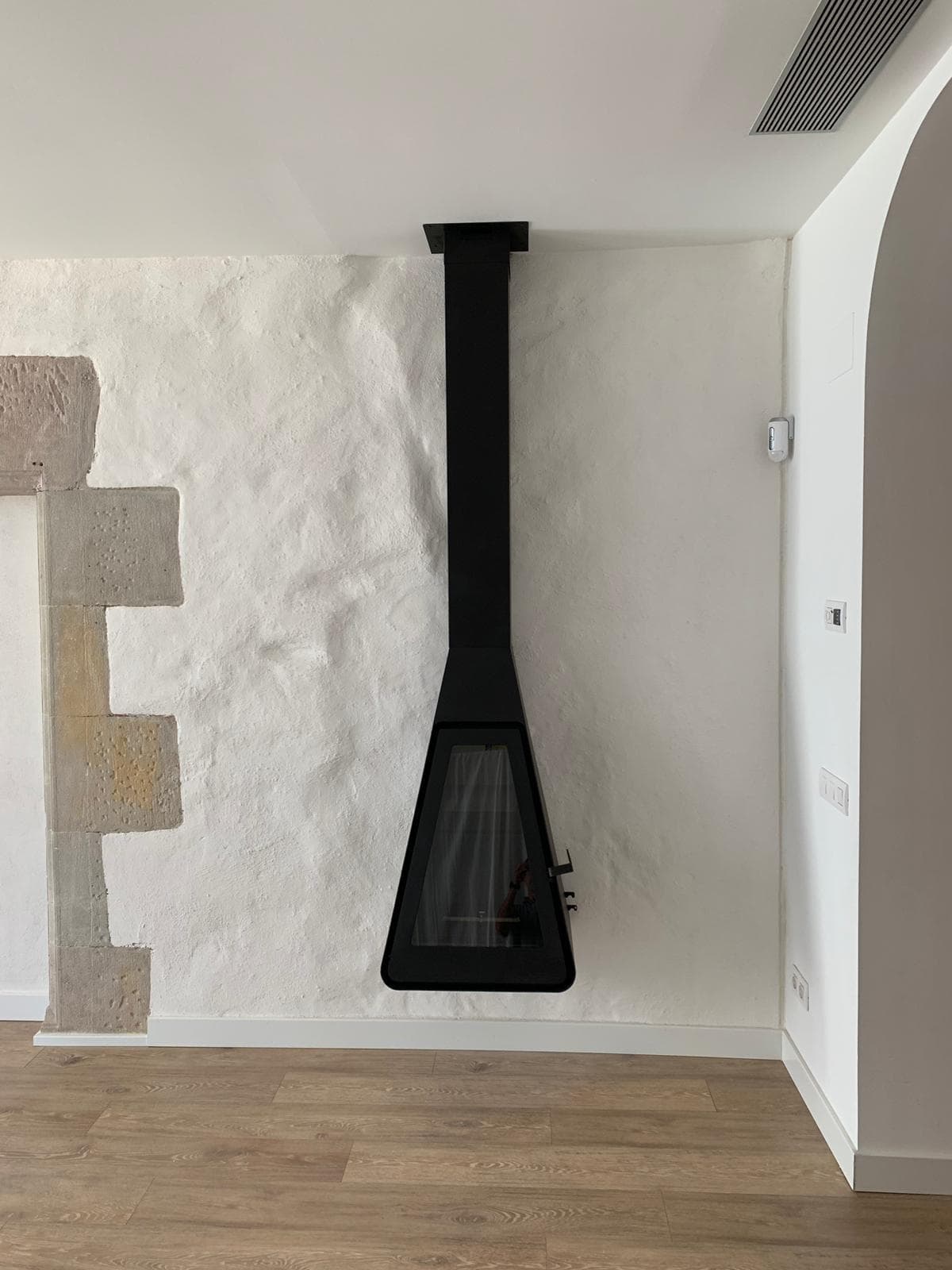
In this project we installed a black steel bioethanol stove hung on a white wall with a rustic finish. It has a glass front door and leaves the whole floor clear.
The difference is mostly one of format. A stove is a self-contained, enclosed unit; a fireplace is usually built into the architecture (recessed, in a bench or suspended) or made to measure. The fuel, the kind of flame and the safety precautions are the same.
Ignition
Most bioethanol fireplaces are lit by hand, but automatic or remote ignition is also available. The difference isn't in the flame, but in how it is lit, refilled and controlled.
| Feature | Manual | Automatic |
|---|---|---|
| Ignition | With a long lighter | Electronic: button, remote or home automation |
| Putting out and adjusting | By closing the burner lid or regulator | From the remote or the panel, depending on the model |
| Refilling | Bioethanol is poured into the burner, always off and cold | An internal tank is filled, as the manufacturer specifies |
| Remote control | No | Yes, including from the home-automation system |
| Safety | Depends on use: follow the lighting and refilling guidelines | Includes the safety systems provided by the manufacturer |
| Usually suits | Occasional use and simple pieces | Daily use, refurbishments and projects built into the home |
Fill the burner with bioethanol up to the level marked by the manufacturer, wipe up any drips and light it with a long lighter. To put it out, close the lid or the regulator; never blow on it or use water. Before refilling, wait until the burner has cooled down.
It is switched on and off remotely and the fuel sits in an internal tank, so it isn't handled next to the flame. In this project the linear burner is switched on and off from the home-automation panel, and in this one we made the Corten steel box for a burner with automatic filling and ignition.
Heat
Yes, but not much. Bioethanol fireplaces don't give out a lot of heat and are mainly used as a decorative feature: you'll feel the warmth near the flame and they'll take the chill off a room, but they won't replace the heating in a home.
So before choosing, be clear about what you're after. If it's the feel of a real fire in a flat with no flue, bioethanol is a great option. If it's heating the house, there are better alternatives, and we'll tell you so.
| Feature | Bioethanol | Gas | Wood |
|---|---|---|---|
| Heat | Low: mainly decorative | Heats as well as decorates | Real heat, better used with a closed firebox |
| Flue | Not needed | Required: vertical, horizontal or below the floor | Required: a chimney to take the smoke away |
| Building work | Minimal or none | Gas connection and flue | Firebox and smoke flue |
| Fuel | Bioethanol, renewable | Natural gas or LPG | Wood |
| Cleaning | No ash | No smell or ash | Ash and flue cleaning |
| Where it fits | Flats, commercial premises and terraces | Flats and houses where a flue is feasible | Houses with a smoke flue |
| Find out more | Bioethanol projects | Gas fireplaces | Wood-burning fireplaces |
Gas. Gas fireplaces and stoves, as well as looking good, are genuinely functional: their heat output lets them warm a room while they decorate it. In return, they need a flue and an installation carried out by a certified installer.
If you want real heating, look at wood-burning fireplaces, pellet stoves or gas fireplaces. If you only want the look of a fire somewhere nothing can be burnt, an electric fireplace with water vapour that mimics smoke may be the answer.
Safety
A bioethanol fireplace is safe if it is installed properly and used as the manufacturer instructs. There is a real flame and a flammable fuel, so these are the basic rules:
Each model's specific requirements (ventilation, room size, clearances) are in its technical data sheet, and we take them into account when we suggest the model and where to put it. Automatic models add whatever safety systems each manufacturer provides.
Put the flame out, wait for the burner to cool and refill it with a funnel or the dosing bottle, without going over the maximum level. If you spill any, wipe it up before lighting. On automatic models, the tank is filled following the manufacturer's procedure.
The flame and the glass or casing get hot. With young children or pets, choose a model with a protective glass screen or place it out of their reach, and keep the bioethanol in a closed cupboard. An automatic model also saves you lighting it by hand next to the flame.
Where to install it
Because it needs no flue, a bioethanol fireplace can go almost anywhere. What changes from one space to another is the format that fits and what should be checked first.
| Space | Format that usually fits | What we check first |
|---|---|---|
| Flat | Wall-mounted, built-in or stove | Room size and ventilation; clearances to furniture and curtains |
| Shop, restaurant or hotel | Built-in, in a bench or made to measure | Customer traffic, flame protection and automatic control |
| Terrace or garden | Outdoor-rated freestanding model | Wind, a sheltered spot and a stable base |
| Disused masonry fireplace | Box with a burner inside the firebox | Condition of the opening and burner dimensions |
This is where it makes most sense: with no flue and no building work, you can have a real fire in the living room. Choose a burner sized for the room and avoid small, closed rooms. As we explain in which fireplace is right for you, if you live in a flat, bioethanol is one of the best options.
In restaurants, hotels and shops, bioethanol lets you have a fire where ducts can't be opened. We build it into benches, walls or made-to-measure pieces, like this bench with an iron back, and if it will be used every day we recommend an automatic model.
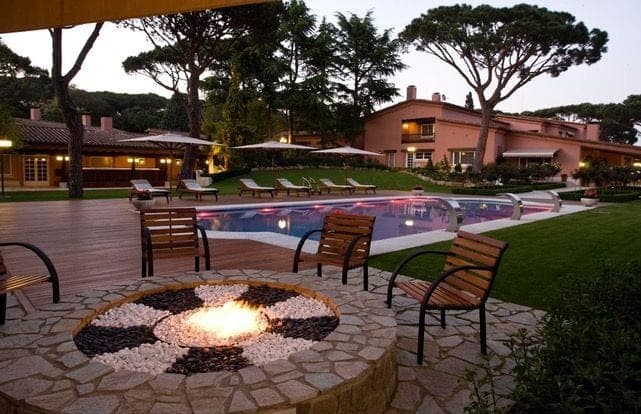
Bioethanol fireplaces work indoors or outdoors. Outside, the enemy is the wind: choose an outdoor-rated model and a sheltered spot. To cook or keep warm on the terrace, have a look at our outdoor solutions too.
Refurbishment
Do you have a wood fireplace you no longer use? One option is to refurbish it with a box and a bioethanol burner: you make use of the opening and structure that are already there and get your fire back with no wood, no smoke and no ash. More convenient and greener.
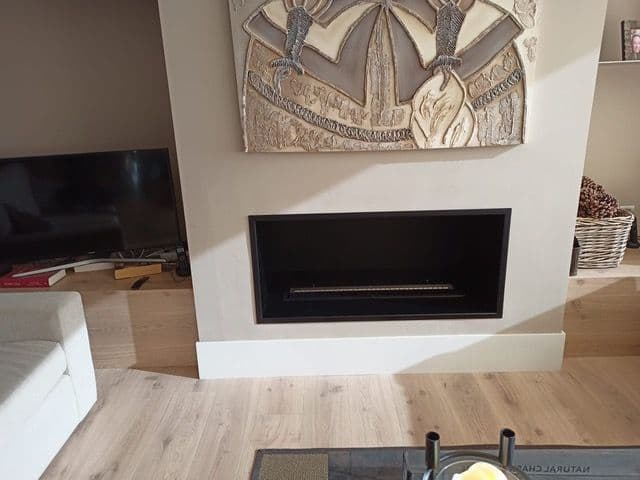
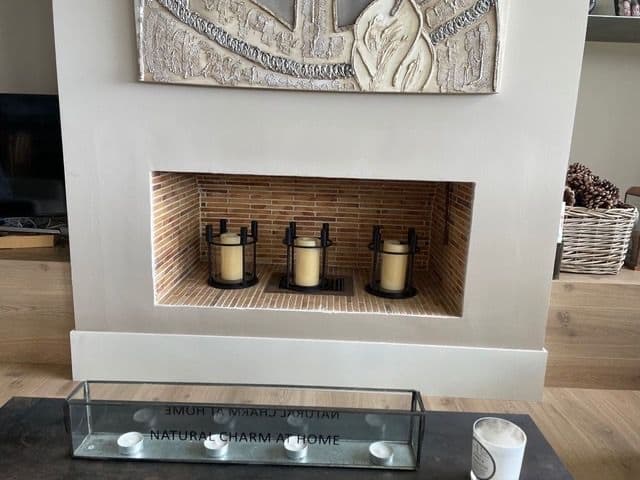
In this project, the brick firebox was out of use and only held a few candles. We fitted a box with a linear bioethanol burner into the opening and the fireplace had a flame again. An open wood fireplace can also be converted into a closed cassette or to gas: we explain how in renew your fireplace.
Portfolio
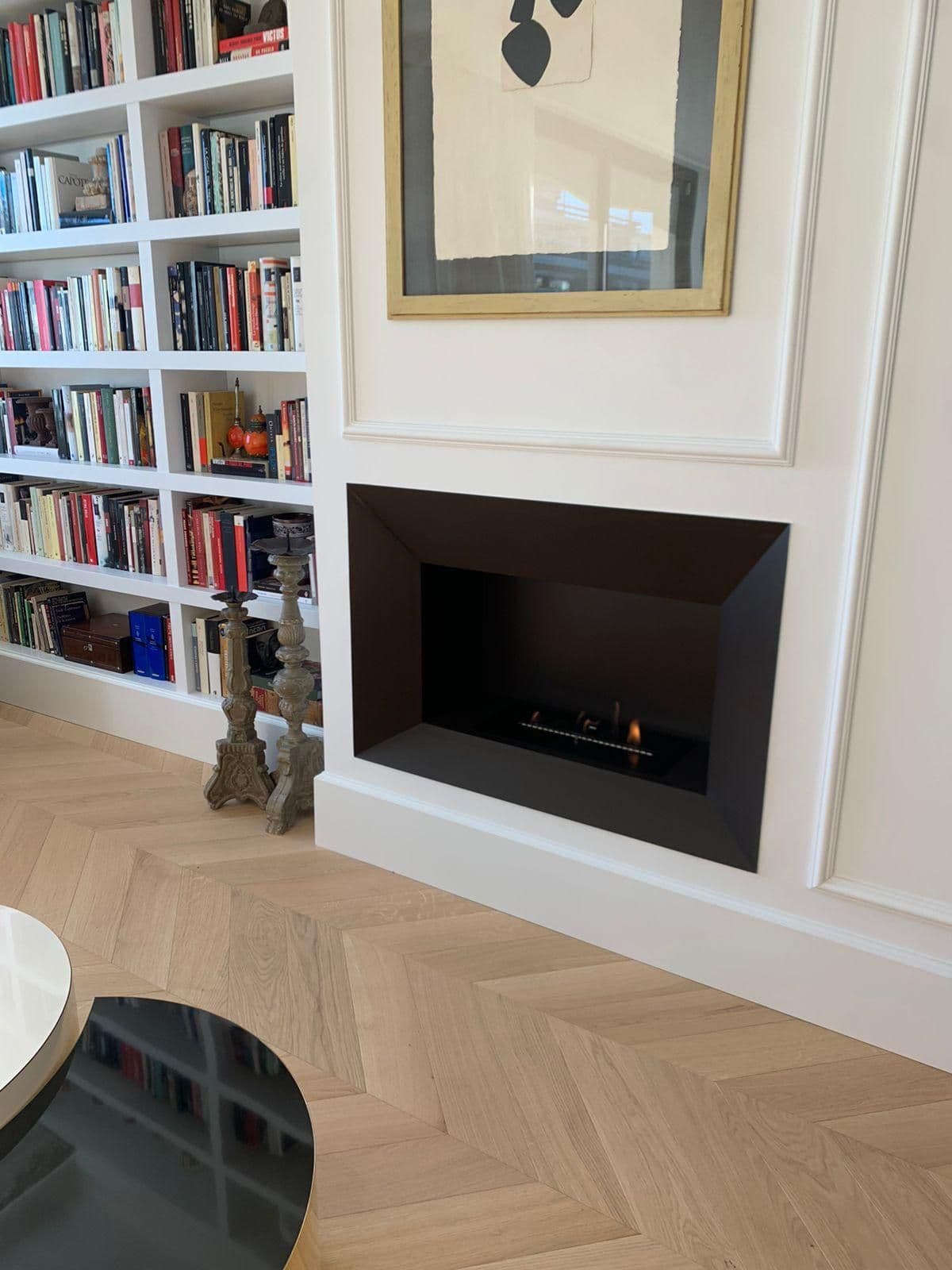
Real bioethanol projects we have designed, made or installed. Each one has its own page with more photos.
 Made to measure
Featured project
A linear bioethanol burner built into a clad wall, switched on and off from the home-automation panel. It's the project in the main photo on this page: no flue, no ducting and no need to go near the flame to light it.
See the project pageInstallation
A bioethanol fireplace needs no gas connection and no flue, but it does need a proper look at where it will go. If it's made to measure or built in, we take care of everything.
Burning uses up the air in the room. We check that the space and ventilation match what the manufacturer requires for the burner size chosen.
We check the distance to ceilings, furniture, curtains and cladding, and that the materials around the flame can withstand the heat. For made-to-measure pieces we work with Corten steel or iron.
A wall-mounted fireplace needs a solid wall; a suspended one, a ceiling that can hold it; a freestanding one, a stable, level base. We sort this out before fitting.
Automatic burners need power and, if they are to be controlled from the home-automation system, a connection to it. We allow for this during the works so the ignition works from day one.
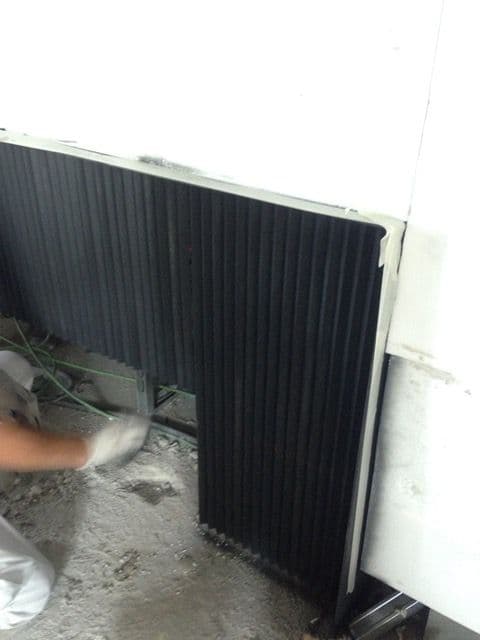
We take care of the whole process, in four stages. We walk through an example in design, manufacture and installation of a bespoke fireplace.
We agree with you the format, the burner size and whether it will be manual or automatic, and choose where it will go.
We make the made-to-measure parts (boxes, backs or recesses) and organise the logistics and timing of the works.
We fit and fix the fireplace, build in the burner and, on automatic models, connect the controls.
We finish the cladding and the fire dressing. All you have to do is light it.
Quote
There's no single price: it ranges from a catalogue stove to a made-to-measure piece built into the architecture. These are the factors that affect the quote most:
We'll prepare a no-obligation quote based on your space and what you're looking for.
It depends on the burner size and the height of the flame: the bigger the flame, the more litres per hour. Each manufacturer gives the consumption and burn time of its model in the technical data sheet; with that figure and the price of bioethanol you can work out the hourly cost before you decide.
Tell us where you want the fire and how you'll use it, and we'll suggest the format, burner size and type of ignition that suit you best. If no catalogue model works, we'll make it to measure. Ask for a no-obligation quote or come and see us at the showroom.
Frequently asked questions
The usual questions before choosing a bioethanol fireplace: heat, safety, fuel use and where to put it.
A little. Bioethanol fireplaces don't have a high heat output and are mainly used as a decorative feature: they give warmth near the flame and take the chill off a room, but they don't replace your heating. If you need to heat your home, a gas fireplace, a wood-burning one or a pellet stove will do that job better.
It needs no flue and no venting of fumes outside, which is why it can be installed without building work. It does need ventilation: burning uses up the air in the room, so you must respect the minimum room size and the ventilation set by the manufacturer of each model.
Yes, if it is installed properly and used as the manufacturer instructs: always refill when cold, use only bioethanol for fireplaces, keep clear of flammable materials and never leave it burning unattended. With children, choose a model with a protective glass screen or place it out of their reach. Automatic models also avoid lighting by hand next to the flame.
It depends on the burner size and the height of the flame: the bigger the flame, the higher the consumption. Each model's litres per hour are given in its technical data sheet; multiplied by the price of a litre of bioethanol, that gives you the hourly cost. If you're interested in a particular model, we'll help you work it out before you decide.
It depends on the burner capacity and how you set the flame: on a low flame it lasts much longer than on full. Each manufacturer gives the burn time per fill in its data sheet. The key thing is never to refill while the burner is lit or hot: once it goes out, wait for it to cool down.
A manual one is lit with a long lighter, put out by closing the lid and refilled by hand when the burner is cold. An automatic one has an internal tank and electronic ignition, and is controlled with a button, a remote or the home-automation system. The flame is the same; convenience and day-to-day safety are what change.
Yes, with an automatic burner. In one of our projects, a linear burner built into the wall is switched on and off from the home-automation panel. To do this you need a compatible burner, with power and a connection to the home-automation system allowed for during the works.
With good-quality bioethanol and clean combustion, hardly at all. If you notice a slight smell, it's usually when lighting or putting it out, or when the fuel isn't the right one. It makes no smoke, but the room must be ventilated to refresh the air, as with any flame.
Yes. Bioethanol fireplaces can be used indoors or outdoors. On a terrace, choose an outdoor-rated model, place it somewhere sheltered from the wind and on a stable surface. To keep warm or cook outdoors, have a look at our outdoor solutions too.
Ceramic logs are the best choice, giving the look of a wood fire. Stones are less advisable in bioethanol fireplaces. Whatever the decoration, only place it as the burner manufacturer instructs, without covering the flame outlet.
At our showroom in Ciutat Vella, Barcelona, you can see fireplaces in person and talk to us, Monday to Friday from 11 am to 2 pm and from 3 pm to 6 pm, and on Saturdays by appointment. Please confirm your visit by phone. If you'd rather start remotely, request a quote online.
On this page you'll find the PDF catalogues of Planika, EcoSmart Fire, Glamm Fire, Kratki, Xaralyn, Traforart, Bosch Marín, ebios-fire and Horus Fontana Forni. Besides catalogue models, we make bioethanol fireplaces to measure when none of them fits the space.
Bioethanol is a biofuel and, as such, it is renewable. Biofuels are green fuels: their main advantage is that they reduce greenhouse gas emissions. In a fireplace it is used in liquid form, inside a burner, with no smoke or ash.
It depends on what the premises allow. Bioethanol gives a real flame with no flue; a water-vapour electric fireplace mimics fire and smoke with no flame, so it works where nothing can be burnt. In both cases, heat is secondary.
Guide: choosing a fireplace for commercial premises (in Spanish)
Showroom
Come and see fireplaces in person and talk through your bioethanol project with us: format, burner size and manual or automatic ignition. Please confirm your visit by phone.
We appreciate you confirming your visit to:
Service area
We work in Barcelona and across the province, the rest of Catalonia and Andorra.
Brands
Download the bioethanol catalogues of Planika, EcoSmart Fire, Glamm Fire, Kratki, Xaralyn, Traforart, Bosch Marín, ebios-fire and Horus Fontana Forni as PDFs.
Keep reading