Experience and specialisation
More than 30 years in the sector, with a portfolio of bespoke fireplaces. Installations in homes and businesses, all made to measure.
16 gas projects documented in our portfolio
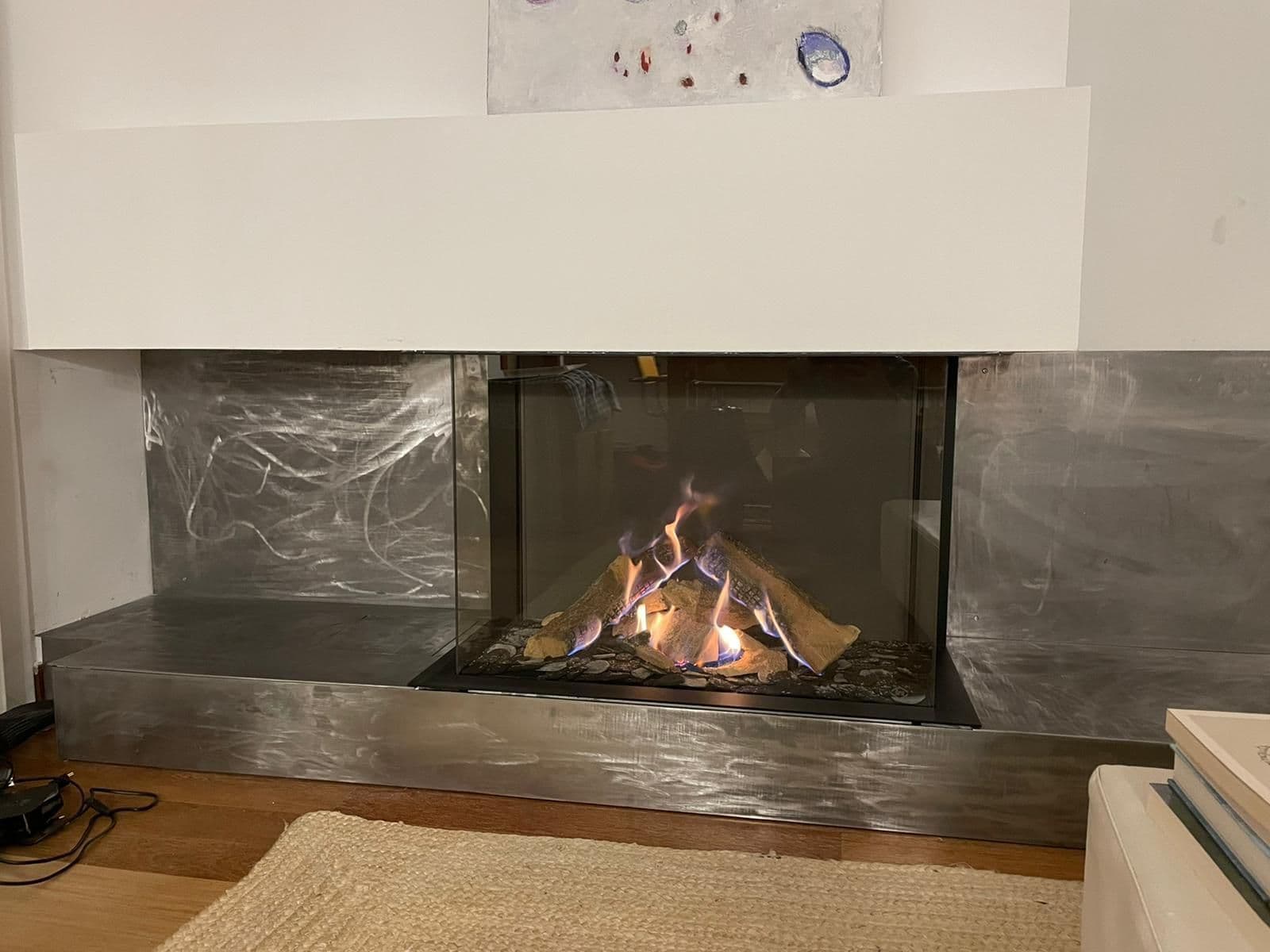

Room-sealed and open · Made to measure
More than 30 years designing, making and installing bespoke fireplaces, with gas fireplaces as our speciality. Our certified installer signs off every installation and takes responsibility for it.
Clima Difusión
At Clima Difusión we have spent more than 30 years making and installing bespoke fireplaces. We work with every kind of fuel —wood, bioethanol, pellet, electric…— but our flagship product is the gas fireplace, a field in which we are true specialists.
We are certified installers, which is decisive when it comes to guaranteeing maximum safety and the quality of every project. Our installer signs off every installation and takes responsibility for it.
If you are looking for a gas fireplace that combines efficiency, design and comfort, you are in the right place. Our team takes care of everything: from the bespoke design and the gas installation to the finishes and after-sales maintenance.
Quick answer
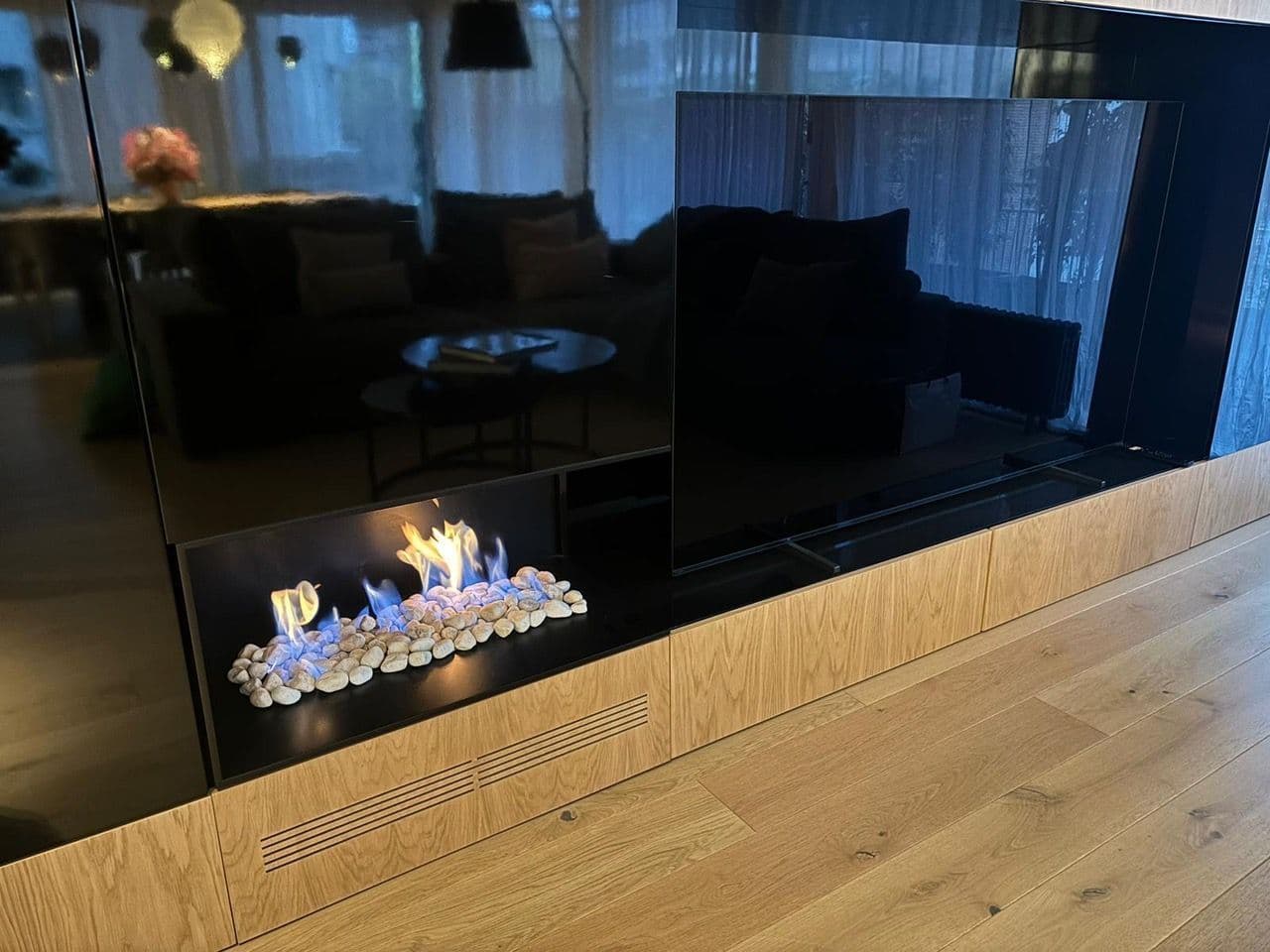
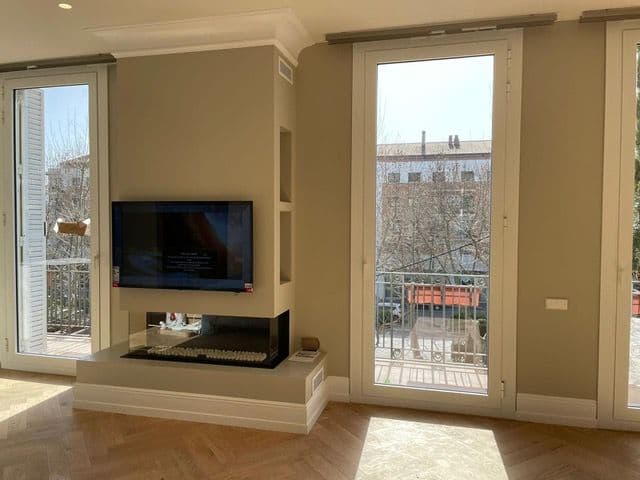
A gas fireplace burns natural gas or LPG to give an instant flame and heat, with no smell or ash. It always needs to vent its fumes outside: vertically, horizontally or below the floor. It can be room-sealed (with glass) or open (without glass). Clima Difusión, with more than 30 years in the sector, designs and installs them to measure.
Updated: October 2026
| Fuel | Natural gas or LPG |
|---|---|
| Flue | Required: vertical, horizontal or below the floor |
| Types | Room-sealed (with glass) or open (without glass) |
| Flame control | Remote control or digital panel, depending on the model |
| Cleaning | No smell and no ash to clear |
| Maintenance | Service by qualified staff: combustion, seals and electronics |
| Installation | Certified installer who signs off every installation |
| Where to see them | At our Barcelona showroom; Saturdays by appointment |
| Quote | No obligation, tailored to each project |
Why Clima Difusión
More than 30 years in the sector, with a portfolio of bespoke fireplaces. Installations in homes and businesses, all made to measure.
16 gas projects documented in our portfolio
We hold the official approval for natural gas work. We comply with every safety regulation and carry out leak-tightness tests.
The installer signs off every installation and takes responsibility for it
We adapt every fireplace to any style, from classic to modern, with many options to personalise the decoration and the cladding.
Stone, iron, wood or plasterboard cladding
Designs that combine elegance and technology with push-button control. Quick, clean ignition and a flame you can adjust to your needs.
No smell and no ash
Ongoing advice and support to keep everything working properly, plus a professional maintenance service for optimum performance.
Combustion, seals and electronics checked by qualified staff
The most heat from the least gas possible. Smart regulation that makes the best use of energy without waste.
Adjustable flame for the heat you need
How it works
A gas fireplace burns natural gas or LPG to produce heat instantly. Unlike a wood-burning fireplace, it gives off no smell and leaves no ash, so it needs far less of your time and much less maintenance. You can also adjust the flame to get exactly the heat you want.
Gas reaches the burner through approved pipes and components. Depending on the model, it is lit with a button, a digital panel or a remote control, and the flame can be turned up or down at any time. The fire decoration —ceramic logs, stones or glass— gives it the look you prefer.
Every gas fireplace needs a flue system that takes the fumes outside. They can be vented vertically, horizontally or below the floor, and a flue is always required. With a room-sealed fireplace the flue can be hidden: a fan pushes the fumes out through the floor slab between storeys, after the length, route and diameter of the pipework have been studied.
Types
Indoor gas fireplaces fall into two families, depending on how the flame relates to the air in the room. That choice decides which flue is possible and the kind of space each one suits.
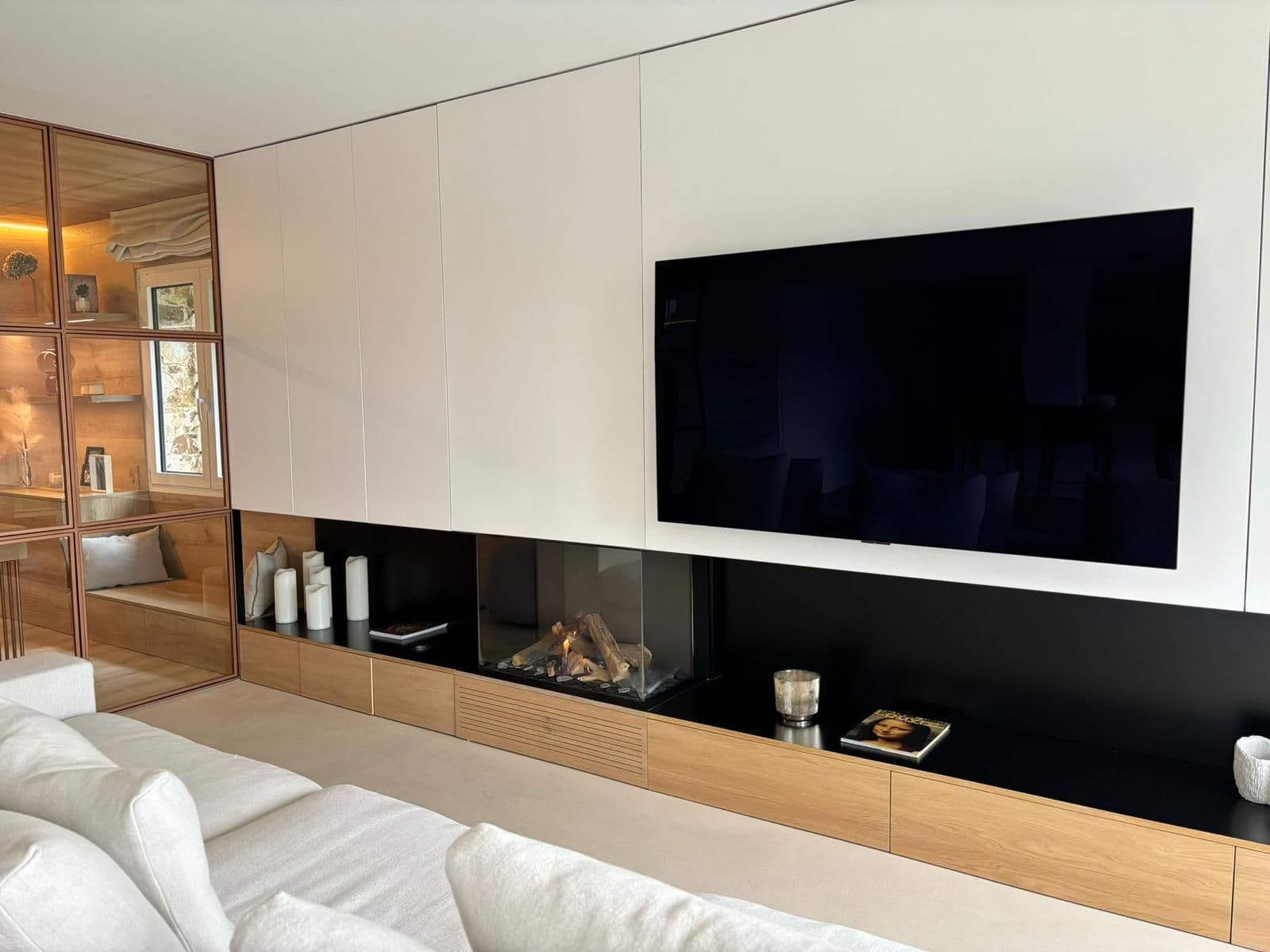 Room-sealed
A glass front makes them safer and more efficient.
The fumes can be vented either vertically or horizontally, depending on the layout of the space. That is why they allow the most formats —front, corner, three-sided or peninsula— and even a hidden flue.
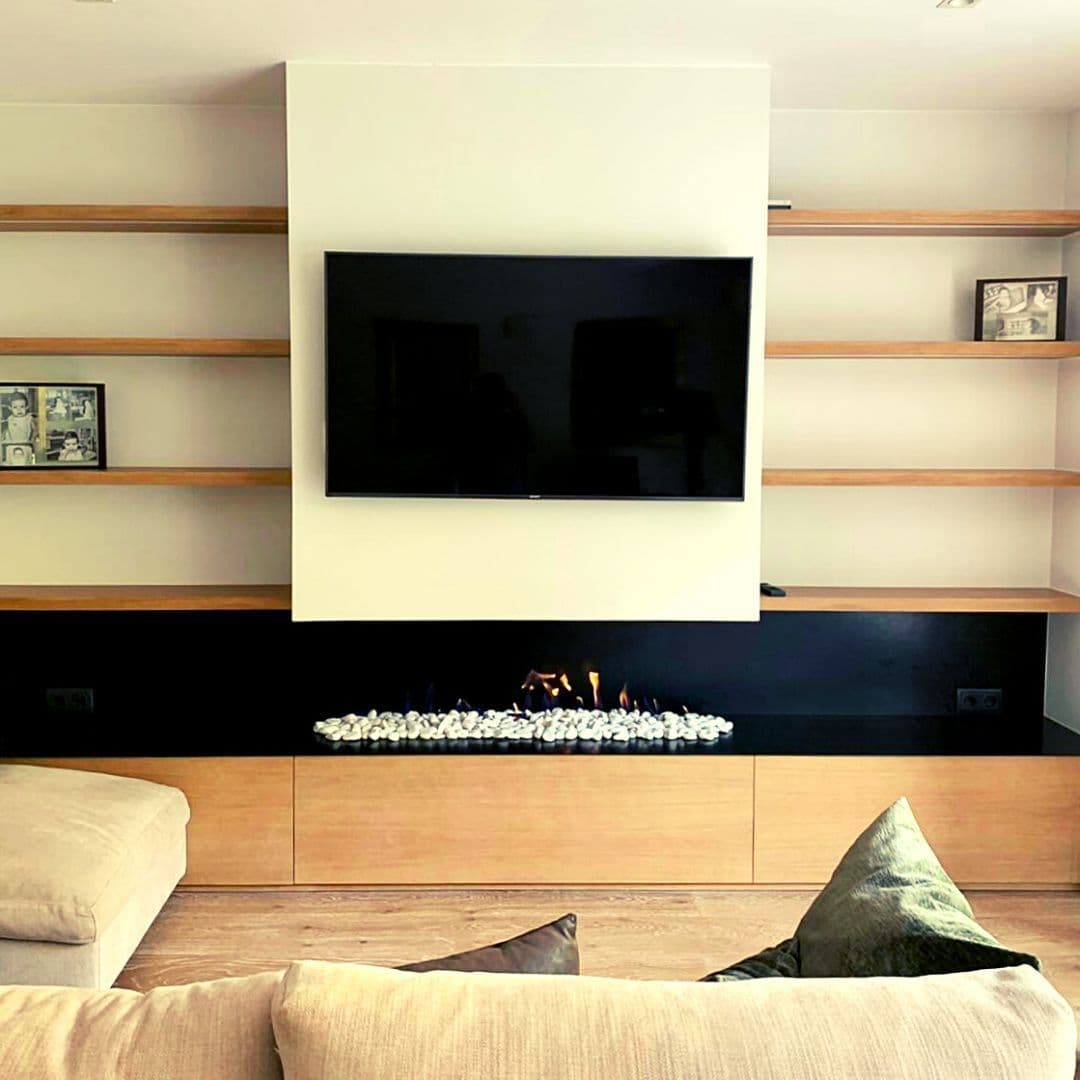 Open
The flame is in direct contact with the air in the room.
They need a vertical flue so the fumes are vented properly. They are a good option where a chimney already exists, for instance to convert an unused wood-burning fireplace to gas.
| Feature | Room-sealed (with glass) | Open (without glass) |
|---|---|---|
| Glass | Yes, it closes the combustion chamber | No, the flame is exposed and open to the room |
| Relation to room air | Separated by the glass | In direct contact |
| Venting | Vertical or horizontal; also fan-assisted through the floor slab | Vertical flue; in one venue, below the floor |
| Formats we have installed | Front, corner, three-sided and peninsula | Front, see-through and conversions of wood hearths |
| Where it usually fits | Flats and spaces without a vertical flue, once the pipework has been studied | Houses and venues with a vertical flue or an existing chimney |
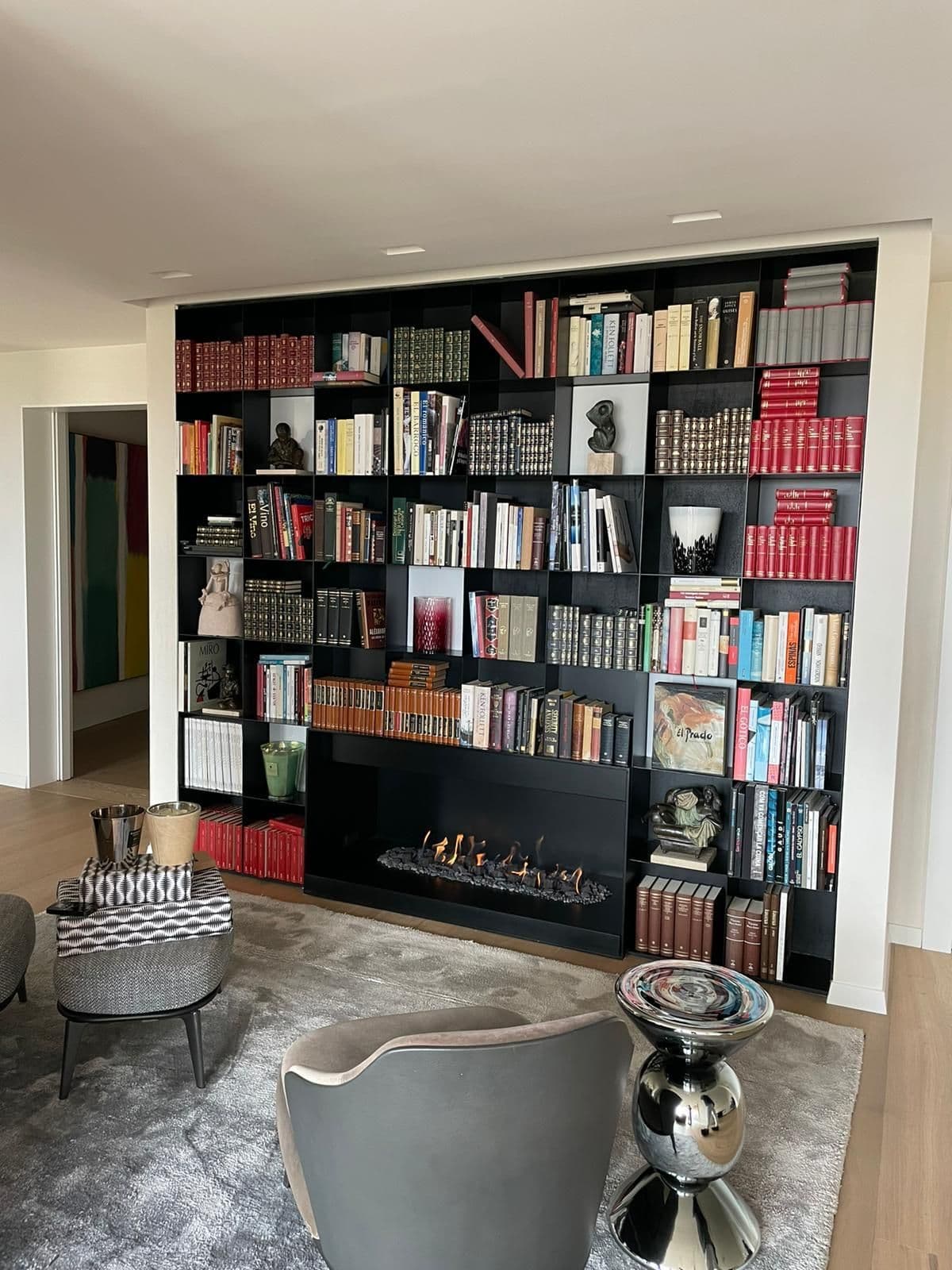
| Real project | Three-sided in Premià de Mar | Iron bookcase in Barcelona |
Formats
Every space calls for a format. These are the ones we install most, each with a real project from our portfolio.
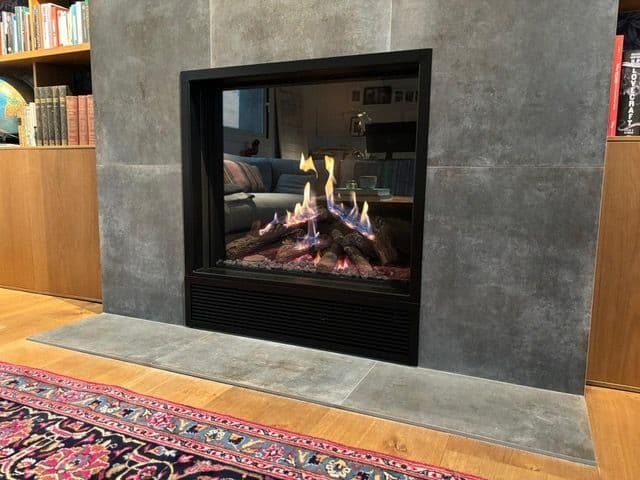
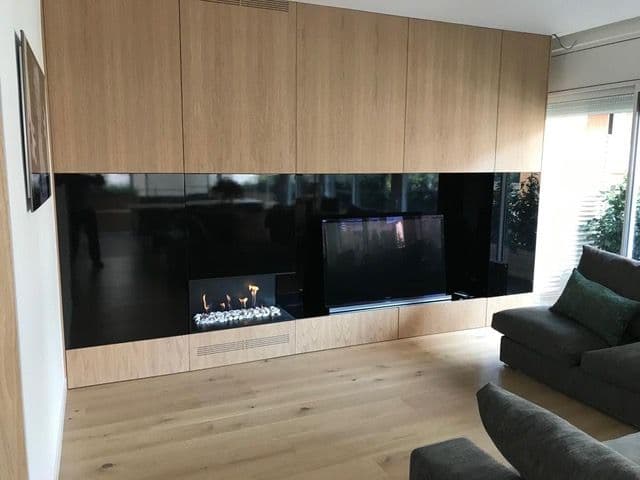
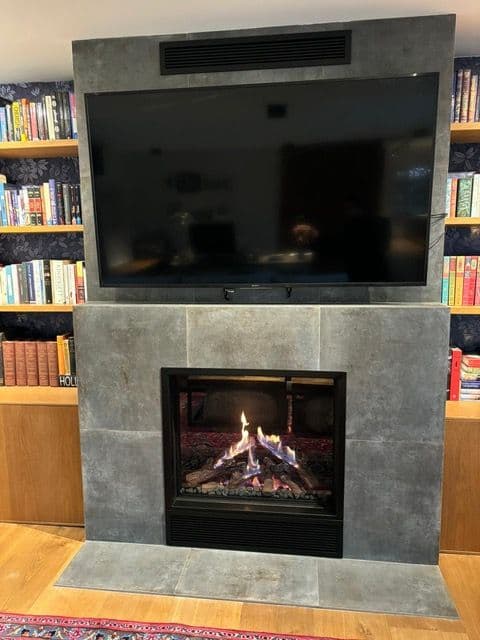
The classic format: the fire is seen from the front and the fireplace is built into the wall, a unit or under the television. It works with both room-sealed and open models.
See the front-view project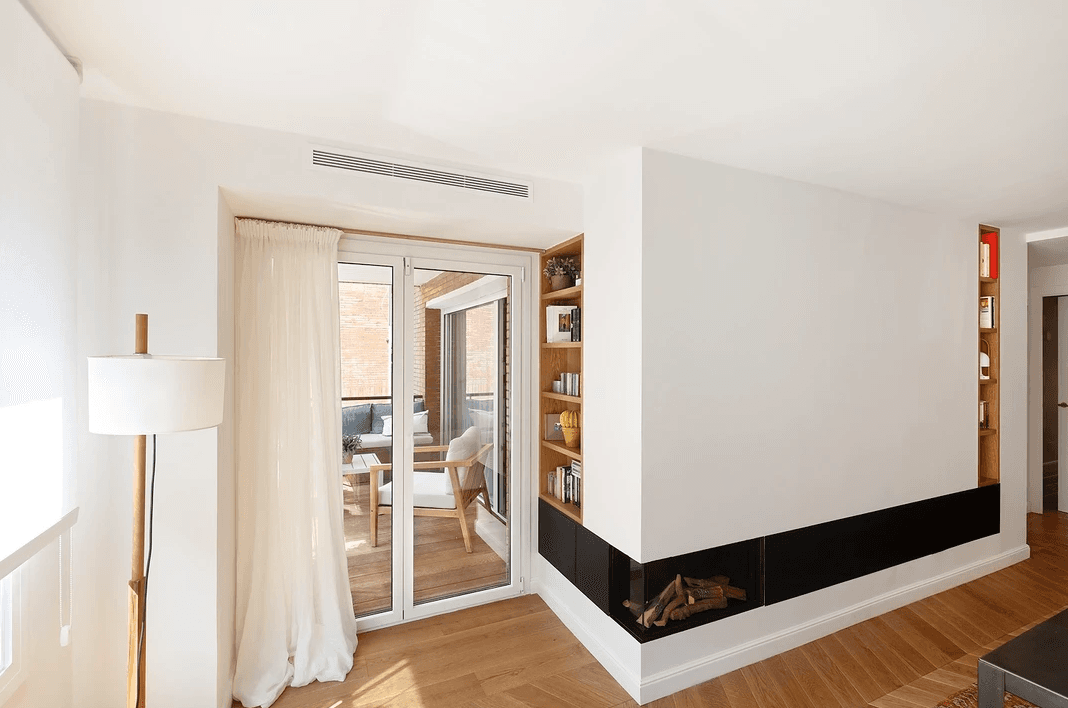
Glass on the front and one side so the fire can be seen from two angles. It makes the most of a corner and opens the view to the next room.
See the corner project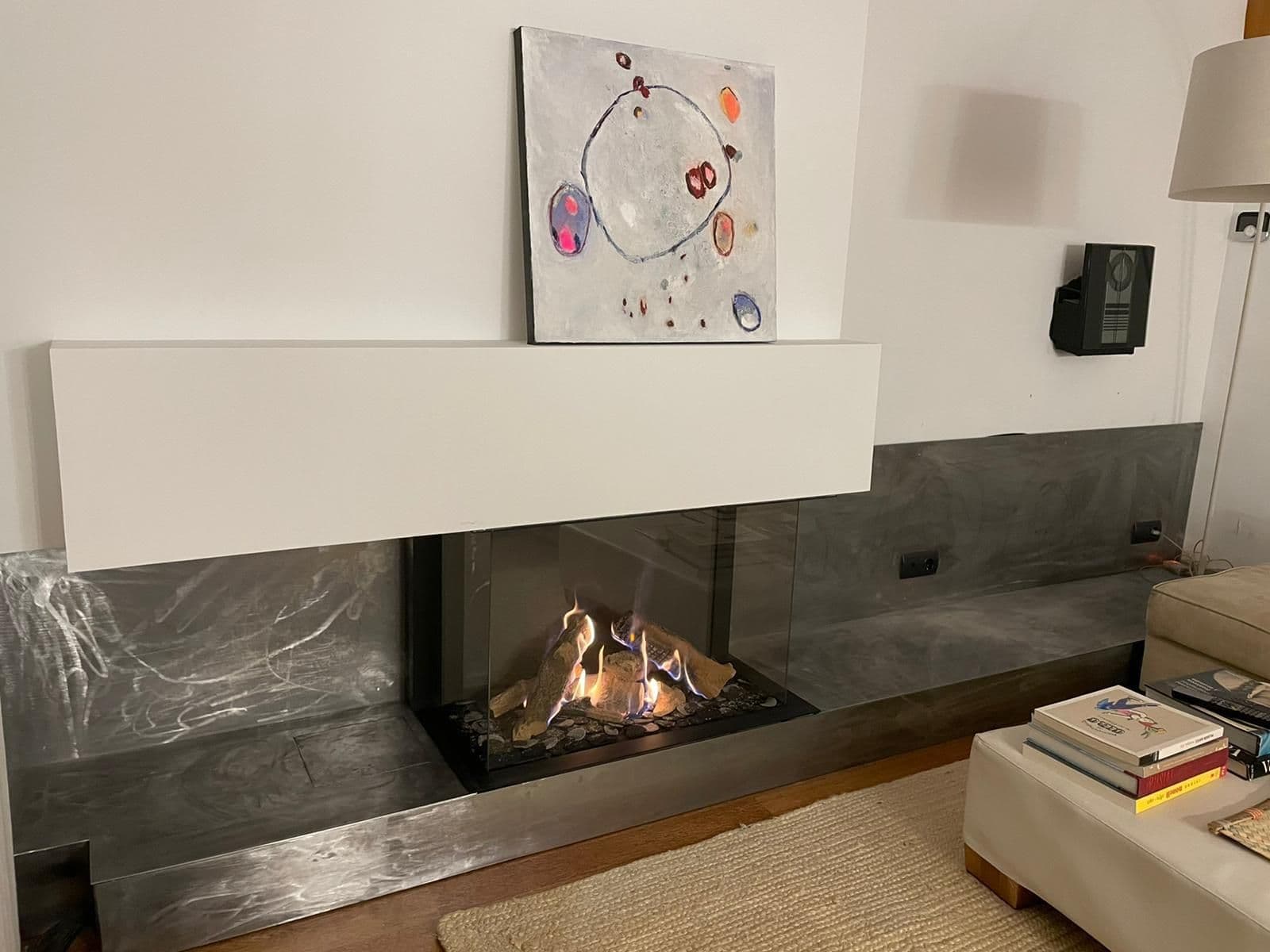
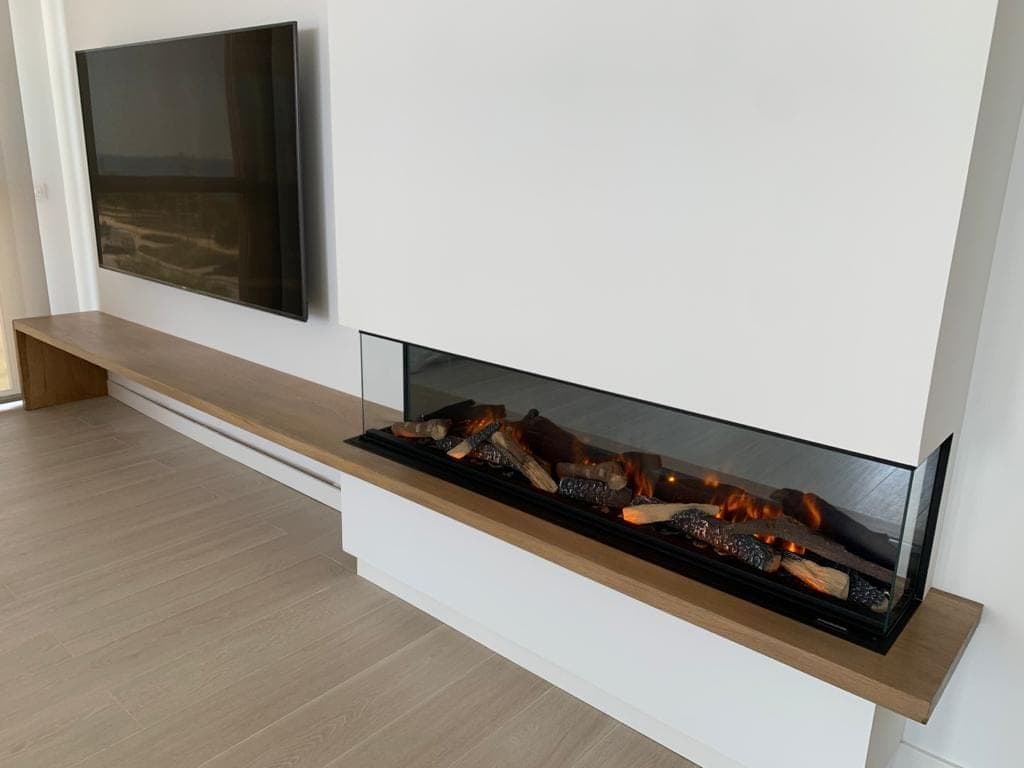
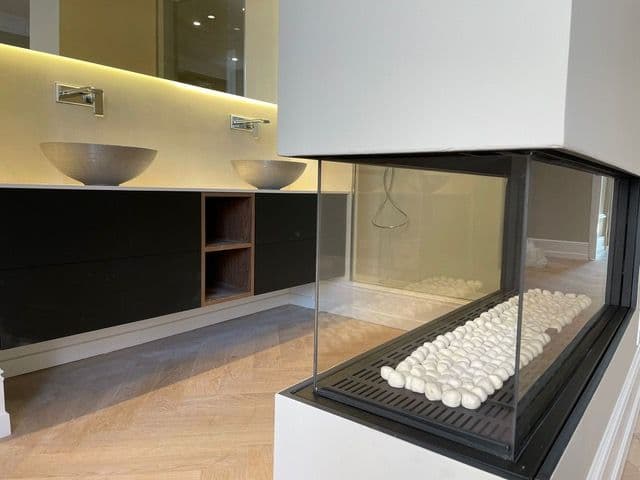
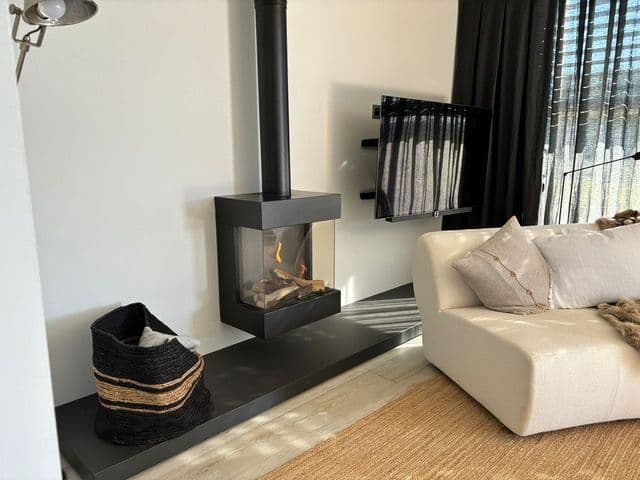
Three panes of glass, with the fire visible from the front and both sides. One of the most striking pieces, often paired with made-to-measure benches or shelving.
See the three-sided project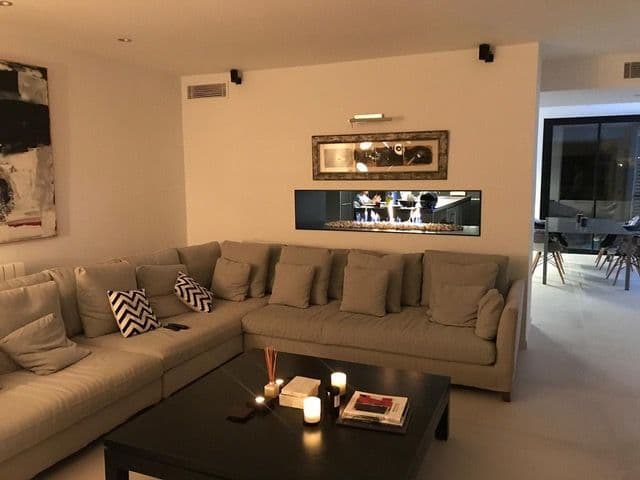
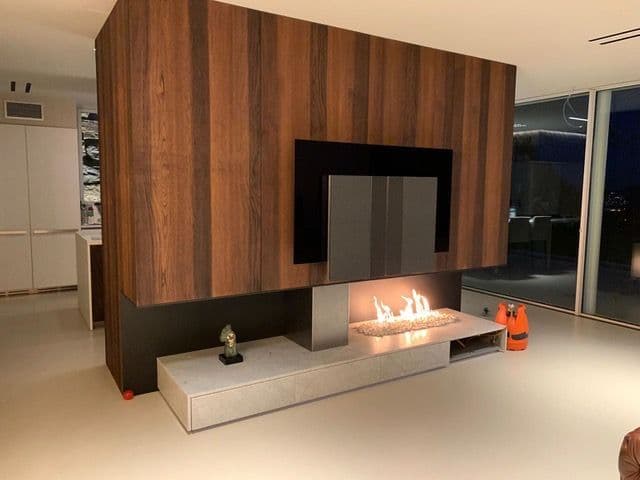
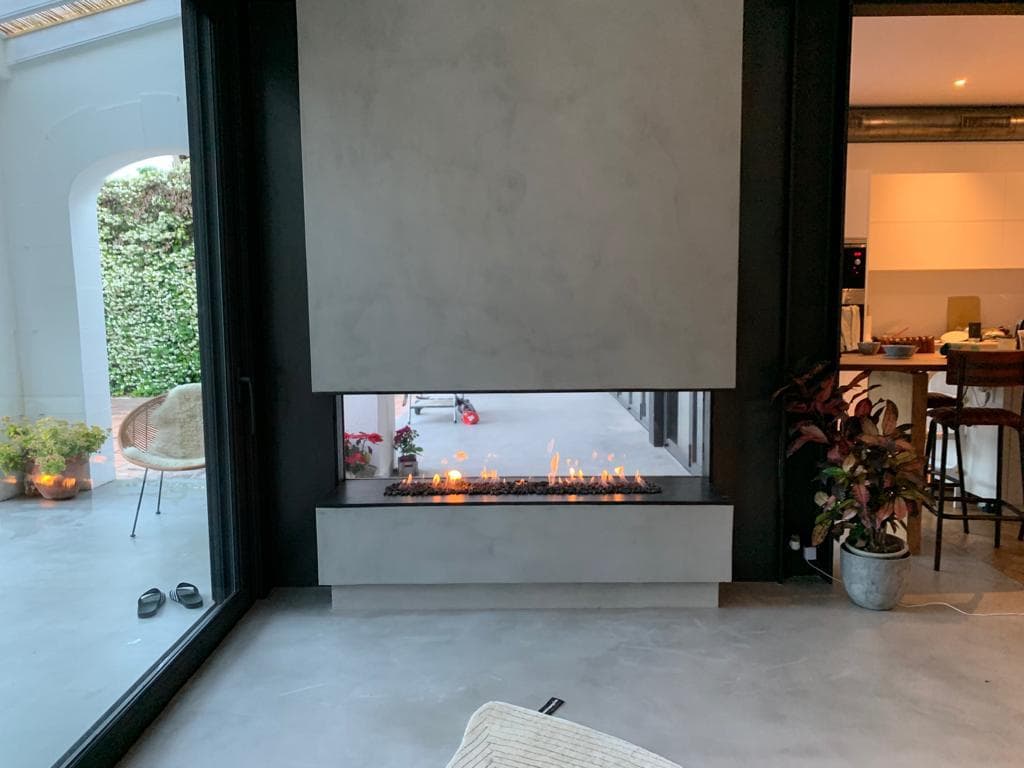
Open on both sides, it can be enjoyed from two rooms at once. It works very well as a divider between living and dining areas, and can be set into an iron box with a hidden hood.
See the see-through project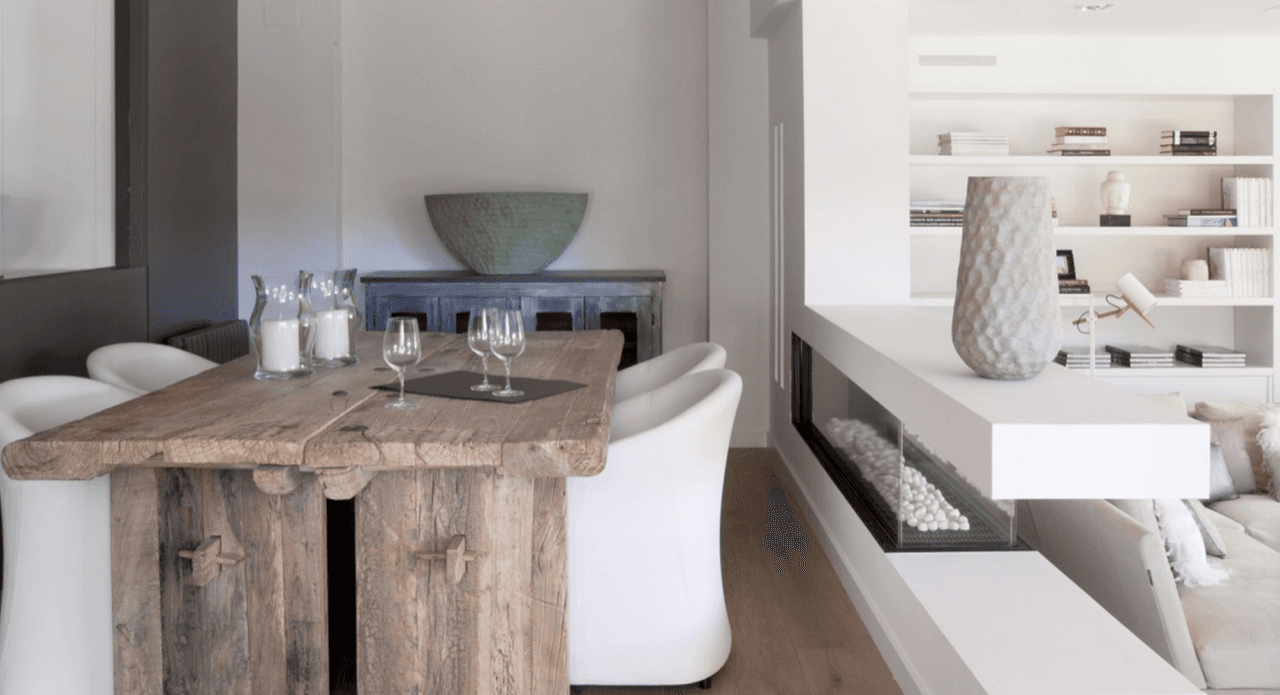
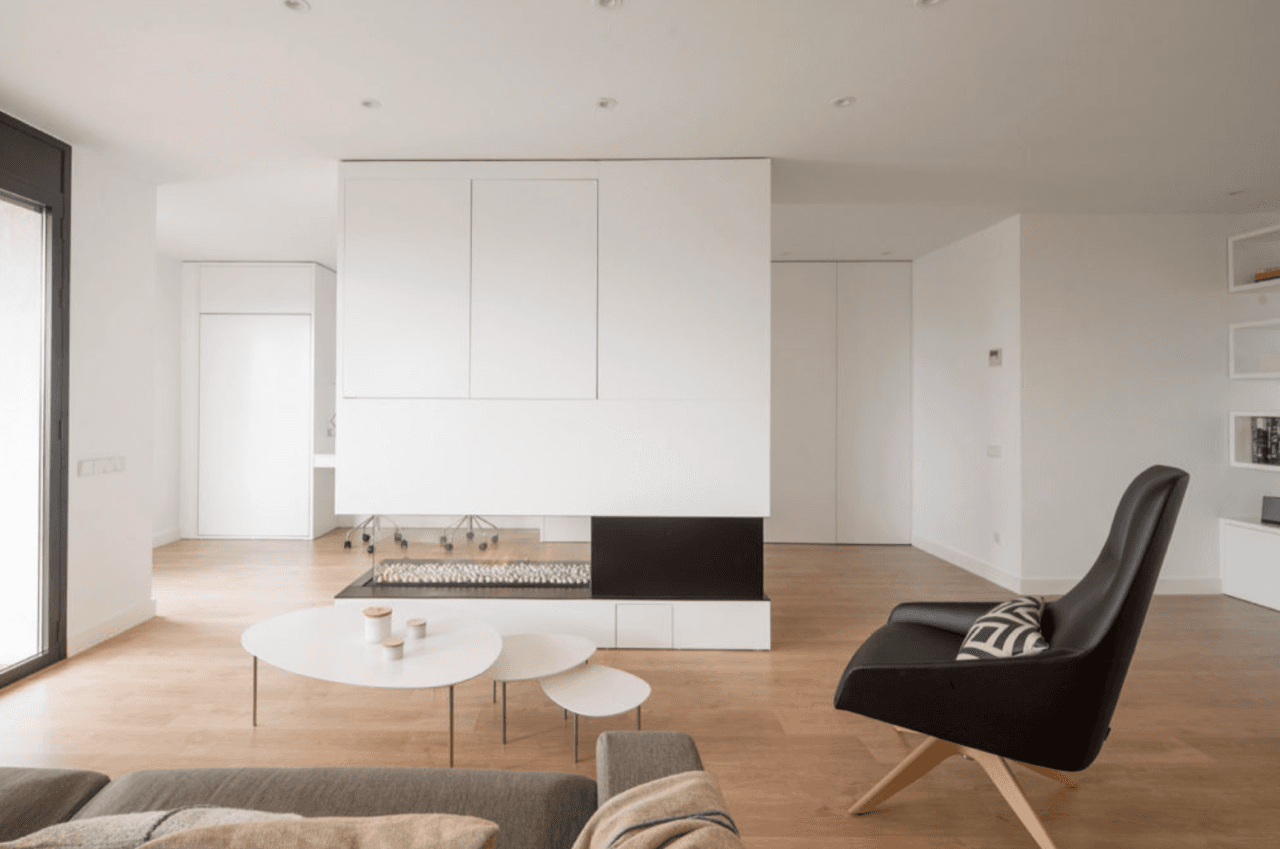
It projects from the wall into the room and can be seen from three sides. It helps to separate areas in large flats without building walls.
See the peninsula project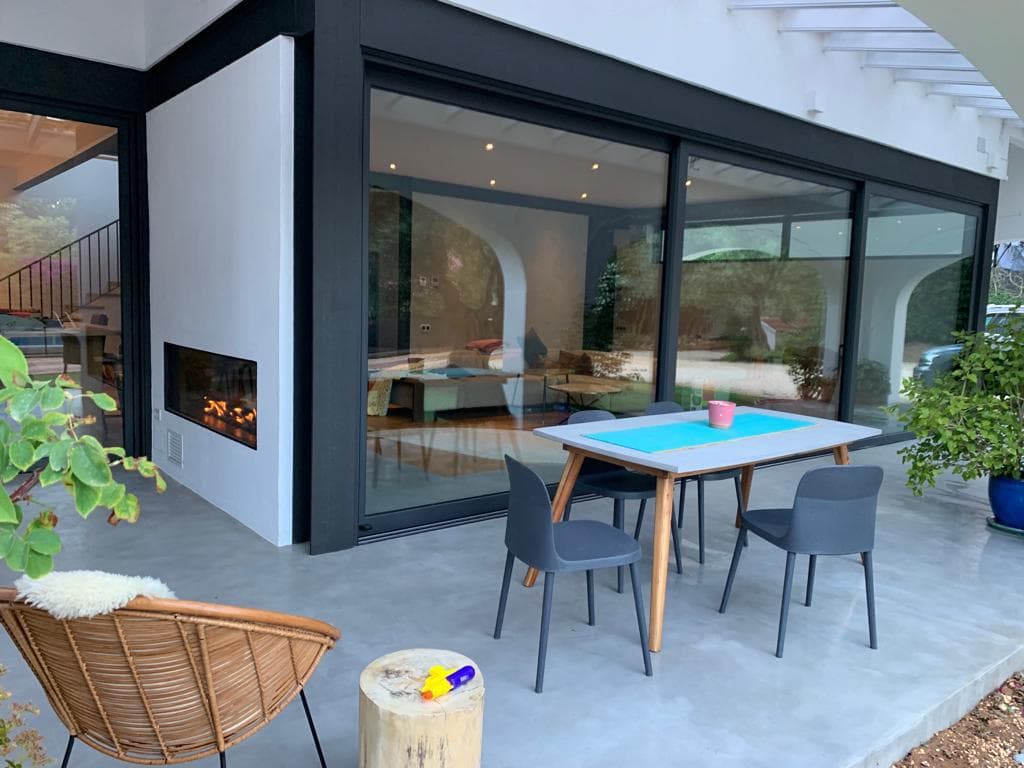
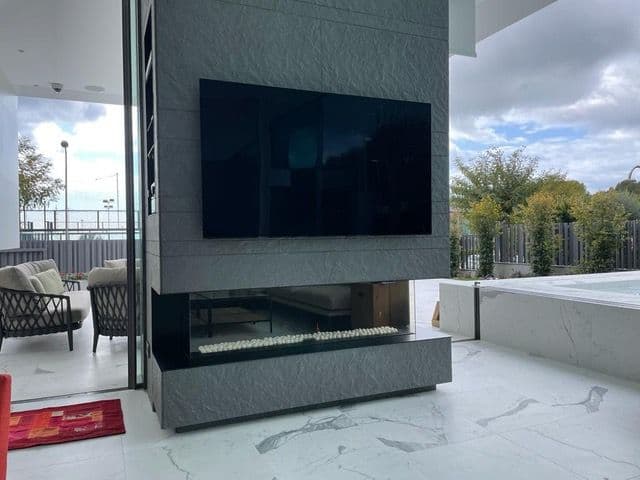
One fireplace seen from inside and outside: the fire keeps the terrace company without giving up warmth in the living room. The flue and the structure need careful study.
See the indoor-outdoor projectFinishes
A bespoke gas fireplace does not end at the burner. We choose the cladding with you —stone, iron, wood or plasterboard— and the decoration inside the fire —ceramic logs, stones or glass— so the piece fits the rest of the house.
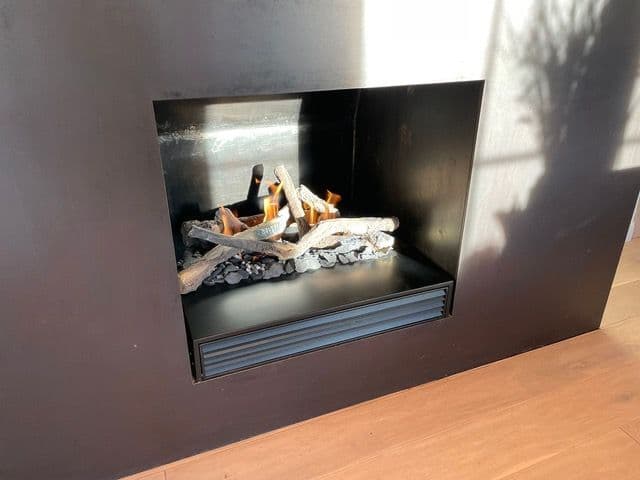
Ceramic logs give the look of a traditional wood fire; stones and glass, a more contemporary image. Either way the flame is adjusted in the same way and leaves no ash.
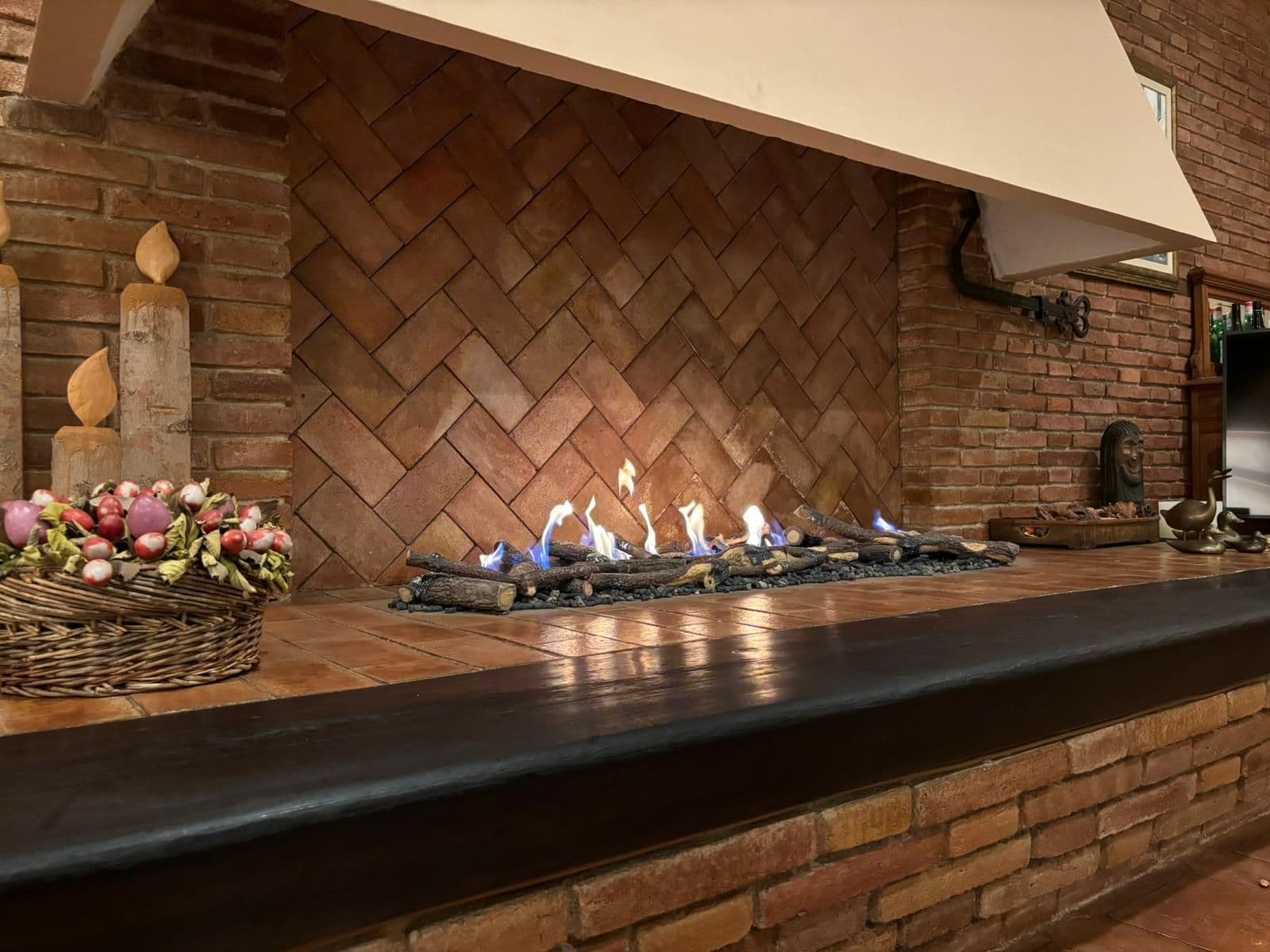
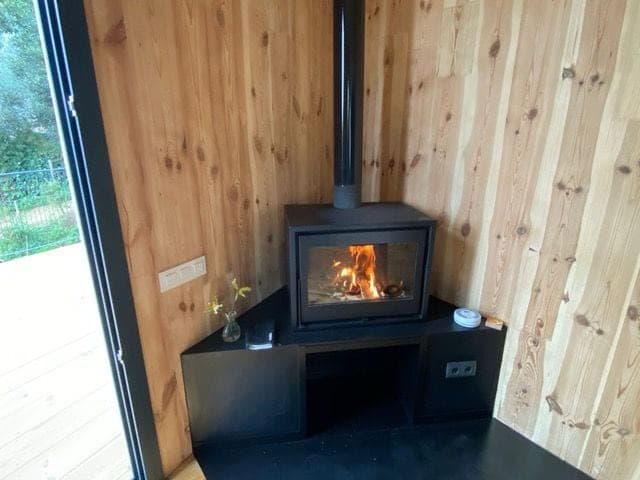
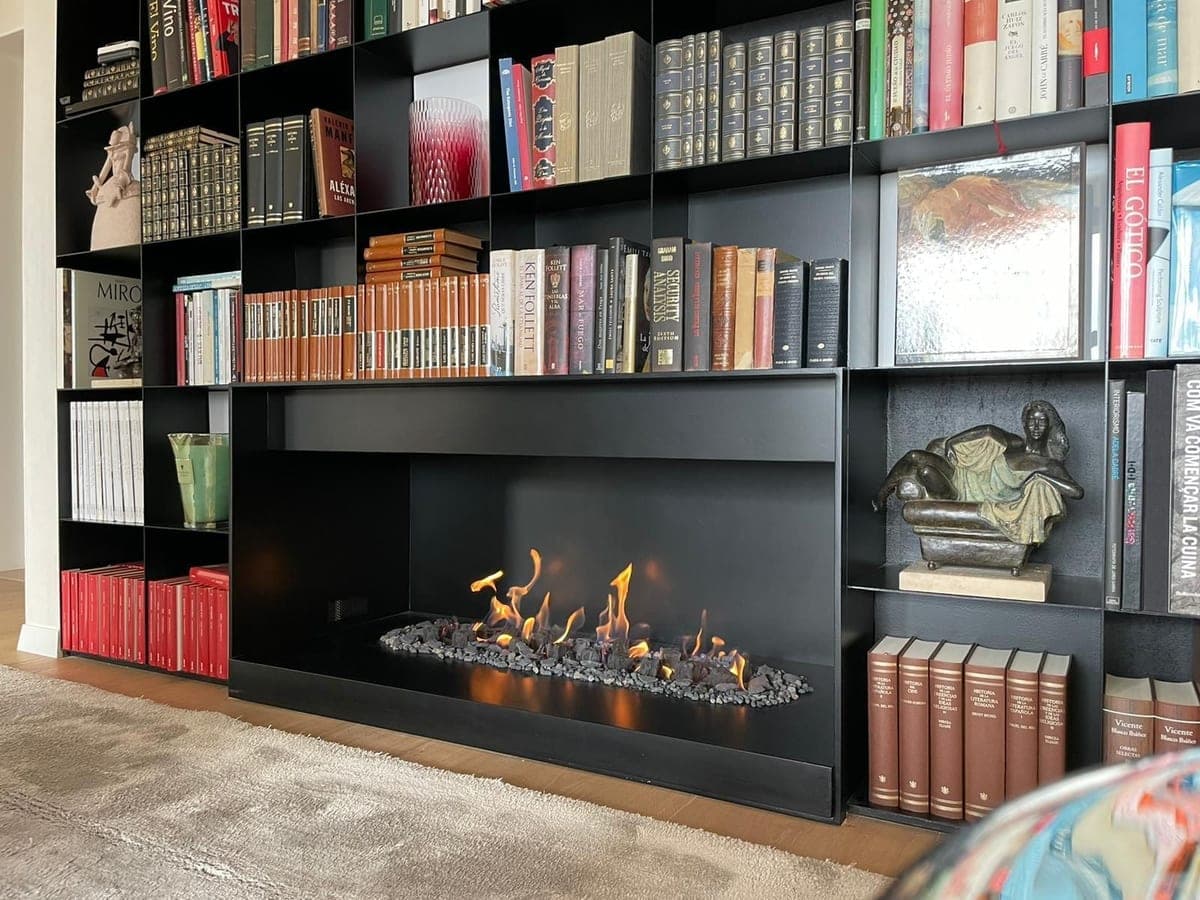
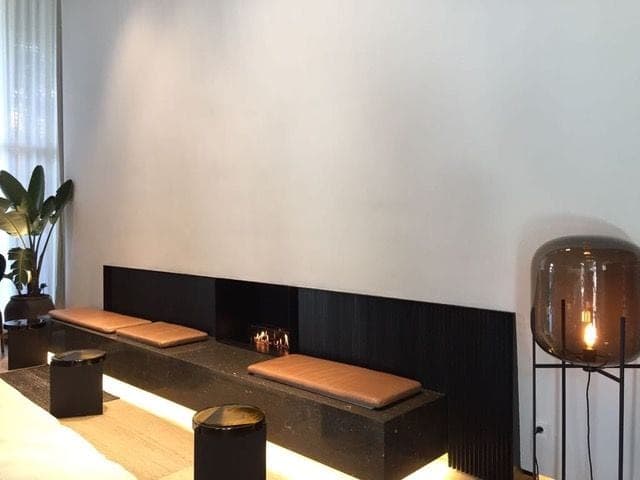
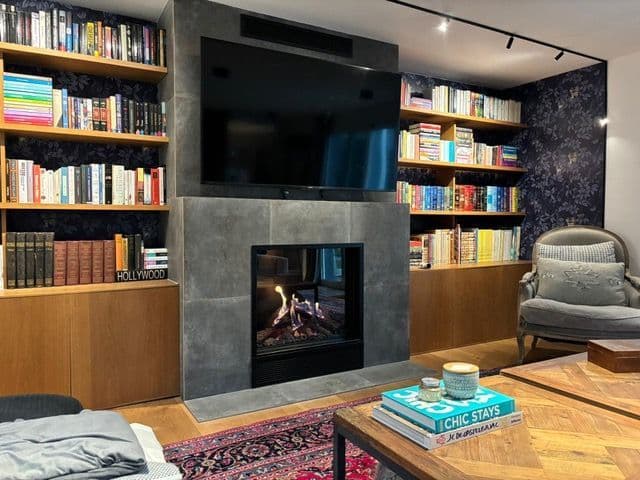
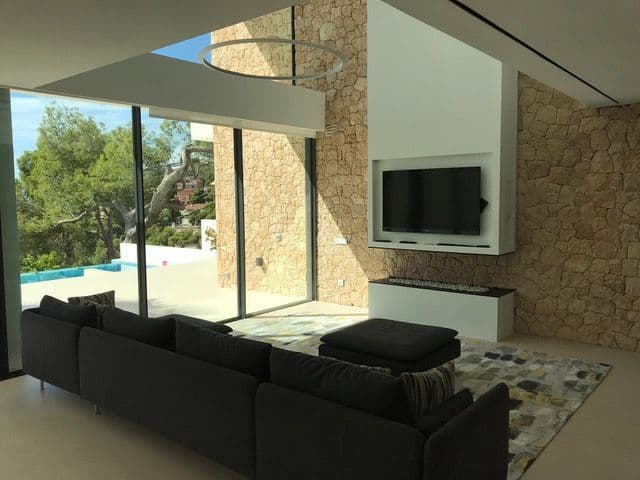
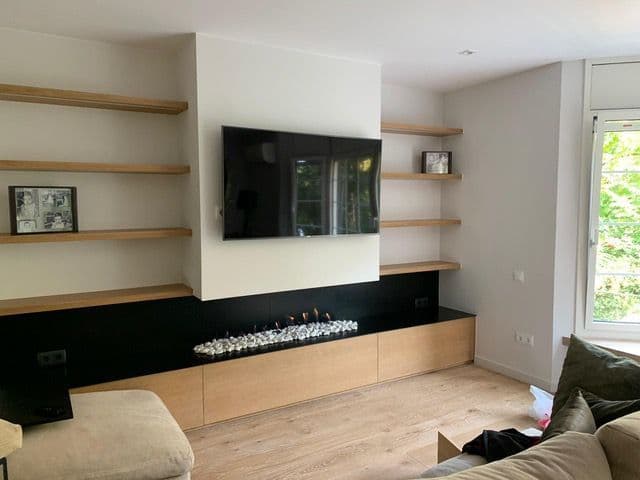
Sculpted walls, iron benches, bookcases and niches: these are some of the finishes we have made to integrate the fireplace into the architecture of the house.
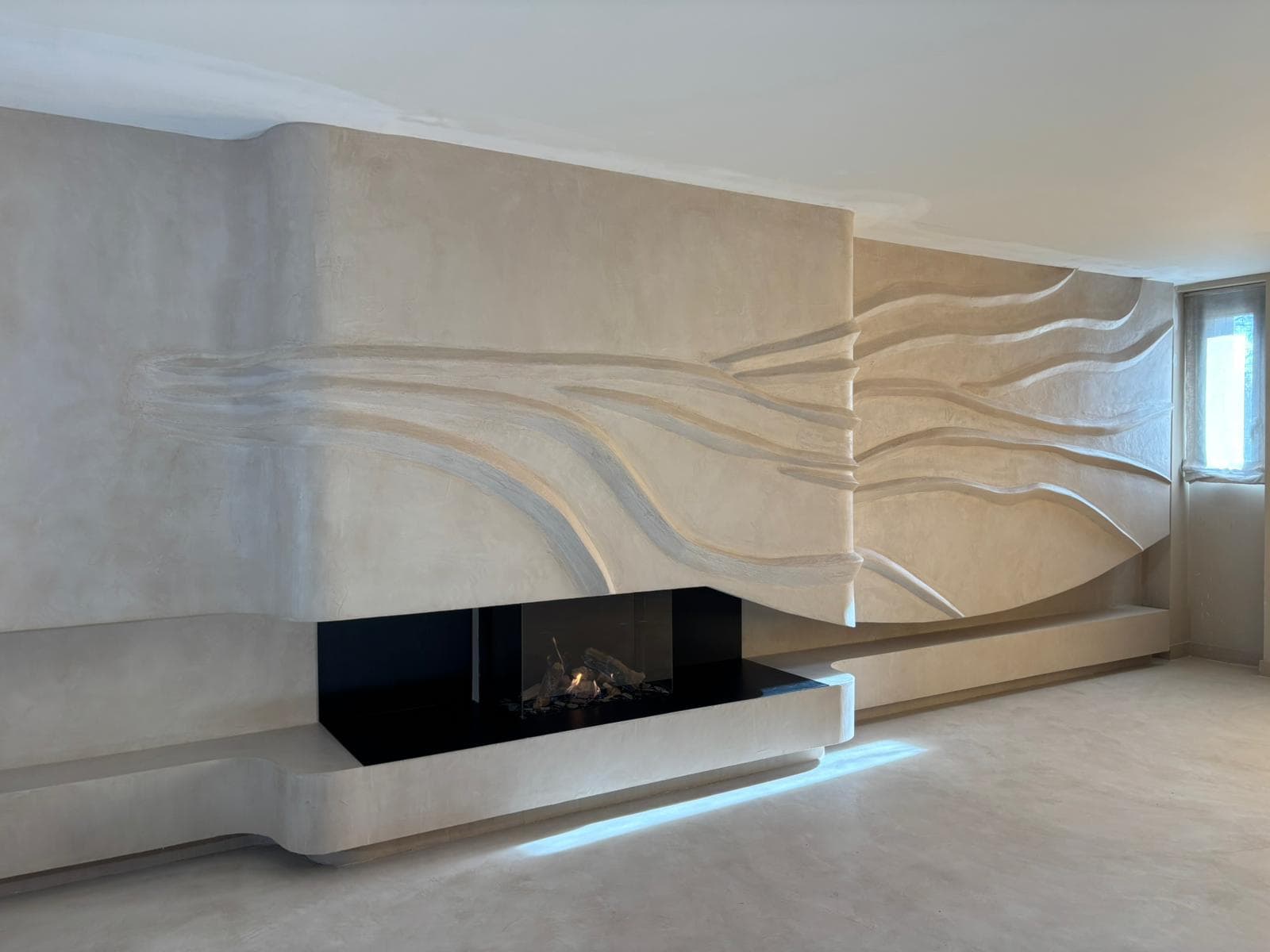
Gas fireplace built into a wall with sculpted relief and a long lit bench.
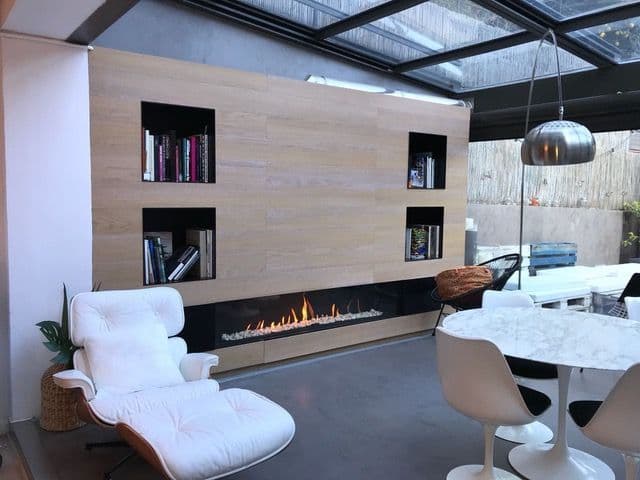
Three-sided room-sealed gas fireplace with iron niches and natural wood cladding, in Barcelona.
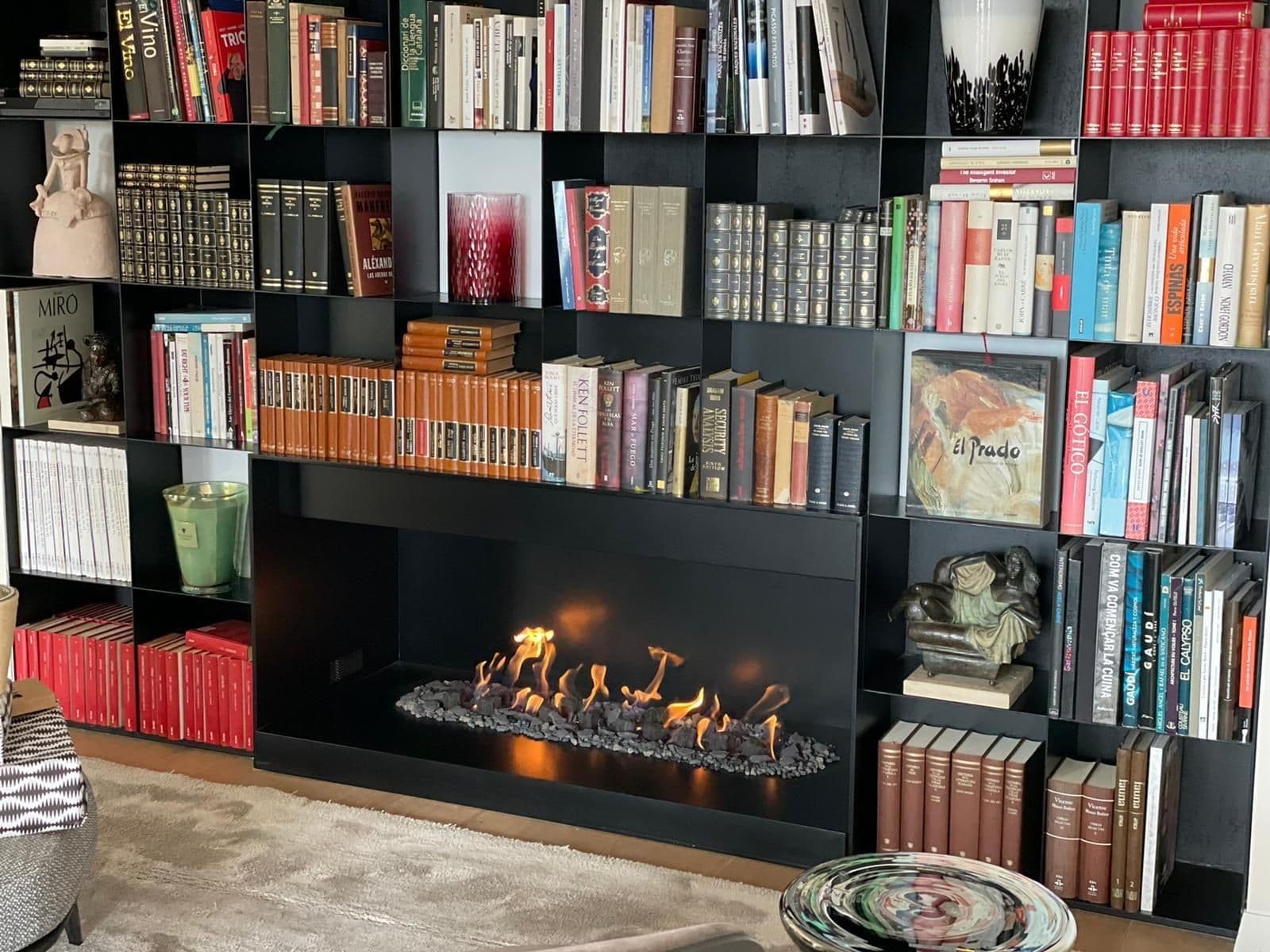
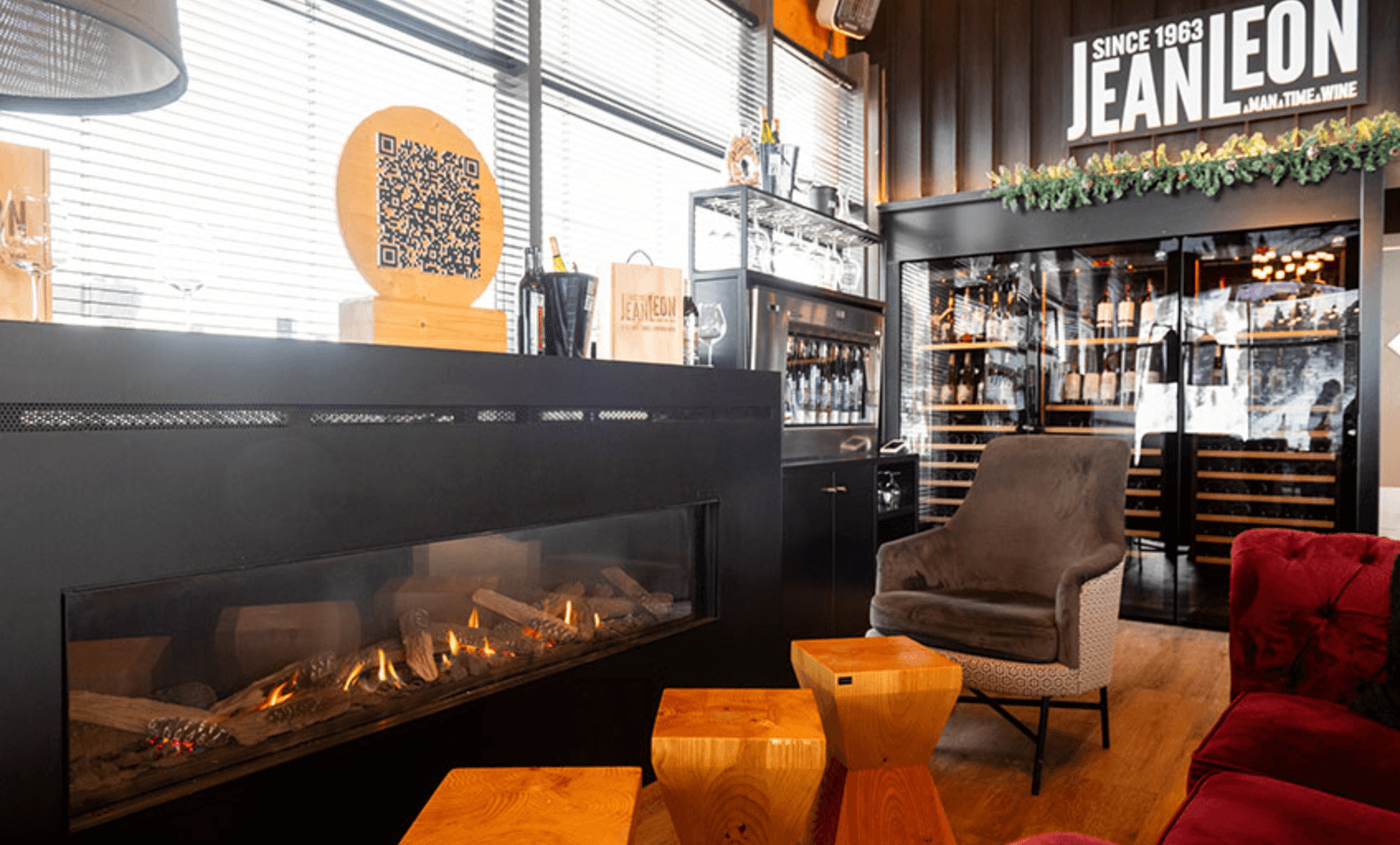
Open gas fireplace built into a made-to-measure iron bookcase, in Barcelona.
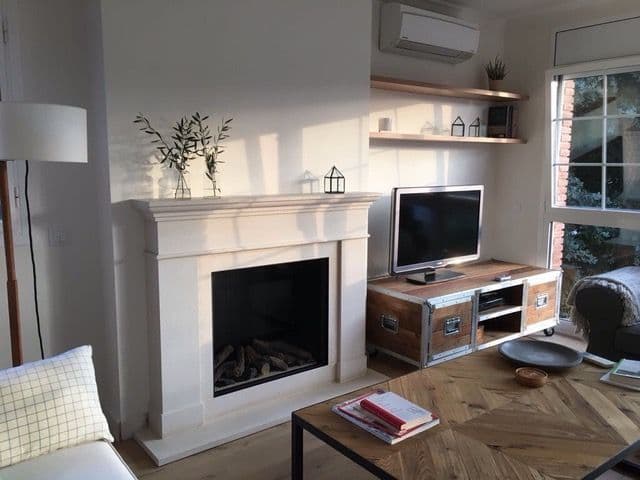
Classic-format room-sealed gas fireplace with a made-to-measure marble surround.
Which space
A gas fireplace can almost always be installed. What changes from one space to another is how the fumes get out and what needs checking before work starts.
| Space | Usual type | Venting | What we check first |
|---|---|---|---|
| Flat | Room-sealed | Horizontal, or fan-assisted through the floor slab with a hidden pipe | Length, route and diameter of the pipework; available gas supply |
| Detached house | Room-sealed or open | Vertical to the roof, horizontal or below the floor | Where to place it and how to vent the fumes with the least building work |
| Shop, restaurant or hotel | Room-sealed or open | Depends on the structure; also below the floor | Space limitations and structural restrictions |
| Unused wood fireplace | Open | Uses the existing vertical chimney | Condition of the hearth and the chimney |
Yes, in most cases, as long as the flue can be solved and there is a gas supply. Today a room-sealed gas fireplace can be fitted without a visible pipe: a fan pushes the fumes out through the floor slab between storeys. To make sure it works properly, we first study the length, route and diameter of the pipework. You can see it done in our project with two fan-assisted fireplaces in Igualada.
In the living room a gas fireplace usually goes under the television, into a bookcase, into an iron unit or in the middle of the room as a peninsula, as in several projects on this page. With an adjustable flame you can enjoy the fire for an hour in the evening without preparing logs or cleaning up afterwards. If you are weighing up fuels, compare it with our bioethanol fireplaces, which need no flue.
Portfolio
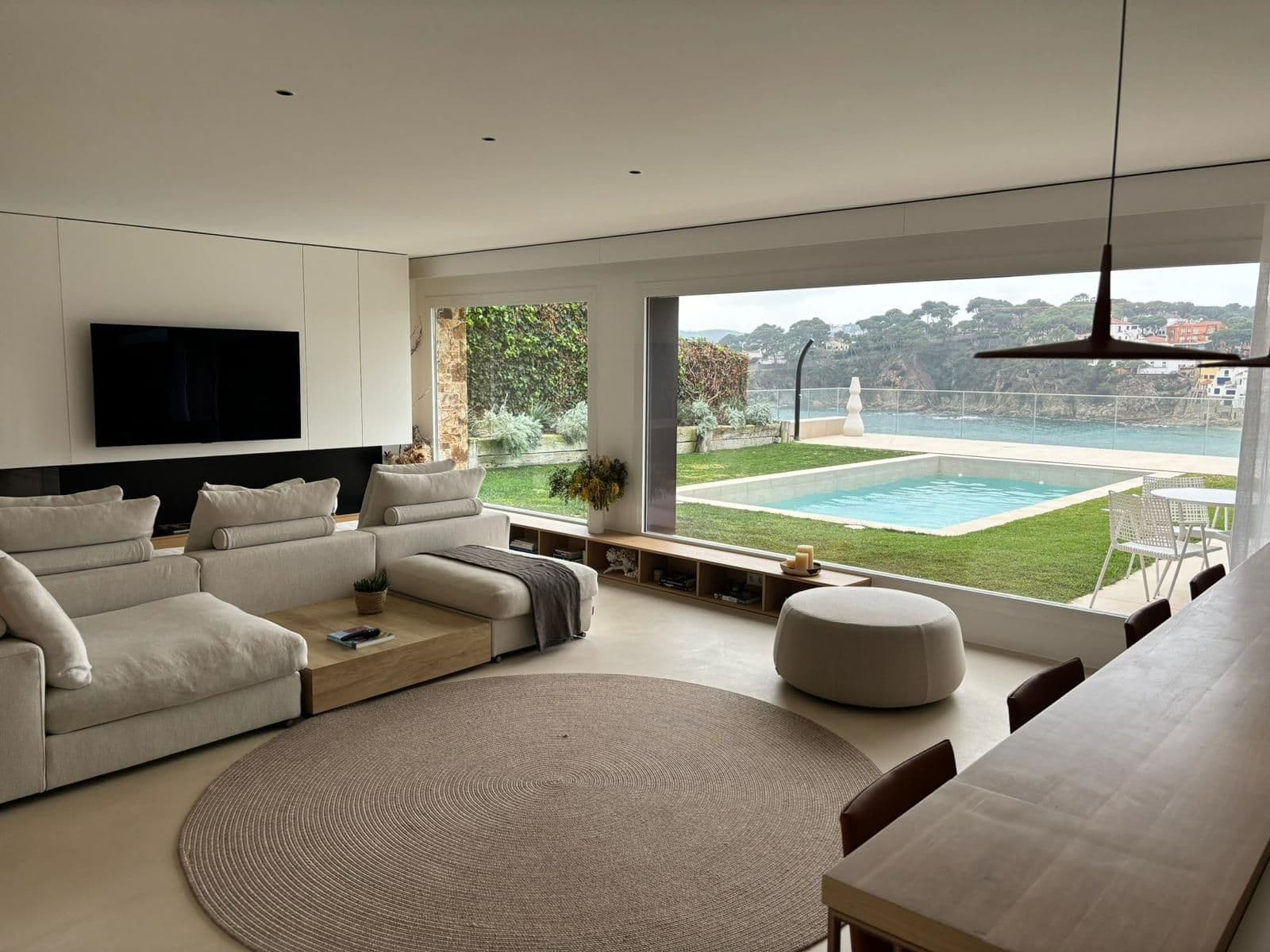
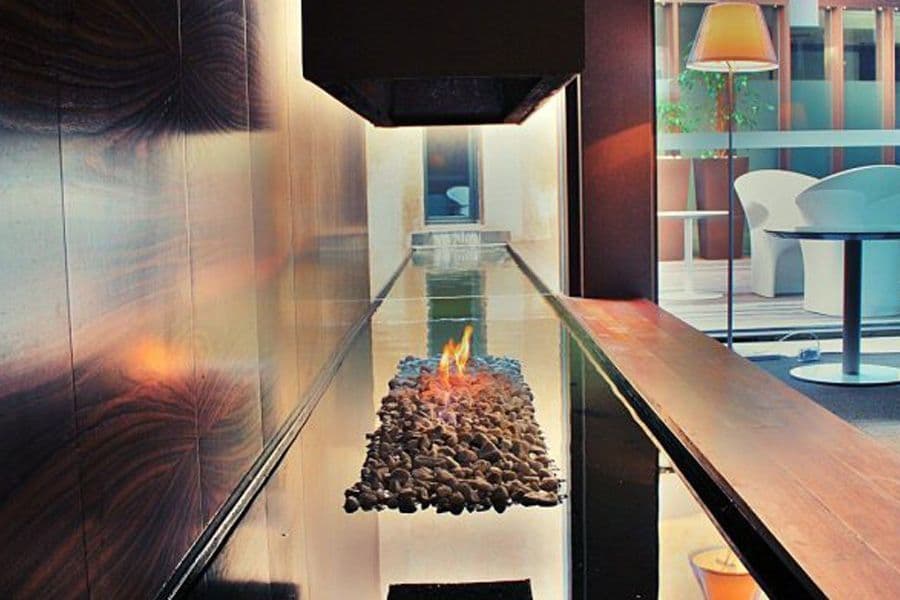
A selection of gas fireplaces we have designed and installed in homes and businesses. Each project has its own page with more photos.
Installation
A gas fireplace is, above all, a gas installation: safety depends on how the flue is designed and how it is connected to the supply. That is why our certified installer does it.
Essential to comply with regulations and avoid the risks of poor combustion of the fumes. A qualified installer always considers the technical limits of a gas installation before recommending for or against fitting a fireplace. The safety of the people using it depends on this, and it is key in this type of installation.
It requires approved pipes and components, as well as periodic maintenance. Like boilers, gas fireplaces need technical maintenance by qualified staff, who check the electrical and electronic parts as well as correct combustion and leak-tightness.
Some homes and commercial premises have limited space or structural restrictions. Gas fireplaces, especially room-sealed ones, allow many installation formats. Today a room-sealed gas fireplace can be fitted without a visible flue pipe: a fan pushes the fumes outside through the floor slab between storeys, which frees up the layout. This requires a study of the pipework —length, route and diameter— so that the fireplace works properly once installed.
Before handing over the fireplace we check there are no gas leaks and that the appliance works properly. We hold the official approval for natural gas work and comply with safety regulations through leak-tightness tests.
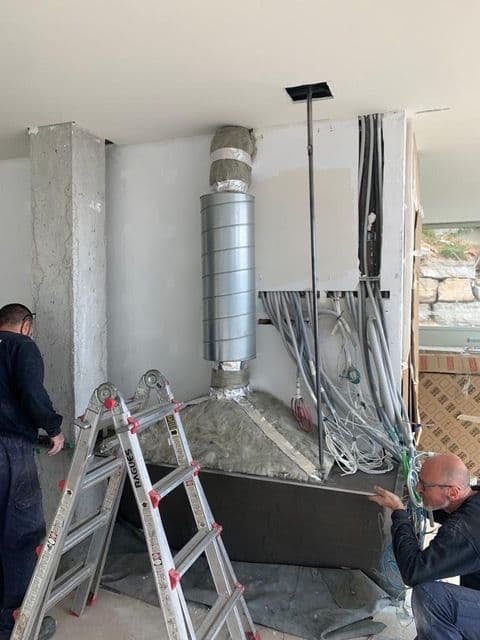
We handle the whole process in four stages.
Together we decide the type of fireplace, the format and the cladding, and we study how the fumes will be vented.
We take care of making the bespoke parts, logistics, permits and the project timeline.
Our certified installer fits the fireplace, connects it to the gas supply and runs the safety and leak-tightness tests.
We complete the cladding and the fire decoration. All you have to do is light the fireplace.
After-sales
A gas fireplace needs much less maintenance than a wood-burning one: there is no ash to clear and no firewood to store. Even so, like any gas appliance, it must be serviced by qualified staff.
The service checks the electrical and electronic parts, correct combustion and the leak-tightness of the installation. Our after-sales service advises you and takes care of maintenance so the fireplace keeps performing at its best.
You will find more details in our gas fireplace maintenance guide.
Quote
There is no single price: every gas fireplace is designed for a specific space. These are the factors that move the quote the most:
We prepare a no-obligation quote based on your space and what you are looking for.
Enjoy the comfort, elegance and efficiency of a gas fireplace designed just for you. At Clima Difusión we create made-to-measure solutions that suit your style and needs, with maximum safety, low consumption and impeccable design.
Ask for your no-obligation quote and take the first step towards a cosier, warmer and more sophisticated home.
Frequently asked questions
Gas fireplaces are an efficient and elegant choice, but it is normal to have questions before choosing the right one for your home or business. Here we answer the most common ones to help you decide.
There are two main types. Room-sealed gas fireplaces have a glass front, are more efficient and safer, and can vent their fumes vertically or horizontally. Open gas fireplaces have no glass: the flame is in contact with the air in the room and they need a vertical flue up to the roof.
Yes. Every gas fireplace needs a flue system to take the combustion fumes outside: vertically, horizontally or even below the floor. With room-sealed models the flue can be fan-assisted through the floor slab and stay hidden.
Yes. Many gas fireplaces have a remote control or a digital panel to adjust the heat output to your liking. You turn the flame up or down whenever you want, without adding logs or waiting for the fire to catch.
No. They are very clean and need less maintenance than wood-burning fireplaces, because there is no ash to clear. A service by an authorised technician, checking combustion, seals and electronics, is usually enough to keep them working properly.
Yes. They comply with strict safety regulations and include automatic shut-off systems and oxygen sensors to avoid risks. The other half of safety is the installation: it is carried out by a certified installer, with leak-tightness tests before the fireplace is lit.
Yes. They produce efficient, steady heat without wasting energy, and they give you better control of the temperature: the output is adjusted instantly, whereas with wood it depends on how the fire burns. If you are torn between the two, compare them with our wood-burning fireplaces.
In most cases, yes. You only need to assess whether a flue is feasible and what gas supply is available. In flats, a room-sealed fireplace with a fan-assisted flue through the floor slab usually solves venting with no pipes on show.
Yes. We make every fireplace to measure to suit your space and style. You can choose between different claddings (stone, iron, wood or plasterboard) and interior decorations (ceramic logs, stones or glass).
There are three routes: vertically to the roof, horizontally or below the floor. Which one is best depends on the type of fireplace and the structure of the building. In a venue in Andorra, for example, we installed an open gas fireplace with buried flue pipes.
There are four stages: initial design; preparation (manufacturing, logistics, permits and timeline); installation by our certified installer, including the safety and leak-tightness tests; and final finishes. How long it takes depends on the building work and the flue, and we confirm it in the quote.
It depends on the model. Fireplaces with a fan-assisted flue need a power point for the fan; for the rest, it depends on each appliance's ignition and control system. When we study the installation we tell you what the chosen model needs so it can be planned into the work.
Consumption depends on the model and how you use it. In general they are more efficient than wood-burning fireplaces, and gas usually costs less than other heating sources.
Gas fireplaces run on natural gas or LPG, which includes butane and propane. Which one suits you depends on the supply available in your home or premises, and we check it when we study the installation.
Showroom
Come and see our fireplaces in person and talk through your project with us. Please confirm your visit by phone.
We appreciate you confirming your visit to:
Service area
We work in Barcelona and across the province, the rest of Catalonia and Andorra.
Brands
Download the PDF gas fireplace catalogues from Ortal, M Design, Thermocet, Faber, Traforart and DRU.
Keep reading